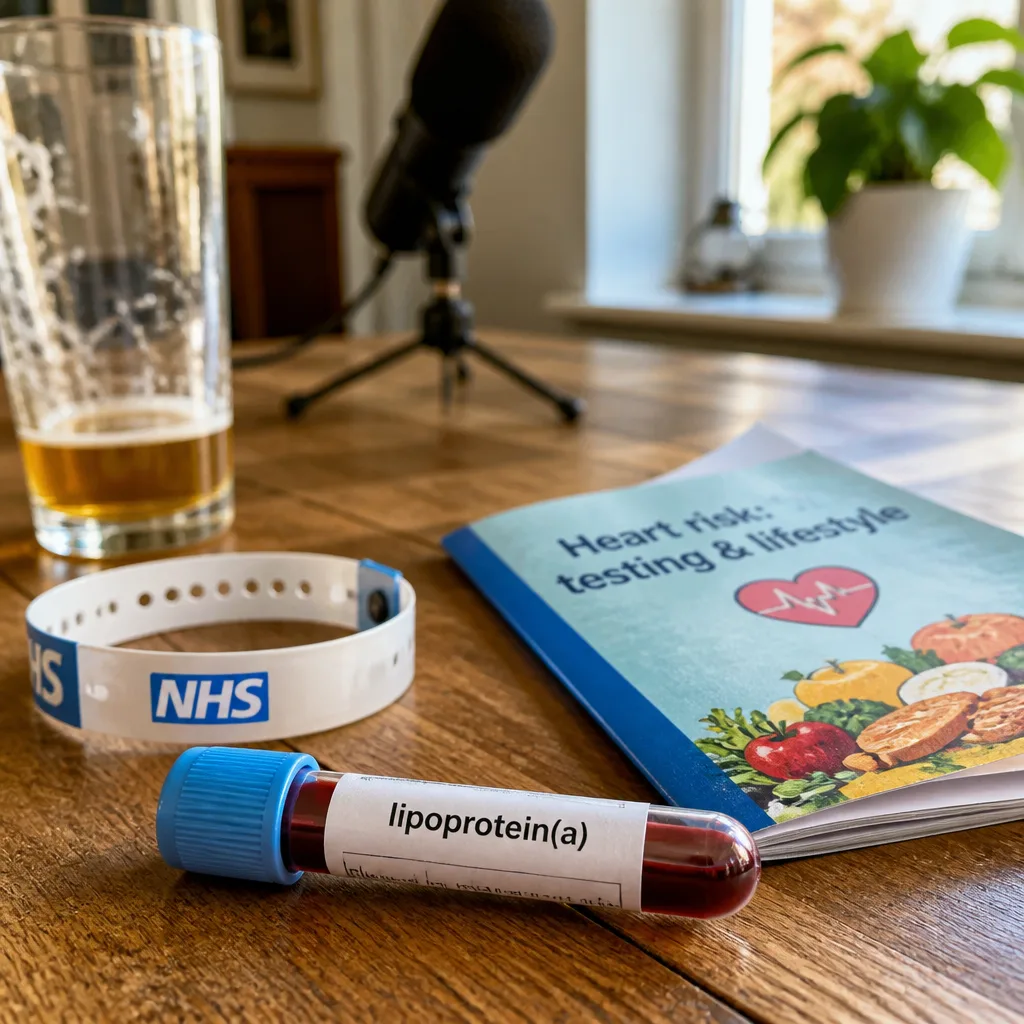
Actor James Buckley has disclosed that he was found to have high levels of lipoprotein(a), an inherited type of fat and protein associated with an increased risk of early heart disease and stroke, and says he reduced his alcohol intake following the diagnosis. The revelation, made in interviews and on the couple’s podcast, has prompted renewed attention on a genetic risk factor that clinicians say is under-recognised.
What was revealed
Buckley, known for his role in The Inbetweeners, learned of the elevated lipoprotein(a) following a routine blood test carried out while his wife Clair was receiving hospital treatment for dehydration. According to reporting of comments made by Clair on The Chris Moyles Show, he did subsequently cut back on drinking “for a little while” though he still socialises.
“I think he had his mum sending him a message saying, ‘Oh, I’ve got this sort of genetic thing’. … ‘you need to get checked’, which he did and then they were like ‘yeah, no, you do have it, so just try and be a bit healthier’. So, he did knock it on the head for a little while but he still goes to the pub.”
Clinical context and prevalence
Charities and clinical sources cited in press coverage note that high lipoprotein(a) is genetically determined and relatively common. The Cleveland Clinic estimates that about 20% of people worldwide have raised levels. Healthcare organisations such as cholesterol charity HEART UK explain that, when elevated, lipoprotein(a) can adhere to artery walls and contribute to narrowing that increases the risk of heart attacks and strokes, sometimes at a younger age than typical atherosclerotic disease.
What this means for patients and practice
Unlike many conventional cholesterol measures, lipoprotein(a) levels are largely fixed by genetics and are not reliably lowered by diet or most lifestyle changes. This limits the options for direct modification of the lipid particle through general measures. Nonetheless, clinicians emphasise several practical points:
- Awareness and testing: Individuals with a family history of premature cardiovascular disease or known elevated lipoprotein(a) may be advised to undergo testing so that overall cardiovascular risk can be assessed more accurately.
- Risk management: Standard strategies to reduce cardiovascular risk — control of blood pressure, diabetes management, smoking cessation, moderate alcohol use and treatment of other lipid abnormalities — remain important even when lipoprotein(a) is raised.
- Family implications: Because the trait is inherited, identification in one person can prompt consideration of testing relatives to establish their risk profile.
Limitations of current knowledge and treatments
It is important to distinguish correlation from causation when interpreting individual outcomes: raised lipoprotein(a) is associated with higher cardiovascular risk, but the absolute risk for any one person depends on the full clinical picture. The coverage surrounding Buckley’s case correctly notes that genetic determination means levels do not usually change much over time. That said, the presence of lipoprotein(a) can alter clinical decision-making about preventive therapies and intensity of risk factor control.
The public discussion driven by a well-known figure can increase awareness of a condition many patients and some clinicians may not routinely consider. However, expert guidance generally recommends targeted testing — for example in those with premature cardiovascular disease or a relevant family history — rather than universal screening.
| Feature | Detail |
|---|---|
| Prevalence | About 20% of people worldwide (Cleveland Clinic estimate) |
| Nature of condition | Genetically determined elevated lipoprotein(a) — largely fixed over life |
| Clinical significance | Associated with increased risk of heart disease and stroke; can contribute to earlier cardiovascular events |
As with any single-person account, care is needed when extrapolating. Public-health messaging should balance raising awareness with clear advice about who should be tested and how clinicians will use results to guide prevention. For patients found to have high lipoprotein(a), the emphasis remains on comprehensive cardiovascular risk reduction rather than reliance on a single lifestyle change.
Reporting on the actor’s experience has put a spotlight on a common but sometimes overlooked cardiovascular risk factor. Clinical charities and services say increased awareness could lead to more targeted identification of at-risk individuals and more personalised preventive care.