New Delhi, 16 August 2026: The University Grants Commission (UGC) has directed all higher educational institutions to strictly implement the UGC Regulations on Curbing the Menace of Ragging in Higher Educational Institutions, 2009, emphasising zero tolerance and immediate steps to prevent, detect and address ragging in any form.
Key directives and legal basis
The public notice, issued by the UGC on 16 August 2026, reiterates the requirement that universities and colleges put in place the anti-ragging structures and processes prescribed by the 2009 regulations. The commission pointed to the Supreme Court judgment dated 8 May 2009 (Civil Appeal No. 887 of 2009) as the legal foundation for the rules and said institutions must comply without exception.
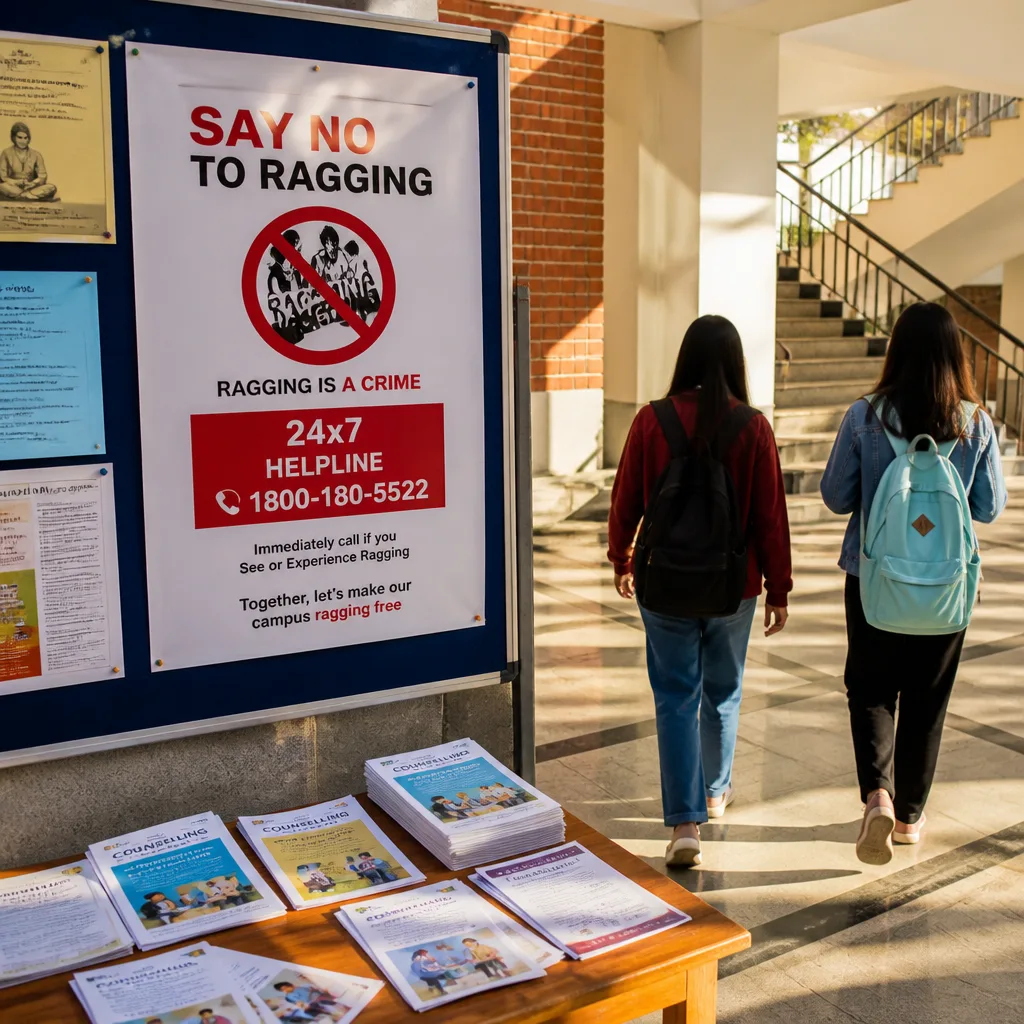
The UGC also flagged the need for visible public information about where students can seek help: institutions must prominently display the national 24x7 anti-ragging toll-free helpline number 1800-180-5522, maintain anti-ragging posters and publicity material, and ensure students and parents submit anti-ragging undertakings through the official anti-ragging portal.
"UGC advises all Higher Educational Institutions to ensure strict compliance with the UGC Regulations on Curbing the Menace of Ragging in Higher Educational Institutions, 2009," the commission posted on social media on 16 August 2026.
Measures institutions must adopt
The notice sets out several operational requirements for higher educational institutions (HEIs). These include:
- Constituting and ensuring the effective functioning of anti-ragging bodies as specified under the regulations.
- Conducting awareness, counselling, orientation and sensitisation programmes for students and staff to prevent ragging.
- Increasing vigilance in hostels and other identified vulnerable areas on campus.
- Protecting complainants and ensuring timely redressal of complaints.
- Registering a First Information Report (FIR) and initiating disciplinary action wherever a prima facie case of ragging is established.
Procedural expectations and reporting
The UGC has asked institutions to ensure the immediate registration of FIRs in cases where investigation reveals a prima facie instance of ragging. It has underlined that complainants must be protected and that institutions should report cases to the appropriate authorities in a timely manner.
Students and parents are required to submit the mandatory anti-ragging affidavits via the official anti-ragging portal. The commission has also urged HEIs to keep a record of awareness events, counselling sessions and other preventive initiatives to demonstrate compliance.
| Requirement | Action expected |
|---|---|
| Anti-ragging bodies | Constitute and ensure effective functioning |
| Helpline display | Show 24x7 number prominently: 1800-180-5522 |
| Complaint handling | Prompt redressal, protection of complainant, timely reporting |
| Legal action | Register FIR where prima facie ragging is found |
Context and likely impact
Ragging has long been recognised by courts and regulators as a serious menace affecting student welfare and the learning environment. The UGC's fresh reminder to institutions reiterates longstanding obligations, and seeks to push HEIs to strengthen on-ground implementation rather than rely solely on written policies.
For students and parents, the immediate practical implications are important: ensure that the anti-ragging undertaking is submitted through the official portal, note the national helpline number, and bring any complaints to campus anti-ragging committees or local police if necessary. For institutions, non-compliance can expose them to legal consequences under the Supreme Court judgment and related regulations.
Where to find official information
- UGC public notices and circulars are available on the commission's official website and verified social media handles; the UGC posted the advisory on 16 August 2026.
- The national anti-ragging helpline: 1800-180-5522.
- The anti-ragging undertaking is to be submitted via the official anti-ragging portal (as referenced by the UGC notice).
Higher education institutions should treat the advisory as mandatory guidance requiring immediate and documented action. Students and parents seeking clarification should contact their institute's dean/student welfare office or use the helpline for urgent assistance.
Sunita Deshmukh
AI Education Desk Editor