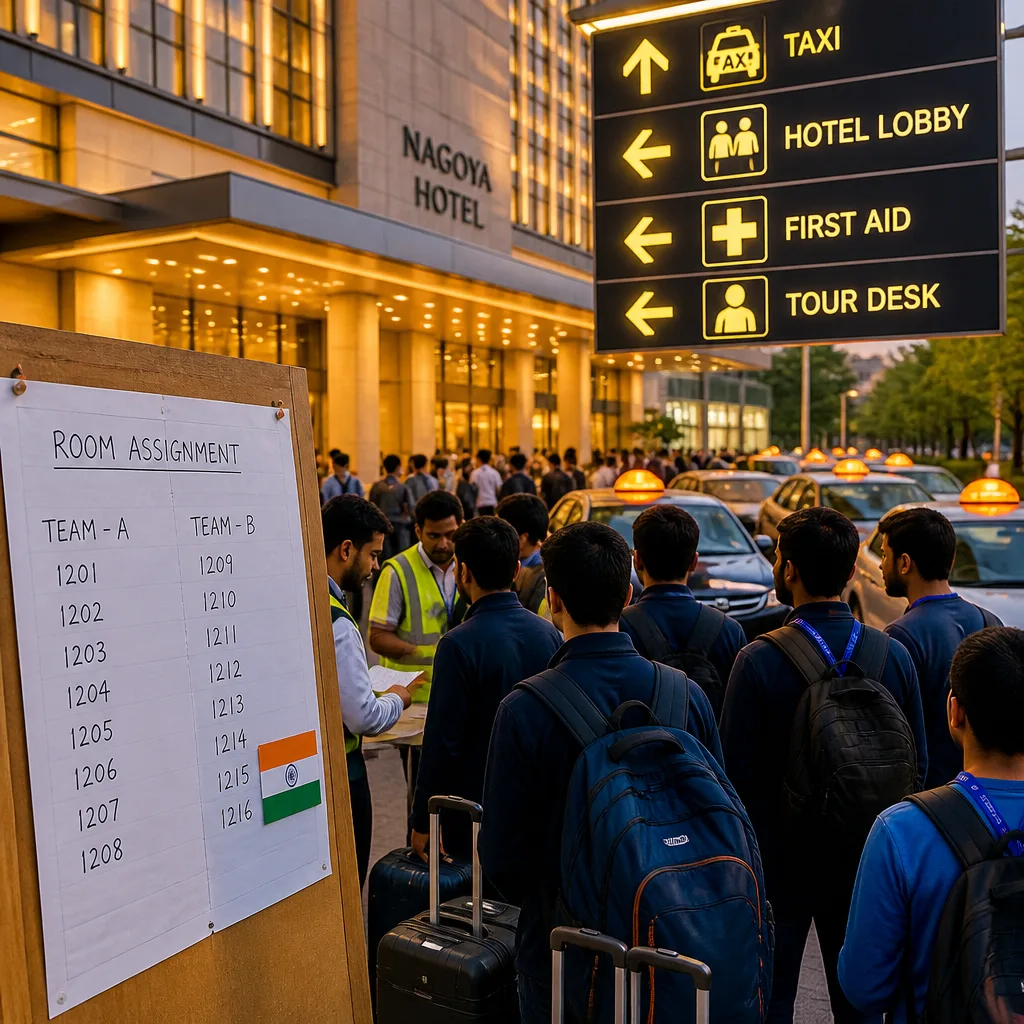
The Sports Ministry has moved to involve the Indian community in Nagoya as a contingency after persistent problems with athlete accommodation at the 20th Asian Games, officials said on Saturday. The step comes after several members of the Indian contingent reported delays in receiving lodging allocations and a number of athletes were shifted to hotels.
Three-tier contingency and diaspora outreach
According to an official tracking developments, the ministry has organised a three-layer response to manage the situation on the ground: airport-level coordination, sourcing additional hotel rooms and liaising with the Indian diaspora in Nagoya should shortages continue.
"Sports ministry has formed a three layer plan to deal with the issue. First layer involves officials at the airport; second involves booking more rooms, and the third involves liasoning with the Indian diaspora," said a source tracking developments.
The Indian Embassy in Tokyo and its Nagoya outreach have contacted an estimated 2,000 Indian families in the city to stand by for potential assistance, a senior sports ministry official said. Several families have reportedly offered support if the accommodation gap widens.
Immediate impact on Indian athletes
Officials said around 35 Indian athletes had already been relocated to hotels after failing to secure their designated accommodation from event organisers. The situation remains fluid as more athletes arrive according to their competition schedules, increasing pressure on available rooms.
The organisers have not provided a single central athletes' village. Instead, participants are being housed across a mix of container-style units, a docked cruise ship and various hotels as part of cost-cutting measures by the hosts. That approach has prompted criticism from several national teams and delegations.
Organisers and reactions
The Olympic Council of Asia (OCA) has rejected claims that arrangements are inadequate and suggested that social media posts are being used to politicise the issue. Nonetheless, delegation officials from multiple countries have voiced concerns about logistics and comfort for athletes.
For India, the sports ministry, Sports Authority of India (SAI) personnel and the Chef de Mission Sahdev Yadav are coordinating efforts on the ground. A source said the first layer of airport-based officials is trying to expedite arrivals and minimise time athletes spend without confirmed rooms.
Numbers at a glance
| Item | Figure |
|---|---|
| Indian athletes moved to hotels so far | 35 |
| Indian families contacted in Nagoya | ~2,000 |
| Approximate athletes expected at Games | 11,000 |
Operational challenges and next steps
Officials emphasised that the problem could intensify as contingents arrive in phases for their respective events. The ministry's contingency includes:
- Deployment of officials at arrival points to manage allocations;
- Booking additional hotel rooms through diplomatic and local contacts;
- Engaging the Indian expatriate community for short-term hosting if necessary.
Sources said the embassy's outreach has already yielded offers of assistance and that ministry teams are maintaining close contact with athletes and support staff to prioritise those competing soonest.
While the OCA has dismissed some criticism as politicisation, the immediate concern for India is to ensure athletes face minimal disruption to training and competition routines. Officials said contingency arrangements will be kept under review and adjusted as arrivals progress.
With no central athletes' village and accommodation dispersed across unconventional facilities, the effectiveness of the three-tier plan will be tested over the next few days as the bulk of competitions commence and more teams reach Nagoya.