Siliguri: The Siliguri District Hospital will be progressively converted into a fully paperless facility and its dialysis capacity doubled, the state Tourism Minister and Siliguri MLA Shankar Ghosh announced on Wednesday after a meeting of the Rogi Kalyan Samiti (Patient Welfare Committee).
Computerisation, e‑prescriptions and e‑billing
Ghosh said the hospital would introduce a fully computerised system in phases, covering e‑prescriptions, electronic reports and e‑billing. The step is intended to speed up preservation of patient records and make administrative and clinical processes more efficient, he added, according to the report.
The announcement comes against the backdrop of a significant rise in daily outpatient load; officials said the facility, originally designed for around 500 patients, now handles nearly 2,000 patients daily, stretching existing infrastructure.
Infrastructure redevelopment and space reallocation
As part of the proposed redevelopment, staff quarters located within hospital premises will be shifted to another location to free up space for healthcare infrastructure. Ghosh assured that arrangements will be made for staff on night duty even after relocation, the Millenium Post reported.
The Public Works Department (PWD) has been tasked with preparing a comprehensive master plan for the hospital. The plan will consider:
- Parking facilities
- A mother‑and‑child hub
- A smart Outpatient Department (OPD)
- Other infrastructure upgrades
Ghosh also said the paediatric department is already fully air‑conditioned. The government is seeking to reduce referrals from the district hospital to the medical college — currently around 8 per cent — with a target to bring that down to 5 per cent, the report added.
Capacity in dialysis and community health
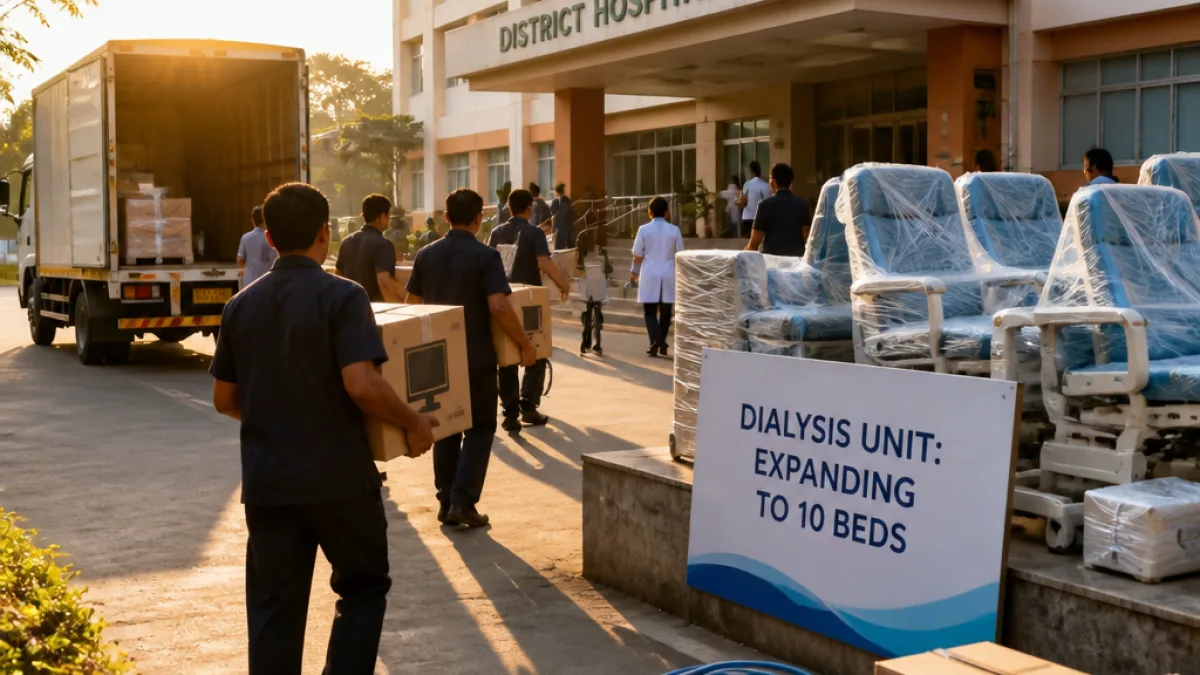
Specifically on renal care, the number of dialysis beds at Siliguri District Hospital will be increased from five to 10. In a related move to extend primary and secondary care, a 30‑bed Community Health Centre will be set up opposite the Matrisadan in Dabgram.
| Item | Current | Planned |
|---|---|---|
| Dialysis beds | 5 | 10 |
| Patient referrals to medical college | 8% | 5% (target) |
Renewable energy and primary care upgrades
The state government will also install solar panels at Urban Primary Health Centres as part of efforts to improve infrastructure and promote renewable energy in the health sector, the announcement said. These measures aim to bolster resilience and reduce recurring running costs of auxiliary health facilities.
"The hospital will introduce a fully computerised system in phases, including e‑prescriptions, e‑reports and e‑billing," Shankar Ghosh said after the Rogi Kalyan Samiti meeting, according to the report.
Officials said the Rogi Kalyan Samiti discussion reviewed present gaps in infrastructure and services; information and recommendations gathered will be forwarded to the state Health Department for incorporation into future planning and budgets.
The proposals reflect growing pressure on Siliguri's public health network as the city and adjoining areas continue to expand. Upgrading the district hospital — a primary referral point for North Bengal — is likely to relieve burden on tertiary centres and reduce travel time for many patients from adjacent blocks and towns.
Further details, including timelines and funding allocations for construction, relocation of staff quarters, and procurement of IT systems and dialysis equipment, were not disclosed in the report. The PWD‑prepared master plan will outline specific phasing and resource requirements.
Health advocates and patient groups in Siliguri have long called for better infrastructure and streamlined services at the district hospital. If implemented as announced, the computerisation drive and capacity expansion could mark a significant shift in how public healthcare is delivered in the city and the surrounding Dooars and Terai regions.