State outlines follow-up after Oct 2023 GLOF; scientists flagged 16‑17 high‑risk lakes
Sikkim Chief Minister Prem Singh Tamang on Wednesday said the state government has completed detailed assessments of several glacial lakes identified by scientists as potentially vulnerable to sudden breaches and is working with the Centre on mitigation measures. The announcement came as Tamang inaugurated the newly constructed Sikkim Guest House in Guwahati.
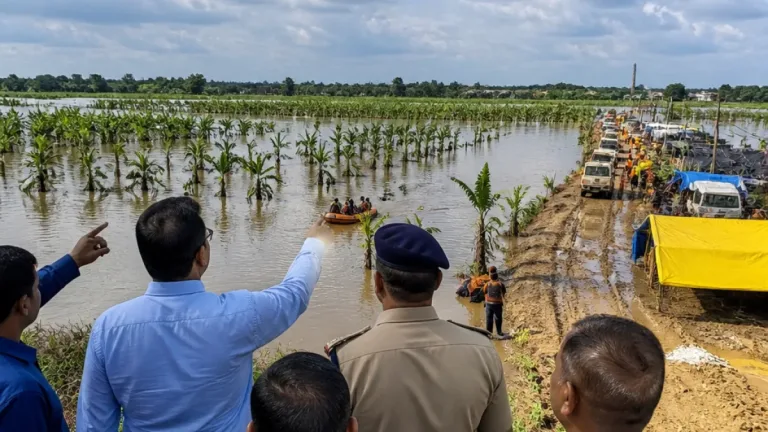
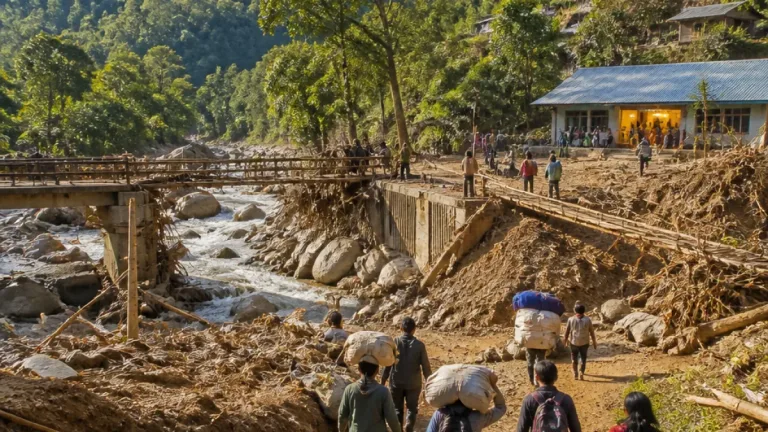
Officials and experts have previously warned that proglacial and supraglacial lakes — formed by meltwater collecting in depressions near or on glaciers — can fail suddenly, producing a glacial lake outburst flood (GLOF) capable of causing extensive downstream damage. Sikkim experienced such an event on October 3–4, 2023, when a GLOF claimed at least 60 lives and caused widespread destruction across multiple districts, including Mangan, Gangtok, Pakyong and Namchi.
What the state says it has done
Tamang said the state government carried out a detailed assessment of glacial lakes following the 2023 disaster and has focused on identifying the further steps required to prevent or minimise similar incidents in future. He said scientists have identified around 16–17 glacial lakes in Sikkim as potentially vulnerable.
"Detailed reports have already been prepared for 13 of these lakes and submitted to the Central government,"
According to the Chief Minister, meetings have been held with central authorities, and further assessment and mitigation work is underway. The National Disaster Management Authority (NDMA) and the Sikkim department of science and technology have identified 16 high‑risk proglacial and supraglacial lakes as potential sources of catastrophic GLOFs; 13 of these are in North Sikkim and 3 are in West Sikkim.
Risks, identification and administrative coordination
The identification of vulnerable lakes follows scientific surveys and hazard mapping by agencies tasked with monitoring cryospheric risks. Tamang said the state has worked closely with the Centre to manage the situation and address the risks that emerged after the disaster.
NDMA involvement signals that assessments and mitigation will be coordinated at the national level, typically involving technical studies, early warning systems, community preparedness, and structural or non‑structural mitigation where feasible. The Sikkim government’s submission of detailed reports for 13 lakes to the Centre is a step towards obtaining technical assistance and possibly funding for interventions.
Where the risky lakes are located
| Category | Number |
|---|---|
| High‑risk lakes identified in North Sikkim | 13 |
| High‑risk lakes identified in West Sikkim | 3 |
| Total identified as high‑risk | 16 (scientists cite 16–17 potentially vulnerable lakes) |
Practical implications for residents and authorities
- Authorities will need to prioritise site‑specific risk reduction measures based on the detailed reports submitted to the Centre.
- Communities downstream of identified lakes should expect increased monitoring and potential advisories or evacuation planning as agencies implement mitigation measures.
- Coordination between state departments, NDMA and scientific bodies is likely to guide decisions on early‑warning systems and structural interventions, where technically viable.
While the Chief Minister emphasised the assessments already submitted, he also said further assessment and mitigation work is continuing. The NDMA and the Sikkim department of science and technology remain central to technical evaluation and risk‑reduction planning.
The October 2023 collapse brought widespread attention to the hazards posed by rapidly changing Himalayan cryospheric conditions, and placed a spotlight on the need for sustained surveillance, community preparedness and intergovernmental coordination to reduce the human and economic toll from future GLOFs.
Further details on specific mitigation measures, timelines or funding sources were not provided during the Guwahati event.