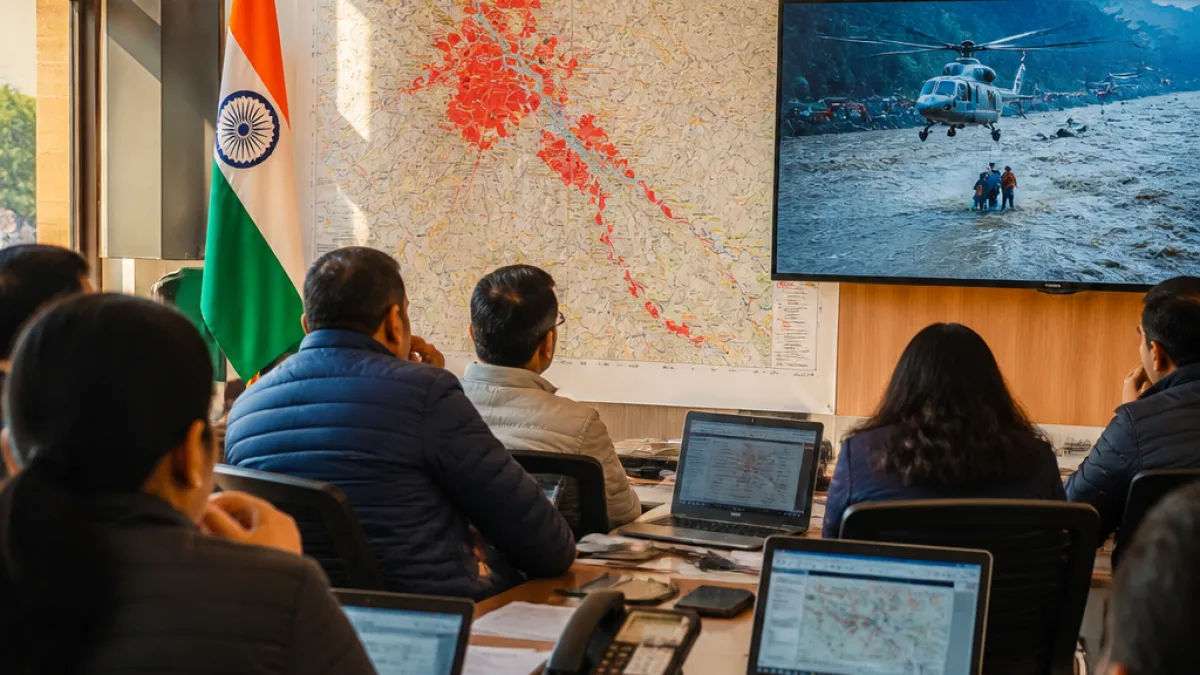
The Sikkim government has constituted a task force to trace and provide relief to people from the state who may be stranded, missing, injured or otherwise affected by the flash floods that struck central Nepal earlier this week, an official notification said on Friday.
Mandate and coordination
According to the notification cited by the state administration, the task force will be headed by Prabhakar Rai, Director of the Sikkim State Disaster Management Authority (SSDMA). Its primary responsibilities include collecting, compiling and verifying information on Sikkim residents reported missing, stranded, injured or deceased in the incident, the official said.
The body is mandated to establish and maintain communication with the families of affected residents and to facilitate the exchange of verified information about their status and whereabouts. It will coordinate with the Government of India, the Indian Embassy in Nepal and other relevant agencies to gather authoritative information and arrange necessary assistance.
"It will collect, compile and verify information regarding persons reported missing, stranded, injured, deceased or otherwise affected in the incident," the notification said.
Context: the disaster in Nepal
The flash floods were triggered by a glacial collapse near the Nepal–Tibet border, which caused an ice-rock avalanche and sent a torrent of water, mud and debris downstream through central Nepal. The deluge devastated towns and villages, sweeping away homes, vehicles, roads and bridges, and damaging hydropower projects.
As rescue and relief operations continued, Nepali authorities reported the death toll had risen to 469 and 1,545 people were injured or rescued from affected areas. Of those, 84 were undergoing treatment at various hospitals in Kathmandu. Security forces had deployed 7,451 personnel for search-and-rescue work, including 2,391 members of the Nepal Army, according to a Nepal Police statement.
What the task force will do
- Compile lists of persons from Sikkim reported missing, stranded, injured or deceased in the affected regions;
- Verify information through coordination with the Centre, the Indian Embassy in Kathmandu and other official agencies;
- Establish communication channels with families in Sikkim to share confirmed updates on status and whereabouts;
- Facilitate relief and necessary assistance to those identified as affected.
State-level response and responsibilities
The formation of the task force places the SSDMA at the centre of the state’s response to the cross-border disaster. By designating its director to lead the body, the government has aimed to ensure continuity with existing disaster-management mechanisms and to streamline liaison with central and diplomatic channels.
Officials said the task force will work in tandem with other departments and agencies to ensure that information passed to families is verified and that any assistance provided is coordinated with national efforts, reducing duplication and minimising the risk of misinformation during an evolving humanitarian situation.
Implications for families and residents
For families with members travelling in the affected areas of Nepal, the task force is intended as a single-point mechanism to receive verified information and to request facilitation of assistance. The SSDMA’s role in verification seeks to prevent the spread of unconfirmed reports while enabling authorities to prioritise resources for tracing and relief.
Given the scale of damage to infrastructure reported in Nepal — including swept-away roads and damaged bridges — the task force’s coordination with diplomatic and national agencies will be crucial for accessing up-to-date information on mobility, medical treatment and potential evacuation or repatriation needs.
Ongoing operations in Nepal
Search-and-rescue efforts were continuing at the time of the notification, with a large contingent of security personnel engaged in operations across multiple affected districts. The scale of the mobilisation underlines the severity of the event and the likelihood that information about displaced or missing persons will continue to emerge over coming days.
The Sikkim task force will therefore operate in a fluid environment, updating families and coordinating assistance as verified information becomes available from Nepali authorities and central government channels.
| Reported figure | Number |
|---|---|
| Deaths (Nepal) | 469 |
| Injured/rescued | 1,545 |
| Under treatment in Kathmandu | 84 |
| Security personnel deployed | 7,451 (including 2,391 Nepal Army) |
State authorities said the task force would continue to work with relevant agencies and families as efforts proceed to trace and assist residents from Sikkim affected by the disaster.