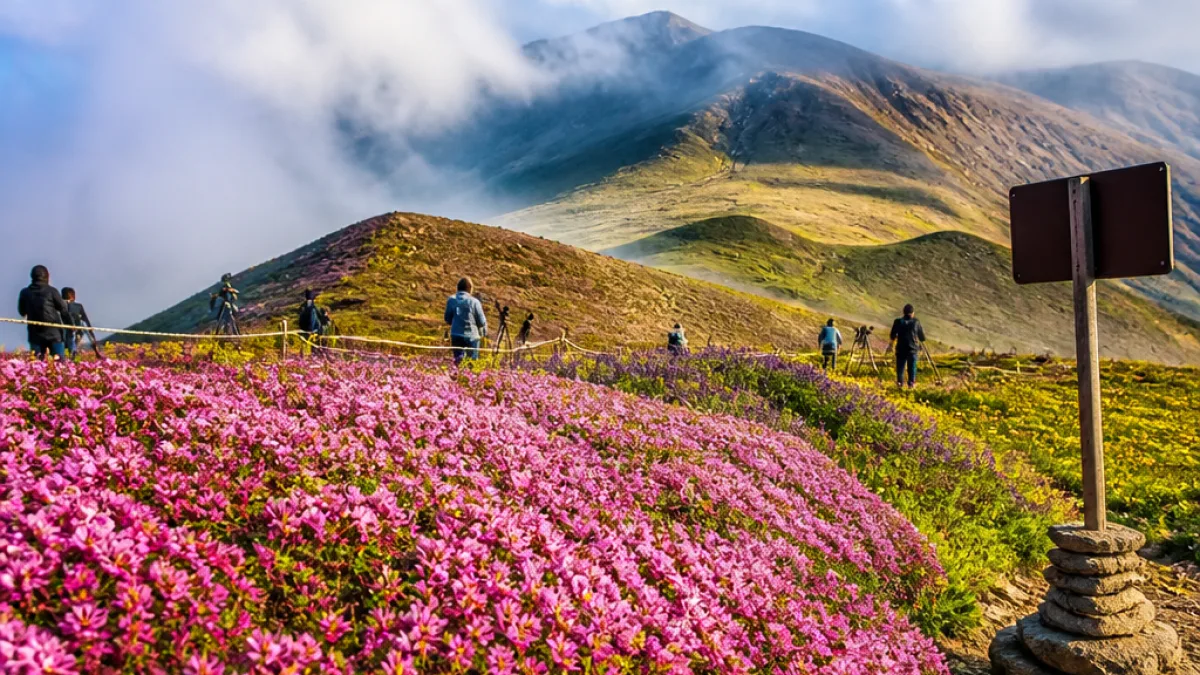
The high-altitude reaches of Kupup and Gnathang Valley in East Sikkim have been transformed by a seasonal burst of colour as rare Himalayan flowers carpet parts of the terrain, drawing tourists, photographers and social media content creators to the region.
Unusual sight in a snow-bound landscape
Situated at roughly 13,000–13,500 feet, the valleys are typically associated with snow and frigid conditions for much of the year. During a short spell when snowfall retreats, however, the high plateaus and slopes host a variety of alpine flora that bloom simultaneously, producing a striking pink and multi-hued display across the landscape.
The flowering has coincided with intermittent drizzle and mist over the area, enhancing the visual effect for visitors and photographers. The combination of low cloud, soft light and the bright colours of the flowers has been cited by visitors as particularly appealing for landscape and macro photography.
Brief season, big interest
Observers note that the spectacle is transient. With the return of winter and renewed snowfall, most of the floral cover is buried and the valleys revert to their usual snowbound appearance. Nonetheless, the short-lived bloom has already brought a noticeable increase in visitors from within Sikkim and from outside the state, according to local reports.
Tourists are arriving to witness and record the bloom in photographs and video for social media. The influx, though temporary, provides a seasonal boost to tourism-related activity in nearby settlements and to guides and drivers who operate in the area.
What visitors should know
- Altitude and conditions: Kupup and Gnathang sit at around 13,000–13,500 feet, where weather can change quickly and temperatures remain low compared with the plains.
- Short window: The flowering period is brief; the bloom ends when snowfall returns to the region.
- Visual conditions: Intermittent drizzle and mist during the bloom can enhance photos but also make terrain slippery and visibility variable.
Visitors should plan with the constraints of high-altitude travel in mind. While local transport and guides operate to facilitate access, travellers should be prepared for sudden weather changes and limited facilities on the high plateau.
Local impact and conservation angle
The seasonal transformation offers residents and businesses a fresh view of areas often thought of only for snow and cold. The brief surge in tourist interest can provide commercial opportunities for accommodation providers, drivers and guides in the broader region.
At the same time, high-altitude ecosystems and alpine flowers are fragile. The ephemeral nature of the bloom underscores the value of responsible visitation practices that minimise disturbance to vegetation and avoid trampling fragile plant communities.
| Feature | Detail |
|---|---|
| Location | Kupup and Gnathang Valley, East Sikkim |
| Altitude | Approximately 13,000–13,500 feet |
| Seasonal trait | Short-lived high-altitude flowering; ends with winter snowfall |
The bloom provides photographers and travellers an uncommon perspective on East Sikkim’s alpine landscape, juxtaposing floral colour against the region’s usual reputation for snow. For residents and businesses in the area, the event brings temporary footfall and visibility; for visitors, it offers an opportunity to experience and record a fleeting natural phenomenon.
Visitors considering travel to Kupup and Gnathang for the bloom are advised to check local access conditions, dress for cold and wet weather, and follow guidance from local authorities and guides to help preserve the fragile high-altitude environment.