After nearly four months of disruption, a key mountain road near the Taramchu Bridge in North Sikkim was reopened on August 29, reinstating the vital link between Lachen and other parts of Mangan district. The restored section is expected to relieve residents cut off by recurring natural calamities and to revive tourism-dependent incomes in the high-altitude region.
Reconstruction and reopening
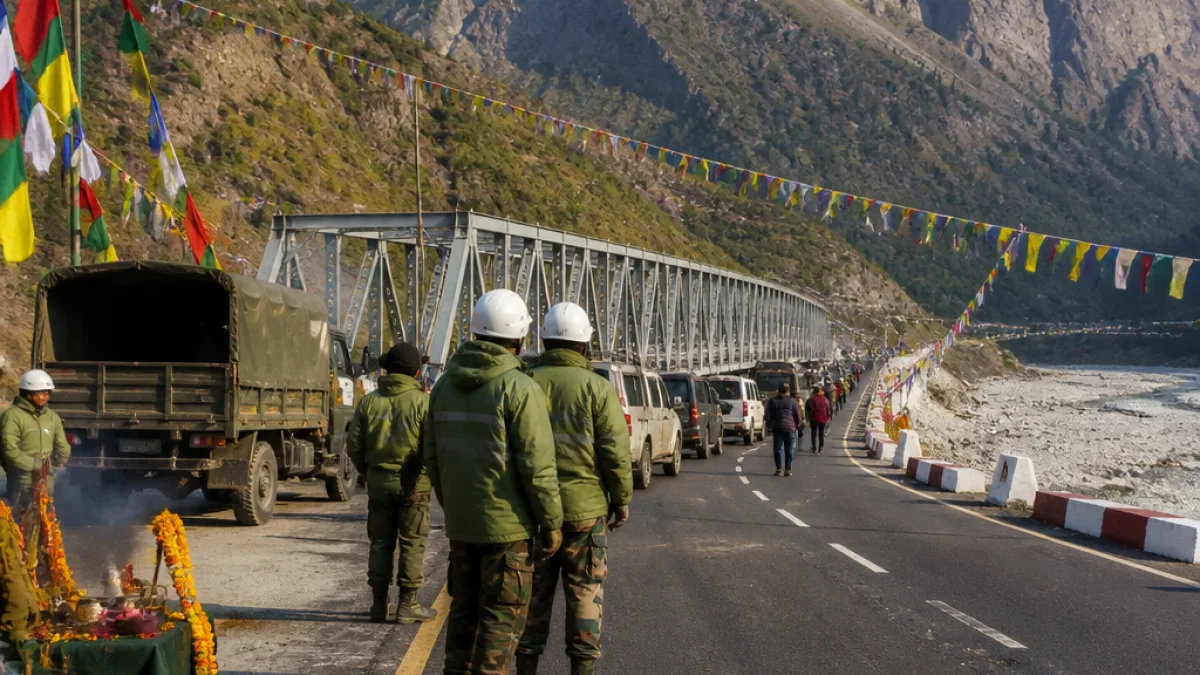
The reconstructed stretch was formally opened for public use by Samdup Lepcha, Minister for Social Welfare and the MLA representing the Lachen area, who performed a brief religious ritual at the site before inaugurating the road. Personnel of the General Reserve Engineer Force (GREF) carried out continuous restoration work for four months to repair the route after it was severed on April 5.
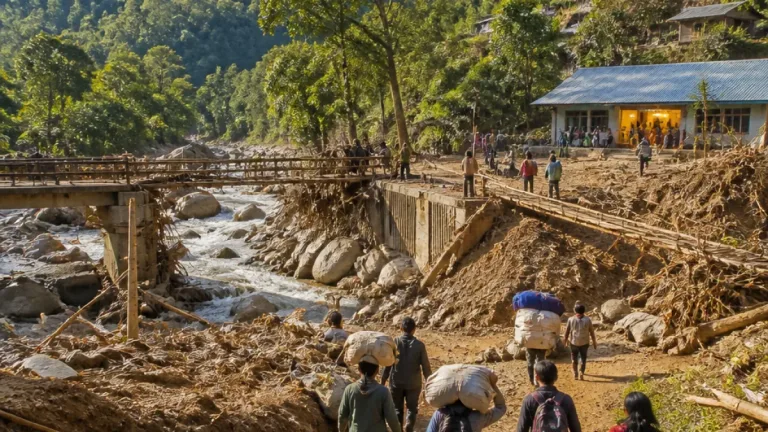
The Taramchu section serves as the primary lifeline connecting Lachen with Chungthang, Mangan and other towns in North Sikkim. Officials noted the route had previously been restored on February 26 this year following earlier damage, only to be cut off again in April.
Who was present and official response
Officials accompanying the minister at the reopening included Mangan District Collector Anant Jain, Chairman Sonam Gyatso Lachenpa of the State Medicinal Plants Board, and Project Swastik Chief Engineer Brigadier Amit Sakhre, together with senior GREF officers and local representatives. The minister thanked GREF personnel for their sustained effort and acknowledged the cooperation of the Lachen Dzomsa and the local community during reconstruction.
“The restoration was completed without any casualty,” the minister said, while assuring residents that the government would continue measures to maintain road links despite the area’s vulnerability to natural hazards.
Impact on residents and livelihoods
Authorities said the reopening will provide immediate relief to the local population, who had faced prolonged isolation in difficult terrain. The closure had disrupted movement and adversely affected livelihoods linked to tourism — including homestays, taxi operators and local guides — since Lachen acts as a gateway for visitors to high-altitude attractions such as Gurudongmar Lake and Chopta Valley.
- Duration of closure: Route cut on April 5; reopening on August 29 after four months of repair work.
- Restoration effort: Continuous operations by GREF with local cooperation.
- Previous repair: Road had been restored on February 26 before being damaged again in April.
Safety measures and future work
Officials indicated further safety and mitigation measures will be undertaken to bolster the route, which lies in a region prone to landslides, erosion and other natural hazards. While the minister emphasised the government’s resolve to maintain connectivity, the exact scope and timeline of additional works were not disclosed at the inauguration.
| Item | Detail |
|---|---|
| Location | Taramchu stretch, North Sikkim (near Taramchu Bridge) |
| Beneficiary towns | Lachen, Chungthang, Mangan and wider North Sikkim |
| Repair agency | General Reserve Engineer Force (GREF) |
| Key officiant | Samdup Lepcha, Minister for Social Welfare and Lachen MLA |
Local cooperation and challenges
Authorities credited the Lachen Dzomsa and residents for assisting the reconstruction effort. Work in the high Himalayan terrain remained challenging due to steep slopes, unstable ground and recurring natural events that have historically interrupted road links in North Sikkim.
The reopening is expected to restore not only everyday mobility for the local population but also seasonal economic activity tied to tourism. Officials have indicated continued monitoring and periodic maintenance will be necessary to reduce the risk of future closures, although no detailed plan or schedule for such interventions was released at the ceremony.
With the Taramchu link back in service, transport and tourism movement to the high-altitude attractions accessible from Lachen can resume, offering relief to operators and households dependent on visitor flows. Local authorities and engineering teams will need to balance immediate restoration with longer-term resilience measures to ensure sustained connectivity in the face of environmental risks.