State moves to bolster water safety after rising drowning toll
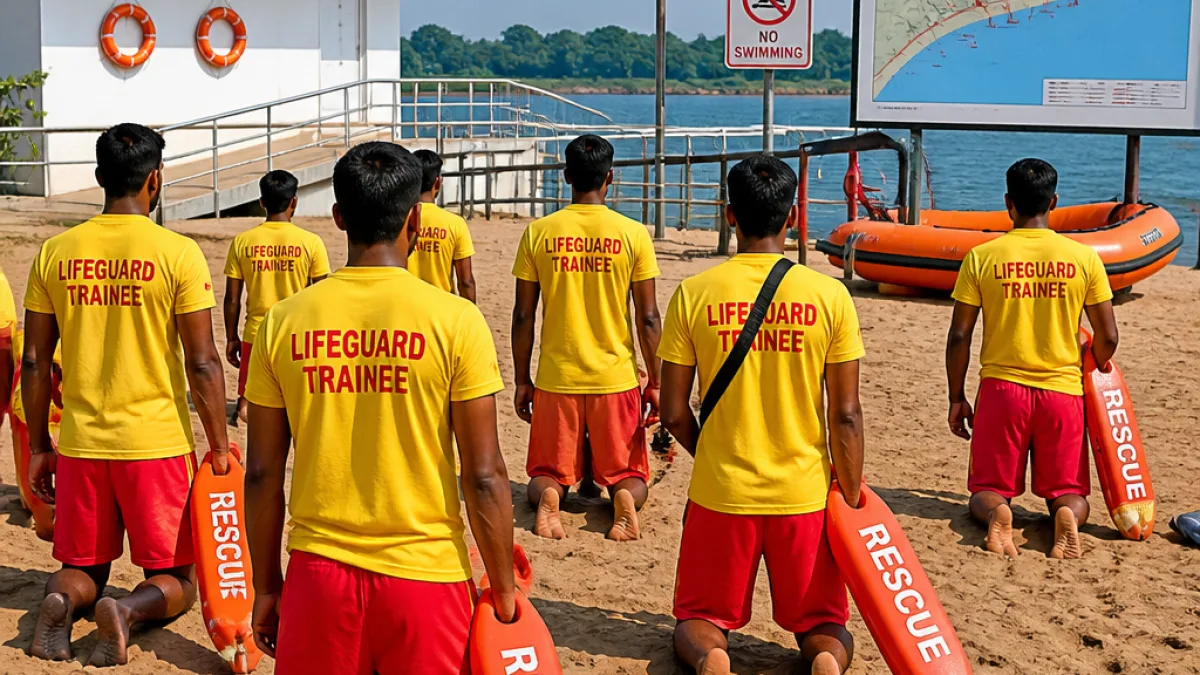
The Odisha government has identified 169 drowning-prone black spots across the State and plans to train and deploy 3,420 home guards as lifeguards at beaches, rivers, reservoirs, waterfalls and other public water bodies, officials said on Saturday. The initiative follows a joint assessment by the Odisha Fire and Emergency Services (F&ES) and the Tourism Department.
Inspector General of Police, Fire & Emergency Services, Umashankar Dash, said the selected home guards will undergo specialised lifesaving and water-rescue training at the Odisha State Watermanship and Lifeguard Institute (OSWALI) at Chandrabhaga. The deployment will be phased, with about 1,010 trained home guards earmarked for the first stage to cover high-footfall tourist spots.
Official directives and mapped priorities
Chief Secretary Anu Garg has directed authorities to scientifically map drowning hotspots and strengthen on-site safety measures. The administration plans to install warning signs, railings and barricades, and to cover open wells where necessary. The government is also exploring a statewide awareness campaign focusing on children and young people.
Basic lifeguarding skills will additionally be imparted to volunteers in gram panchayats to improve local-level emergency response, the officials said. The combined approach aims to marry trained personnel on-site with preventive infrastructure and community awareness.
Why the move: drowning statistics and risks
According to National Crime Records Bureau (NCRB) data cited by the administration, 10,383 people drowned in Odisha between 2020 and 2024. This figure includes 9,149 accidental deaths and 1,234 suicides, underscoring both an accidental-safety and a mental-health dimension to water-related fatalities.
| Item | Figure |
|---|---|
| Drowning-prone spots identified | 169 |
| Home guards to be trained | 3,420 |
| Home guards in first phase | 1,010 |
| Drownings (2020–2024, NCRB) | 10,383 |
Focus on tourist sites and public water bodies
The identified black spots include popular tourist destinations and public water bodies such as beaches, rivers, lakes, ponds, reservoirs and waterfalls. Officials said priority will be given to locations with heavy footfall during festivals and holiday seasons.
- Training hub: OSWALI, Chandrabhaga — water-rescue and lifesaving techniques.
- First phase deployment: 1,010 guards to cover busiest tourist and coastal points.
- Local capacity building: basic lifesaving skills to be taught in gram panchayats.
Practical public guidance and preparedness
The decision to station trained home guards complements engineering and community measures. Residents and visitors should note practical precautions: avoid entering water bodies alone, heed warning signs and barricades, supervise children near water at all times, and keep emergency numbers handy. In coastal and riverine areas, awareness of changing tides, currents and sudden depth changes is critical.
Community-level first response will be strengthened through lifeguard training of local volunteers. This is intended to reduce response times in remote areas where professional rescue teams may take longer to arrive.
Next steps and implementation challenges
Officials said mapping of hotspots will be conducted scientifically to finalise deployment schedules. Key implementation tasks include completion of OSWALI training cycles, procurement of rescue equipment, erection of safety infrastructure and coordination with local bodies for awareness drives.
While the plan addresses on-site human resources and preventive structures, long-term success will depend on sustained training, maintenance of safety installations and community acceptance. Authorities have been urged to maintain an updated, publicly accessible map of high-risk locations and to publish periodic progress reports on deployments.
The initiative represents a significant step towards reducing water-related fatalities in Odisha, combining trained personnel, preventive measures and local engagement to address a persistent public-safety challenge.