Local shelter offers free accommodation, food and transport for long-term patients
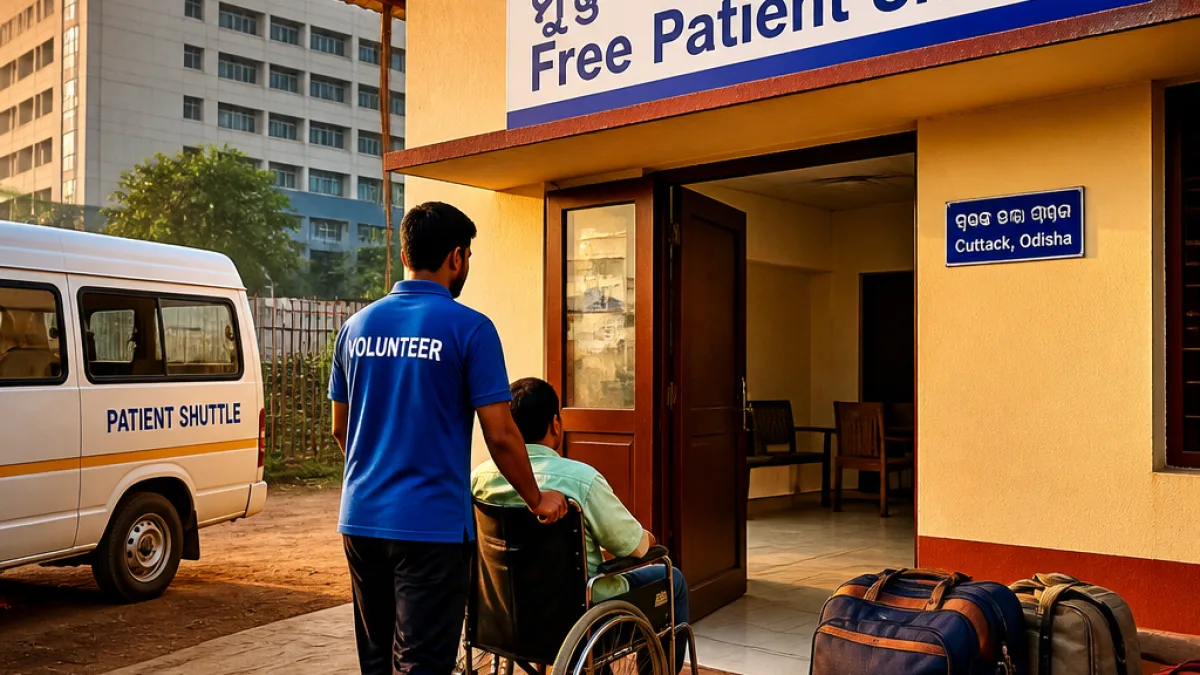
Cuttack: For patients and attendants who travel from distant districts for prolonged treatment at SCB Medical College and Hospital, daily costs of accommodation, food and travel can become an overwhelming barrier to care. According to a report by ETV Bharat, 39-year-old Bibhuti Ray has established a shelter in Cuttack that provides free lodging, meals, transport and basic caregiving support to such families.
The free facility serves people visiting SCB Medical College and Hospital for recurring therapies — including those requiring frequent dialysis or extended cancer care — and also accepts unidentified or abandoned patients. The shelter arranges home-based care where necessary and, on occasion, brings physiotherapists to the hospital for patients who need rehabilitation support, the report said.
- Free accommodation for patients and their attendants arriving from far districts;
- Meals provided at no cost to residents of the shelter;
- Transport using the owner’s vehicle to take patients to SCB Medical College and Hospital;
- Care coordination including arranging physiotherapists and basic home-based care.
Once an autorickshaw driver, Bibhuti reportedly encountered numerous families struggling in Cuttack and decided to open his home and resources to those in need. The shelter is intended to cut the non-medical costs that often force families to delay or abandon treatment.
“He provides free accommodation and meals to helpless patients who visit SCB Medical College and Hospital for prolonged or recurring treatment,”
The shelter’s services are particularly crucial for patients with advanced kidney disease who need dialysis at frequent intervals. Repeated travel from remote districts to Cuttack can be logistically difficult and expensive; some patients are reported to be unable to afford vehicle fare. By allowing them to stay locally and providing transport to the hospital, the shelter reduces both financial strain and the risk of missed treatments.
Practical value and local context
SCB Medical College and Hospital is a referral centre for many serious illnesses across Odisha. While state-run and charitable hospitals provide medical care, ancillary costs such as accommodation, food and transport remain major obstacles for poor households. The shelter run by Bibhuti supplements existing support networks by focusing on non-medical needs that influence treatment continuity.
| Service | Benefit to patients/attendants |
|---|---|
| Accommodation | Reduces nightly lodging costs; enables regular access to hospital |
| Meals | Lowers food expenditure and nutritional stress during long treatments |
| Transport | Ensures timely arrival for dialysis, chemotherapy and follow-ups |
| Basic care coordination | Facilitates rehabilitation and continuity after discharge |
Local residents and well-wishers sometimes step in to support such private initiatives, but the sustainability of an informal shelter depends on volunteers and the proprietor’s resources. The report notes that Bibhuti uses his own vehicle to ferry patients to hospital appointments and that he still provides care despite limited means.
Advice for families coming to Cuttack for treatment
Families planning long-term treatment at SCB or other city hospitals should consider the following practical steps:
- Contact hospital social work or patient support services at SCB in advance to learn about official accommodation options and subsidies;
- Ask hospital staff for details of registered charitable shelters and NGOs that assist long-term patients;
- Carry identification and medical documents to facilitate admission to charitable schemes or government welfare assistance;
- Maintain a local contact number and keep essentials for frequent outpatient visits to minimise repeat travel costs.
The ETV Bharat report highlights one individual’s effort to fill gaps left by institutional systems. While his shelter eases the burden for some families, broader, organised support from hospitals, local NGOs and government schemes remains essential to ensure that poverty does not prevent access to continuous care.