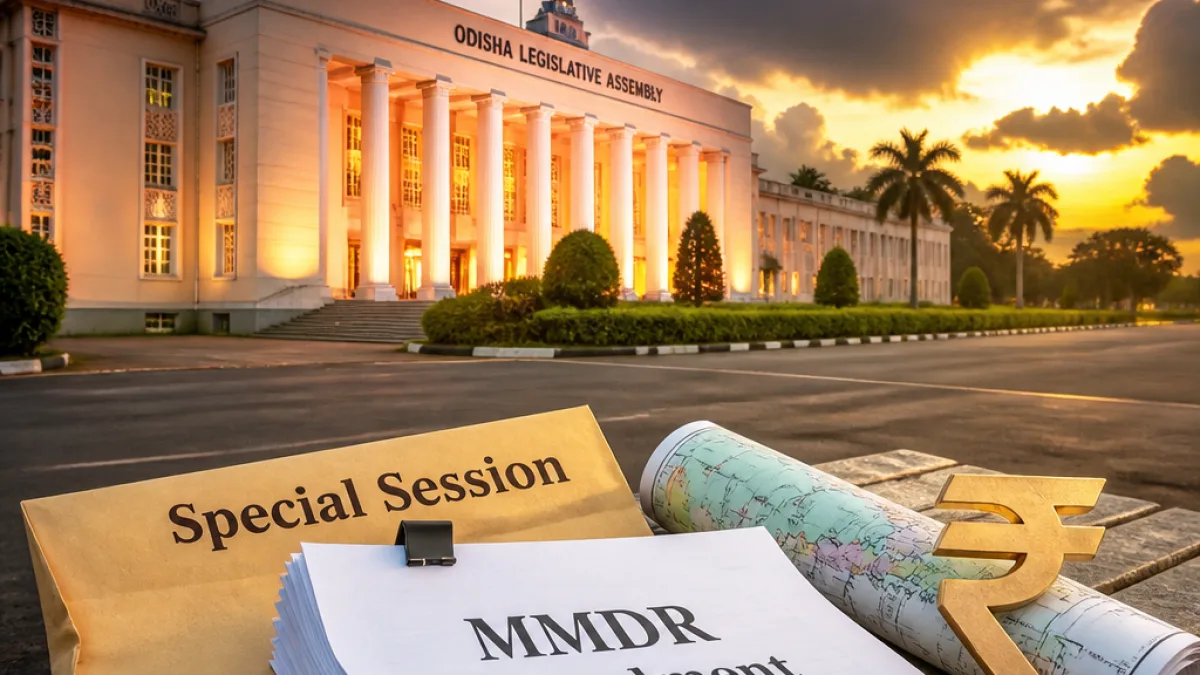
Leader of Opposition Naveen Patnaik on Sunday urged Chief Minister Mohan Charan Majhi to convene a special session of the Odisha Legislative Assembly and move a unanimous resolution seeking repeal of the Mines and Minerals (Development and Regulation) Amendment Act, 2026, arguing the amendment has eroded the state’s constitutional right to levy taxes on mineral wealth and mineral-bearing lands.
Claim of large revenue impact
In a letter dated September 20, Patnaik reminded the Chief Minister that Odisha had pursued a prolonged legal defence to protect its power to tax minerals. He referred to a recent case heard by a nine-judge Constitution Bench of the Supreme Court that, according to him, had upheld the state's position and opened the way for recovery of past dues and a minimum recurring annual revenue of nearly ₹12,000 crore.
Patnaik said the MMDR Amendment, which was passed by Parliament and received the President's assent in August 2026, “has taken away Odisha’s constitutional right to levy taxes on its mineral wealth,” and therefore must be challenged through legislative action at the state level.
He called on the state government to seek repeal of the amendment and reaffirm the constitutional rights that he said were upheld by the Supreme Court.
Parliamentary timeline
The Mines and Minerals (Development and Regulation) Amendment Bill, 2026 was passed by the Lok Sabha on 12 August 2026 and by the Rajya Sabha on 13 August 2026, before receiving presidential assent on 17 August 2026.
| Event | Date |
|---|---|
| Lok Sabha passage | 12 August 2026 |
| Rajya Sabha passage | 13 August 2026 |
| Presidential assent | 17 August 2026 |
Political appeal and allegations
Patnaik asked Majhi, as Leader of the House, to call the special session and urged the Assembly to adopt a unanimous resolution demanding repeal of the amendment and restoration of state fiscal powers over minerals. He also said the Biju Janata Dal would back the government in pursuing such a resolution.
In his letter, Patnaik alleged that 20 BJP MPs supported the MMDR Amendment — a claim he made in urging state action. The correspondence frames the issue as one with major fiscal consequences for Odisha's development plans and prospects for employment generation.
Implications for Odisha
If the figures cited by Patnaik were realised, the potential recurring revenue would have a material impact on state finances. The claim of recoverable past dues and additional annual receipts is raised as the principal argument for immediate legislative and political pushback against the amendment.
- Patnaik wants a special Assembly session to pass a unanimous resolution seeking repeal.
- He cites a Supreme Court decision by a nine-judge Constitution Bench in support of Odisha's right to tax minerals.
- He warns the MMDR Amendment undermines those rights and could deprive the state of nearly ₹12,000 crore annually.
What this means for residents and administration
The dispute centres on the constitutional allocation of fiscal powers between the Centre and states in the context of mineral taxation. For residents, any change in the state’s mineral revenue base may affect long-term funding for public services and infrastructure projects. For the administration, the matter presents choices between legal recourse, political protest and legislative measures in the Assembly.
Citizens are advised to monitor official state communications for further action and to follow statements from the Chief Minister’s Office and the Revenue and Mines departments for authoritative guidance. Any measures arising from the Assembly — including resolutions, further legal challenges or policy shifts — will be communicated through government channels.
The letter from Naveen Patnaik reiterates a wider national debate about mineral governance and federal fiscal rights. The Odisha government has not, as of the time of this report, issued a formal response to the LoP’s request; the next steps will determine whether the issue is taken up in the Assembly and if there will be coordinated political or legal action to contest the central amendment.
Further reporting will follow official reactions from the Chief Minister’s office and the departments concerned.