Kolkata: The Solar Energy Corporation of India (SECI) has invited Expressions of Interest (EoIs) for geothermal resource assessment, exploration and potential development of a geothermal power plant in the Andaman and Nicobar Islands, a move that could reduce the archipelago's reliance on diesel-based electricity and supply baseload renewable power.
Why the islands are being targeted
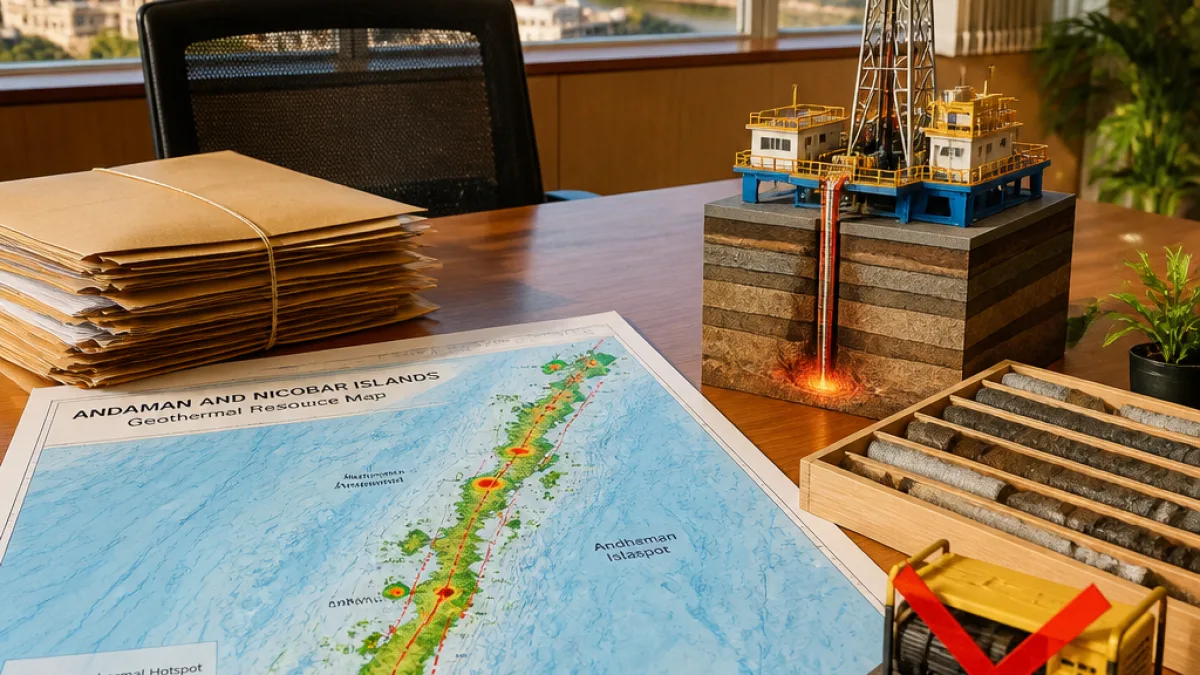
The decision follows geological indications that the Andaman and Nicobar Islands are among India’s important geothermal provinces, as identified by the Geological Survey of India (GSI). The island chain lies along a tectonic boundary where the Indian Plate subducts beneath the Burma Plate, producing notable seismic activity and hosting South Asia’s only active volcano at Barren Island.
Geothermal energy harnesses heat from beneath the Earth’s surface — naturally occurring hot water and steam — to produce electricity. Unlike solar and wind, geothermal can provide continuous, weather-independent generation, which makes it attractive as a potential baseload renewable for remote island grids that now rely heavily on fuel imports.
Scope of the SECI invitation
SECI’s call for EoIs seeks participation from a range of players with expertise in the sector. The agency is looking to engage geothermal developers, drilling agencies, technology providers, research institutions and integrated energy companies to carry out phased work starting with detailed resource assessment and exploration.
- Phase 1: resource assessment and exploration (as per SECI’s EoI).
- Subsequent phases: appraisal drilling, feasibility studies and potential development of a geothermal power plant, subject to findings and clearances.
Policy and environmental context
The initiative forms part of efforts to implement the National Policy on Geothermal Energy, notified by the Ministry of New and Renewable Energy in September 2025. The policy provides a framework for identifying and developing geothermal resources across India and encourages participation by both public and private stakeholders.
Officials have highlighted the ecological sensitivity of the Andaman and Nicobar Islands as a factor guiding the approach. Large conventional power projects are constrained by environmental considerations on the islands, prompting policymakers to evaluate cleaner and less intrusive alternatives.
Potential benefits and constraints
Harnessing geothermal resources could bring several advantages for the UT:
- Reduced diesel imports: A portion of current generation could be substituted with locally generated geothermal power, lowering fuel transportation and storage needs.
- Round‑the‑clock supply: Geothermal plants can operate continuously, helping stabilise the local grid and support critical services.
- Lower emissions: Compared with diesel generators, geothermal electricity has much smaller greenhouse‑gas emissions.
However, the islands’ complex geology and seismic activity also pose operational and environmental challenges. Detailed exploration and risk assessment will be necessary to determine the commercial viability of any plant and to identify safeguards for fragile ecosystems and communities.
Who is being invited and what comes next
SECI is inviting qualified agencies and companies with relevant technical capability to respond to the EoI. The agency expects collaboration among drilling specialists, geothermal technology providers and research bodies to complete the initial investigative phases.
| Stakeholders sought | Role |
|---|---|
| Geothermal developers | Project development and financing |
| Drilling agencies | Exploration and appraisal drilling |
| Research institutions | Resource assessment, environmental studies |
SECI’s EoI starts a process rather than committing to plant construction. The immediate objective is to determine whether the islands’ sub‑surface heat can be commercially harnessed. Any later stages would require additional technical studies, regulatory clearances and environmental impact assessments.
Local implications
For residents and administrators, a locally available, low‑carbon source of baseload power could ease the high cost and logistical burden of transporting diesel to the islands. It may also reduce blackouts and support development of services that depend on stable electricity supply. At the same time, authorities will need to balance exploration activities with conservation priorities and disaster‑risk management in a geologically active zone.
As the process unfolds, SECI’s assessments and any subsequent pilot projects will be watched closely by policymakers and local stakeholders seeking sustainable, reliable energy solutions for the Andaman and Nicobar Islands.