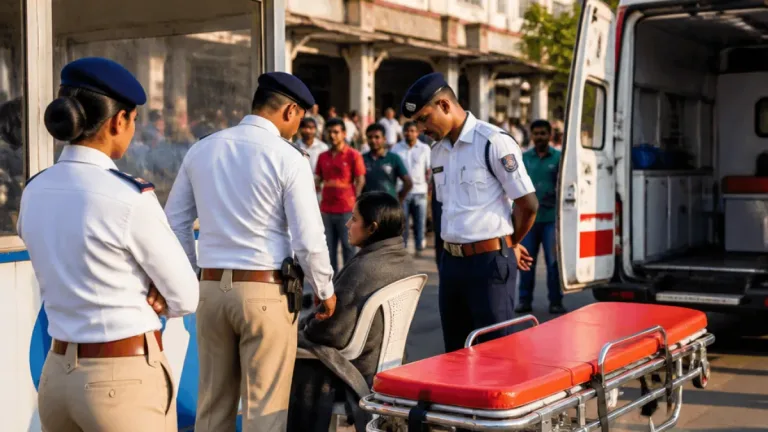
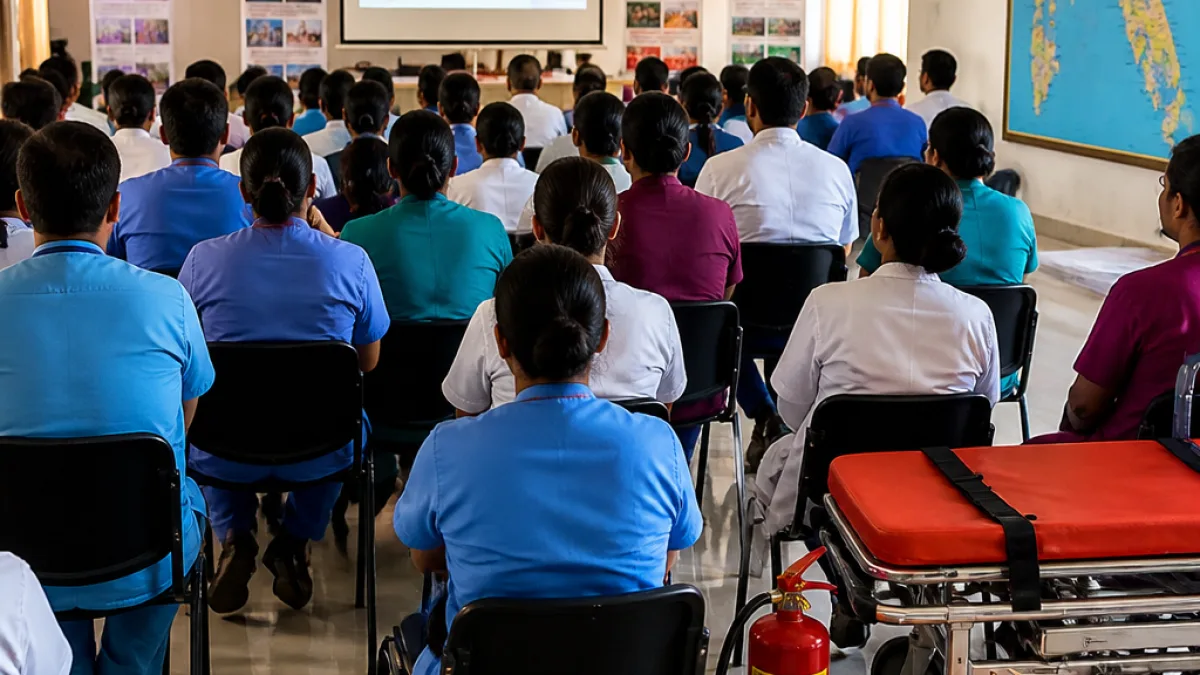
Sri Vijaya Puram, Aug. 17: The Andaman and Nicobar Islands Institute of Medical Sciences (ANIIMS), with technical support from the National Institute of Disaster Management (NIDM), Ministry of Home Affairs, on Monday launched a two-day training on strengthening hospital preparedness, safety and emergency response.
Focus on practical resilience across health facilities
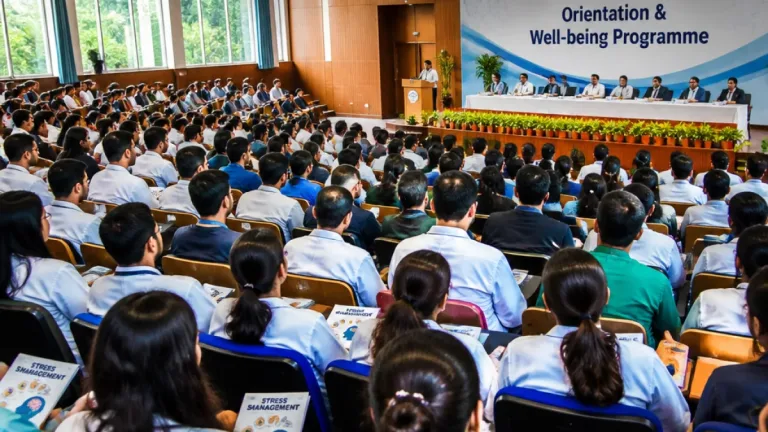
The programme, titled “Strengthening Hospital Preparedness, Safety and Emergency Response: From Planning to Action”, is being held on 17 and 18 August 2026 at the Conference Hall of Tagore Government College of Education, Sri Vijaya Puram. It was inaugurated by Shri Madhup Vyas, IAS, Executive Director, NIDM, in the presence of Dr. Sachin Shinde, IAS, Commissioner-cum-Secretary (Health), A&N Administration, and ANIIMS Director Dr. Mukesh Tripathi.
Speakers and organisers emphasised that hospitals are a critical pillar in disaster management, particularly for the Andaman & Nicobar Islands which face a range of hazards. The training aims to bolster both planning and on-ground capability so health services can continue during emergencies.
Training components and target participants
The two-day event has enrolled local healthcare professionals, including doctors, nursing officers and faculty. According to the organisers, sessions will cover a mix of theoretical and practical topics intended to familiarise participants with real-world emergency operations.
- Hospital disaster planning and drills
- Continuity of critical services
- Climate and health linkages
- Public health emergency management
- Psychosocial care and mental health
- Fire safety and infrastructure resilience
Shri Madhup Vyas highlighted the need to regularly test disaster plans through drills and to ensure effective communication across hospital departments and with external agencies. He also advocated for inclusive preparedness measures that protect vulnerable populations.
“From Planning to Action,” he underscored the need for hospitals to regularly test disaster management plans through drills, ensure effective communication and continuity of critical services, and adopt inclusive preparedness that protects vulnerable communities.
Administrative support and expected outcomes
Dr. Sachin Shinde spoke on strengthening institutional response capacity across hospitals and healthcare institutions to manage disasters, emergencies and other critical situations. ANIIMS Director Dr. Mukesh Tripathi thanked participants and expressed confidence that the training would improve coordinated delivery of health services during crises.
Organisers said the programme will emphasise practical steps that institutions can adopt immediately, including revision of standard operating procedures, establishment of internal communication protocols and scheduling of regular mock drills.
Why this matters for the islands
The Andaman & Nicobar Islands are exposed to multiple hazards — cyclones, seismic activity, and climate-related events — that can disrupt transport, utilities and health services. Strengthening hospital preparedness aims to reduce mortality and morbidity during such incidents by ensuring treatment capacity, timely referrals and continuity of essential care.
Participants will receive guidance on integrating disaster-risk reduction into routine hospital management and on coordinating with district and island-level disaster management authorities.
| Item | Details |
|---|---|
| Dates | 17–18 August 2026 |
| Venue | Conference Hall, Tagore Government College of Education, Sri Vijaya Puram |
| Organisers | ANIIMS (host) with technical support from NIDM, Ministry of Home Affairs |
| Participants | Doctors, faculty and nursing officers from local healthcare institutions |
Officials indicated that the training is part of broader NIDM efforts to build resilience in the health sector through capacity building on hospital preparedness, climate and health, public health emergencies, psychosocial care, and fire safety.
ANIIMS and NIDM did not announce immediate follow-up dates, but the emphasis on drills and operationalisation suggests local facilities may be expected to implement revised plans and exercises in the coming months. The training provides an opportunity for frontline staff to clarify roles and strengthen coordination that would be needed if a major incident occurs.
Health administrators and hospital managers in the islands will closely watch whether the learning from these sessions translates into updated protocols, regular drills and improved resource allocation — measures that can directly affect patient outcomes when disasters strike.