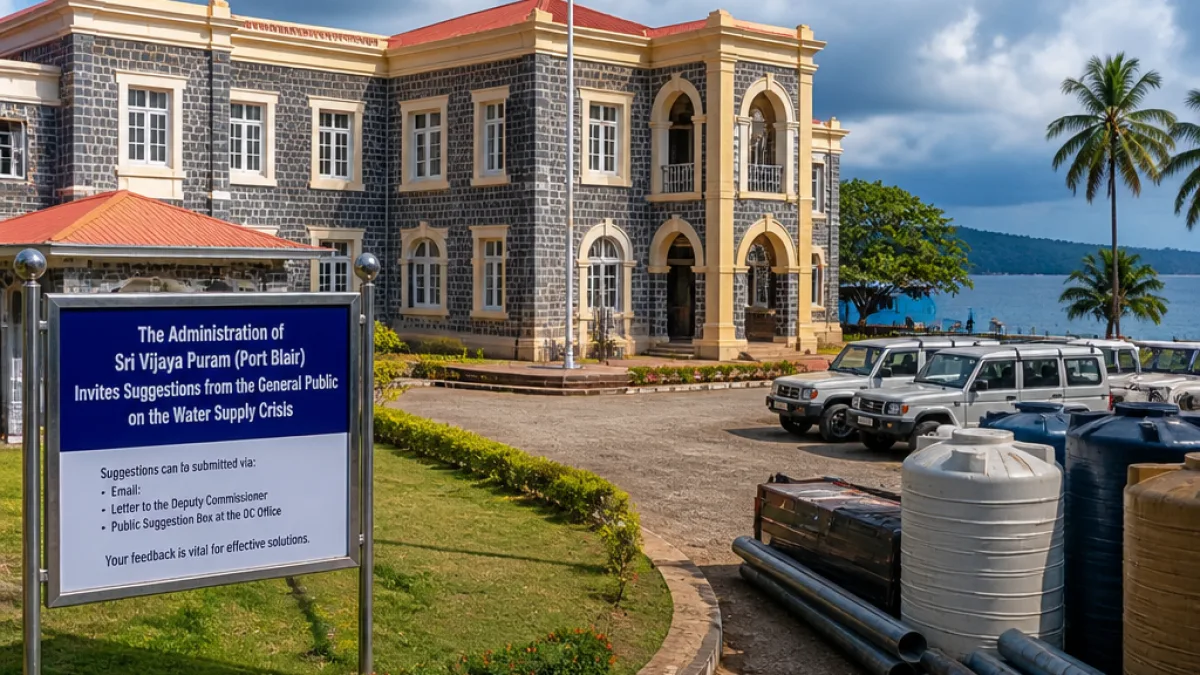
Port Blair (Sri Vijaya Puram): The Calcutta High Court, Circuit Bench at Sri Vijaya Puram, has invited suggestions from the public to address the persistent shortage of potable water in the Andaman and Nicobar Islands despite the territory receiving an average annual rainfall of about 3,100 mm.
Judicial direction and the expert committee
The directive, issued in WPA(P)/2/2026, Sandeep Singh v. Union of India & Others by order dated 03.08.2026, instructs that suggestions be solicited from members of the public and stakeholders on feasible and sustainable measures to meet potable water needs in the Isles. In response, the Andaman and Nicobar Administration has constituted an Expert Committee to examine the problem and recommend remedial steps.
The committee brings together representatives and specialists from several central and local institutions tasked with water, groundwater and ocean technology issues. The source lists the membership as including the Administration, the Geological Survey of India (GSI), the Central Ground Water Board (CGWB), the National Institute of Hydrology (NIH), IIT Kharagpur, the National Institute of Ocean Technology (NIOT) and the Andaman and Nicobar Pollution Control Committee (ANPCC).
Public participation and scope
The High Court has made clear that the petitioner and "all stakeholders" are entitled to submit practical suggestions, including examples of approaches used elsewhere in the world where water scarcity has been successfully addressed. Suggestions may be submitted in written or electronic form and will be placed before the Expert Committee for consideration.
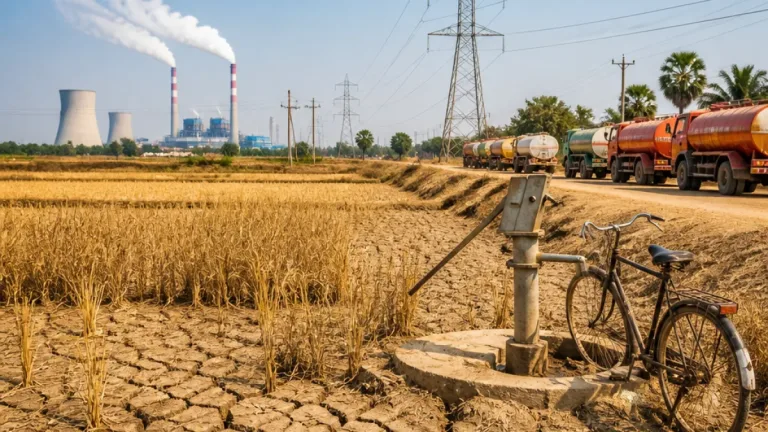
The order highlights a familiar paradox for the territory: high average rainfall on paper but recurring shortages of potable water for residents and communities. The court’s invitation signals interest in a range of responses — from technical and infrastructural measures to institutional and management reforms.
What the Expert Committee's membership suggests
The combination of agencies named to the committee spans geosciences, groundwater assessment, hydrology, engineering and ocean technology. That mix indicates the administration and the court expect the committee to examine multiple dimensions of the problem, including:
- Groundwater availability, recharge and quality (CGWB, GSI)
- Surface and rainfall-runoff management and storage (NIH, Administration)
- Technical solutions such as desalination or coastal-sourced options (NIOT)
- Academic and engineering assessments, including design and modelling (IIT Kharagpur)
- Environmental safeguards and pollution control (ANPCC)
While the order does not prescribe specific remedies, the institutional mix points to a comprehensive review rather than a single technical fix.
Background and local impact
Communities across the Andaman and Nicobar Islands have periodically faced shortages of potable water, particularly during dry spells and when infrastructure or storage is inadequate. The High Court’s move reflects mounting public concern and litigation seeking systemic solutions to ensure safe and reliable water supply for households, health facilities and economic activities.
For island administrations, common challenges include limited natural freshwater reserves, variable rainfall distribution, contamination risks from saltwater intrusion, logistical constraints in extending piped supply across remote islands, and the costs and maintenance demands of alternatives such as desalination plants.
| Aspect | Agencies likely to address it |
|---|---|
| Groundwater assessment and recharge | GSI, CGWB |
| Hydrological modelling and storage design | NIH, Administration |
| Desalination and ocean-based options | NIOT, IIT Kharagpur |
| Pollution control and environmental safeguards | ANPCC |
Next steps and what residents should know
The High Court’s order invites submissions that may shape the committee’s recommendations. Residents, civil society groups, technical experts and institutions have been asked to send concise proposals with contact details. The suggestions received will be placed before the Expert Committee for consideration.
Authorities have not published a detailed timeline in the material released so far beyond the court order and constitution of the committee. The committee’s composition suggests its report will likely cover assessment of current supplies, short‑ and medium‑term operational measures, and longer‑term infrastructure and policy interventions.
Given the territory’s geographic and environmental context, any recommended solutions will need to balance technical effectiveness, environmental impact and costs. The court’s invitation for examples from other jurisdictions underlines the search for options that are both proven elsewhere and adaptable to island conditions.
Key immediate points: the Calcutta High Court’s Port Blair bench has formally solicited public suggestions in WPA(P)/2/2026; an inter‑institutional Expert Committee has been formed; and submissions will be considered by that committee as it examines potable water scarcity across the Andaman and Nicobar Islands.