ICAR‑CIARI convenes stakeholders to bolster aquatic animal health in Andaman & Nicobar Islands
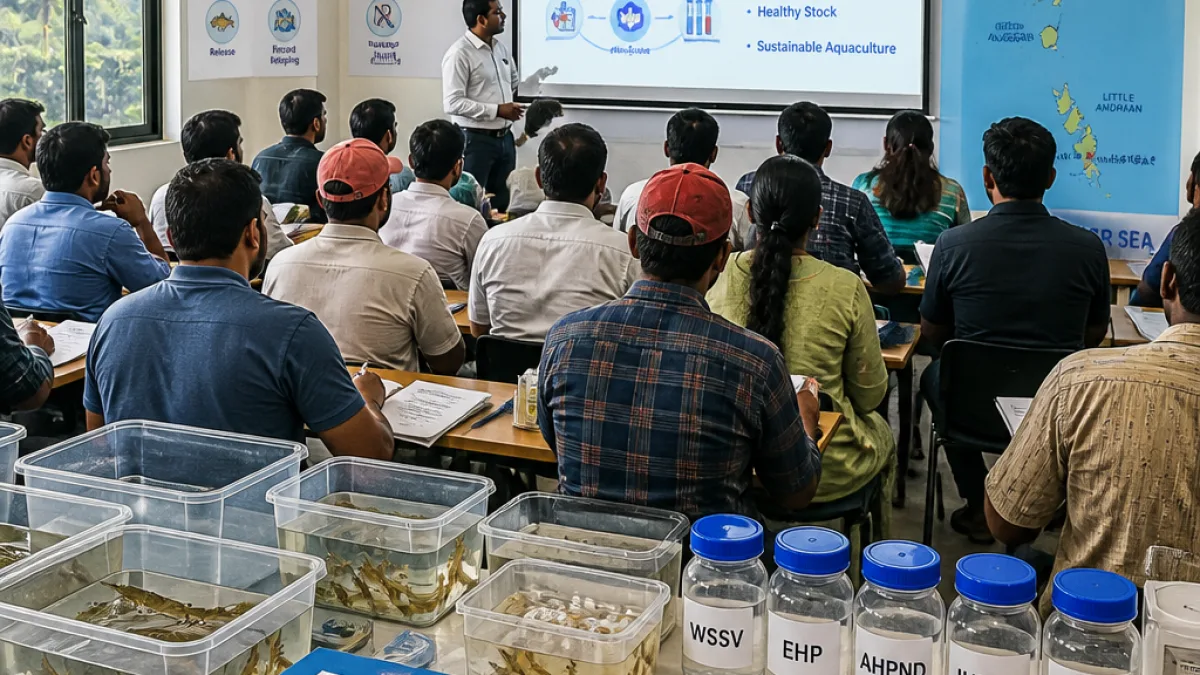
The Division of Fisheries Science, ICAR–Central Island Agricultural Research Institute (ICAR‑CIARI), Sri Vijaya Puram, organised a one‑day workshop on “Biosecurity and Quarantine Protocols to Curb Aquatic Animal Diseases in the Andaman & Nicobar Islands” on 10 August 2026 under the National Surveillance Programme for Aquatic Animal Diseases (NSPAAD) Phase‑II, officials said.
The event, convened by Dr Muruganandam, Head, Division of Fisheries Science, brought together a cross‑section of fisheries stakeholders including Department of Fisheries officials and field personnel, shrimp farmers, aquarium and ornamental fish traders, cage‑culture operators and others engaged in island aquaculture and ornamental trades. The workshop aimed to create awareness and strengthen capacities on aquatic animal health, disease prevention, farm biosecurity, quarantine and disease surveillance.
Participants were sensitised to the need for ensuring that culture operations start with healthy stocks sourced from reliable suppliers, and for maintaining appropriate quarantine facilities and routine health screening before introducing any new stocks into existing systems, the institute said.
"The objective of the programme was to create awareness and strengthen the capacity of fisheries stakeholders on aquatic animal health, disease prevention, farm biosecurity, quarantine and disease surveillance," ICAR‑CIARI reported.
Speakers underlined that early detection and containment of aquatic animal diseases are central to protecting both farmed and wild stocks, sustaining livelihoods and preventing trade disruptions. The workshop formed part of NSPAAD Phase‑II activities in the islands, which focus on surveillance and capacity building for aquatic animal disease management, the organisers said.
Practical focus and target groups
- Target audience: departmental officials and field staff, shrimp farmers, aquarium and ornamental fish traders, cage‑culture operators and other fisheries stakeholders.
- Key messages: obtain healthy seed from reliable sources; establish and maintain quarantine facilities; conduct health screening before stock introductions.
- Programme aim: strengthen disease surveillance and biosecurity practices under NSPAAD Phase‑II.
Workshop sessions emphasised biosecurity measures relevant to both commercial culture (for example shrimp farming and cage culture) and the ornamental fish sector. Those attending were encouraged to adopt standard operating procedures for quarantine, maintain records of animal movements, and liaise with departmental field staff for surveillance support.
Why this matters locally
The Andaman & Nicobar Islands host diverse aquaculture and ornamental fish activities that support local livelihoods and small businesses. Disease outbreaks in aquaculture can cause immediate production losses and longer‑term market impacts. By focusing on preventive steps — healthy sourcing, quarantine and screening — the workshop sought to reduce the risk of disease introduction and spread across farms and wild populations.
Organisers framed the capacity‑building initiative as part of a surveillance‑led strategy under NSPAAD Phase‑II to strengthen laboratory and field networks for early warning and response. Improved stakeholder awareness and practical biosecurity can complement government surveillance and laboratory efforts to manage aquatic animal health risks.
Takeaways for stakeholders
Attendees received guidance aimed at reducing disease risk at multiple points in the production chain. Practical implications include:
| Issue | Recommended action |
|---|---|
| Introduction of new stocks | Quarantine and health screening before release into culture systems |
| Source of broodstock/seed | Procure from reliable, disease‑free sources |
| Surveillance | Coordinate with Department of Fisheries and NSPAAD networks for monitoring |
ICAR‑CIARI said the workshop provided a platform for exchange among regulators, researchers and practitioners, and for aligning field practices with surveillance priorities under the national programme.
While the institute did not publish detailed session proceedings in its brief report, the emphasis on quarantine infrastructure and pre‑introduction health checks sends a clear message to island stakeholders: preventive measures and coordinated surveillance are essential to limit impacts should aquatic animal diseases occur.
Further follow‑up under NSPAAD Phase‑II is expected to focus on strengthening linkages between field personnel, diagnostic support and the farming community, enabling earlier detection and more rapid response to disease events in the island context, the organisers said.