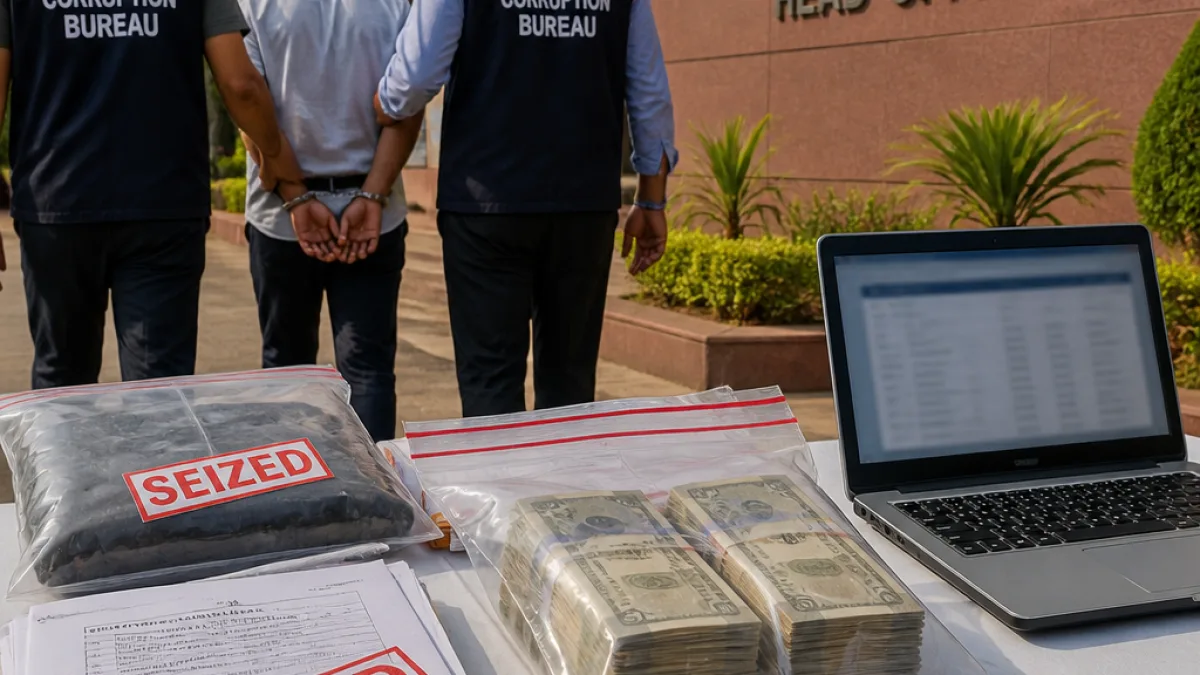
New Delhi: The Delhi Anti-Corruption Branch (ACB) on Tuesday arrested senior Aam Aadmi Party (AAP) leader and former Delhi minister Satyendar Kumar Jain in a case alleging irregularities and manipulation of tender conditions for the augmentation and upgradation of Delhi Jal Board (DJB) sewage treatment plants (STPs). The agency also took into custody former DJB CEO Udit Prakash Rai and four private contractors and consultants, officials said.
Allegations, scope and seized evidence
ACB chief Vikramjit Singh said the action follows a complaint by the Directorate of Vigilance that, according to the agency, disclosed “widespread irregularities, manipulation of tender criteria and illicit collusion in the tendering process” for the DJB STP works.
The probe, the ACB said, found that tendering criteria were tailored to restrict competition by prescribing restrictive technical specifications favouring one private company. The agency alleged that:
- essential effluent parameters were omitted from tender requirements,
- a mandatory pilot study was not carried out, and
- technical specifications were altered suddenly to deliver unfair financial gains to the chosen bidder.
Electronic records seized during the investigation, the ACB said, show active communications between private operators and government officials, with draft corrigenda and restrictive terms shared before being formally issued in DJB tender notices. Financial tracing, the agency added, uncovered a complex money trail that allegedly disguised kickbacks as commercial transactions routed through intermediary entities.
“The investigation further revealed non-conduct of the proposed pilot study, inclusion of restrictive conditions relating to the technology/media to be used, exclusion of essential parameters of treated effluent and changes in technical specifications which allegedly resulted in significant financial implications for the government exchequer,”
Vikramjit Singh said the probe established that Rai, while serving as DJB CEO, received bribes totalling around ₹1.52 crore through banking channels via intermediary firms, an allegation denied by the accused.
Who has been arrested
Alongside Jain and Rai, the ACB arrested four others identified in agency statements and filings:
| Name | Role / Affiliation |
|---|---|
| Ankit Srivastava | Former DJB contractual consultant; identified by the ACB as adviser to Jain during his tenure as Water Minister |
| Nagendra Yadav | Proprietor, AN Enterprises (intermediary firm) |
| Raj Kumar Kurra | Owner, Euroteck Environment (alleged preferred bidder/technology provider) |
| Pankaj Verma | Proprietor, Srijanhar (intermediary firm) |
The ACB said its investigators seized electronic evidence and banking records while probing the alleged scheme. The agency has alleged that funds were routed through firms such as AN Enterprises and Srijanhar to conceal quid pro quo payments.
Background: earlier cases and detention history
The arrest follows earlier legal troubles for Jain. He was arrested by the Enforcement Directorate in a money-laundering probe on May 31, 2022, and spent nearly one-and-a-half years in Tihar Jail before being granted bail on October 18, 2024. The current ACB action arises from a separate complaint by the Directorate of Vigilance regarding the DJB tendering process.
The case raises questions about procurement safeguards for critical civic infrastructure. Sewage treatment works are central to the capital’s sanitation and environmental compliance; alleged manipulation of tenders for these projects has potential implications for public health, environmental standards and public finances.
Political reaction and legal process
AAP national convenor Arvind Kejriwal reacted on social media, characterising the arrest as politically motivated. The party has frequently accused rival political formations of using investigative agencies for political ends. The ACB maintained its action is based on the Directorate of Vigilance complaint and investigative findings.
The arrested persons are expected to be produced before the competent court in New Delhi. The ACB said investigations are ongoing and further action, including additional arrests or charges, may follow as the probe expands and documents are examined.
What the allegations mean for Delhi’s governance
If substantiated in court, the ACB’s allegations could point to systemic weaknesses in tender framing, technical evaluation and checks against collusion between officials and private bidders at the DJB. Officials said the agency will evaluate whether current procurement rules and oversight mechanisms require strengthening to prevent recurrence.
For now, the case brings renewed focus to procurement transparency in municipal utilities and underscores the interface between governance, infrastructure delivery and accountability in the capital.
Note: The ACB named specific companies and intermediaries in its complaint and alleged transaction amounts; the accused have the right to legal defence and are presumed innocent until proven guilty in a court of law.