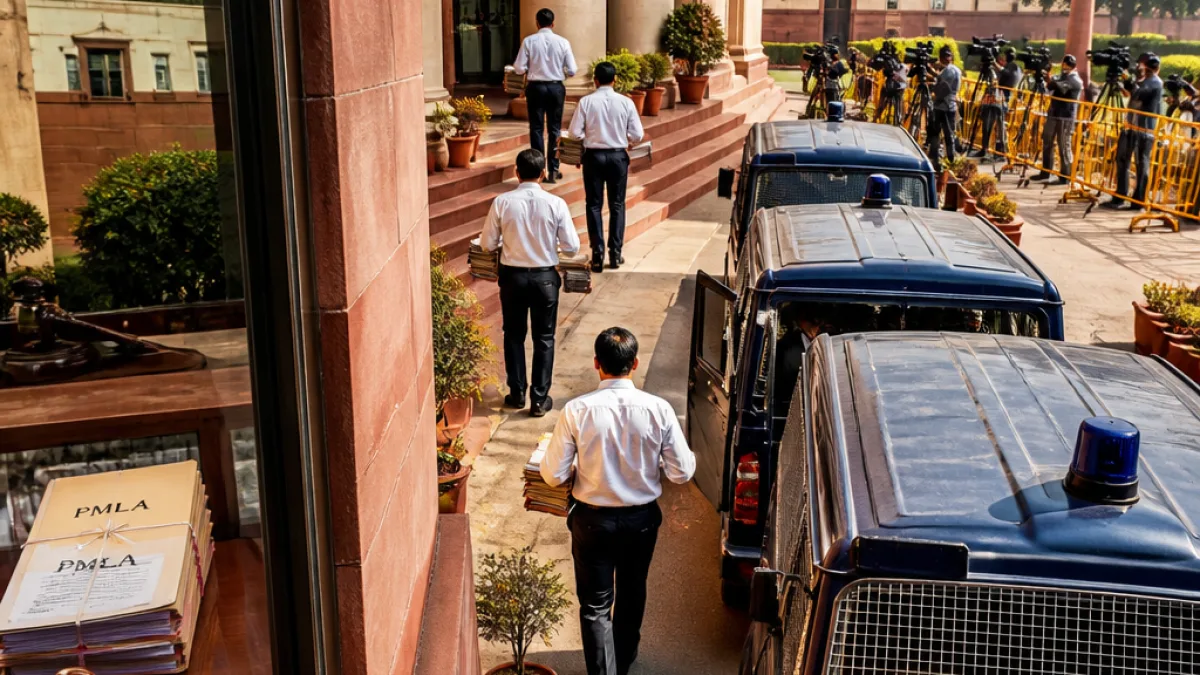
A Delhi court on Thursday ordered framing of money‑laundering charges under the Prevention of Money‑laundering Act (PMLA) against Lalu Prasad Yadav, his wife Rabri Devi, son Tejashwi Prasad Yadav and six others in a case investigated by the Enforcement Directorate (ED) relating to alleged irregularities in contracts involving the Indian Railway Catering and Tourism Corporation (IRCTC).
Judge cites strong suspicion, rejects political‑vendetta plea
Special Judge Vishal Gogne said there was a "strong suspicion" against seven persons for the offence of money‑laundering and found that the "nature, timing and course" of the investigation did not suggest it was motivated by political vendetta, according to the court order made public on Thursday.
"There was a strong suspicion against seven persons for the offence of money‑laundering and the nature, timing and course of investigation did not appear inspired by political vendetta," the judge said.
The court also discharged seven accused in the matter. The ED had registered a criminal case under the PMLA on the basis of a Central Bureau of Investigation (CBI) First Information Report (FIR) that dates to 2018.
Background of the case
The CBI FIR, registered on 5 July 2018, alleged that while Lalu Prasad Yadav was Railway Minister in the UPA‑I government, maintenance contracts for two IRCTC hotels were handed over to a company in 2004 in return for a quid pro quo. The agency alleged that a premium land parcel in Patna was provided as a bribe through a benami company associated with Sarla Gupta, wife of former Union Minister Prem Chand Gupta.
On the basis of that FIR, the ED looked into alleged "proceeds of crime" purportedly generated through shell entities and routed to the accused, officials said. The probe has named several individuals and firms that were reportedly involved in the award of contracts or the real estate transactions at the centre of the matter.
Who is accused and what the CBI and ED named
The CBI FIR had named the following persons and entities in its complaint:
- Lalu Prasad Yadav — then Railway Minister
- Rabri Devi — spouse of Lalu Prasad
- Tejashwi Prasad Yadav — son of Lalu Prasad
- Sarla Gupta — alleged owner of a benami company
- Prem Chand Gupta — former Union Minister (linked by relation)
- Vijay Kochhar and Vinay Kochhar — directors of Sujata Hotels
- Delight Marketing (now Lara Projects)
- P.K. Goel — then IRCTC managing director
Edging on nearly a decade of probes, the matter concerns contracts for upkeep of IRCTC hotels in Ranchi and Puri, and alleged exchange of favours culminating in the transfer of a high‑value land parcel in Patna, according to the agencies' records.
| Entity/Person | Role in FIR/ED case |
|---|---|
| Lalu Prasad Yadav | Alleged beneficiary; then Railway Minister |
| Tejashwi Prasad Yadav | Named in ED probe under PMLA |
| Vijay & Vinay Kochhar | Directors of Sujata Hotels; linked to contract awards |
Legal trajectory and implications
The CBI's criminal complaint in 2018 led to parallel scrutiny by the ED under anti‑money laundering laws. Thursday's order to frame charges under the PMLA moves the litigation forward, requiring the court to eventually record evidence and decide on conviction or acquittal after trial.
Separately, the same judge had earlier framed corruption charges against Lalu Prasad and 11 others in the CBI case. The present development narrows the list of persons against whom money‑laundering charges will proceed while absolving others through discharge orders.
The matter intersects both criminal law and political accountability. The accused include prominent political figures whose legal entanglements have public and electoral resonance. The court's finding that the probe did not display signs of political motivation addresses a defence plea raised by some accused during hearings.
What comes next
Formal framing of PMLA charges means the trial will proceed on specified money‑laundering counts as per the court's order. Defence counsels may seek to challenge the framing through further legal remedies, including appeals, and the ED will present its case at trial through documentary and witness evidence.
Any future hearings will be listed on the court register; the prosecution and defence will exchange affidavits and evidence in accordance with criminal procedure and PMLA rules.
Delhi courts continue to monitor the high‑profile litigation stemming from the 2018 CBI FIR, and the case is likely to be followed closely for its legal outcomes and political repercussions.