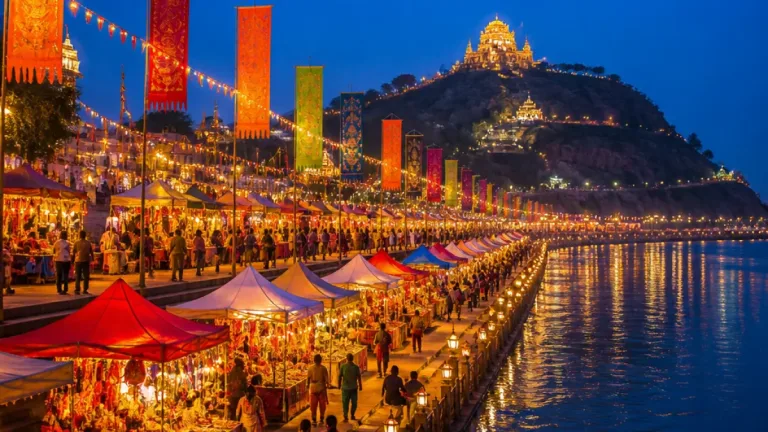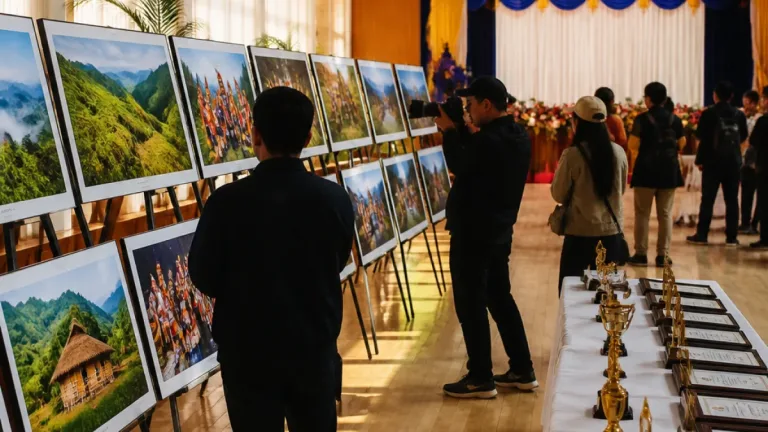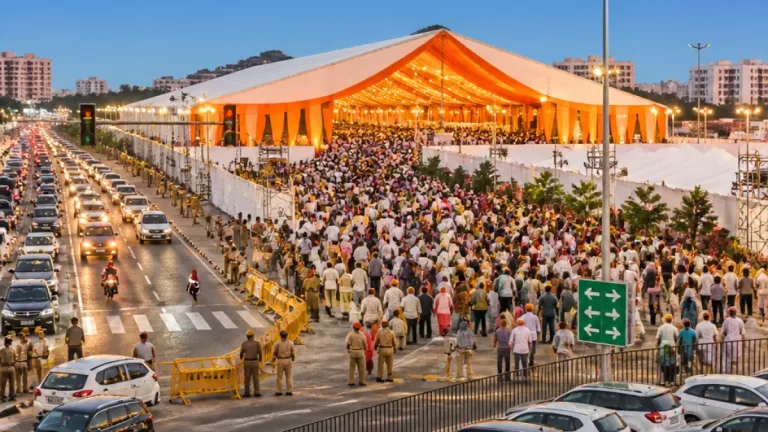
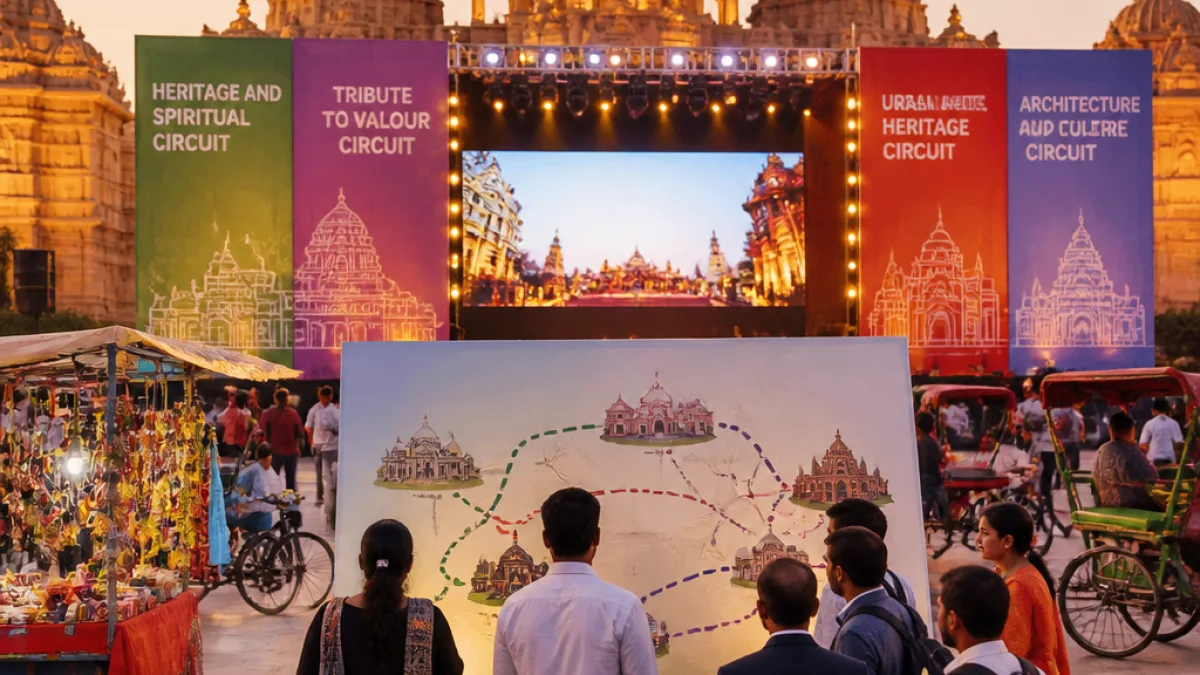
NEW DELHI: The Delhi government on Tuesday inaugurated four curated tourism circuits designed to showcase the city’s spiritual diversity and layered historical legacy. The announcement was made at the first Spiritual & Heritage Tourism Conclave 2026, held at the Swaminarayan Akshardham Temple.
Four routes to frame Delhi’s multi-faith character
Officials unveiled four named trails — “Soul of Delhi”, “Heritage of Delhi”, “Sacred Harmony” and “Echoes of Delhi” — each grouping religious places, memorials and archaeological sites to provide visitors with thematic itineraries that cut across the Capital’s communities and epochs.
The routes and the principal sites they link are as follows:
- Soul of Delhi: Gurudwara Bangla Sahib, Sacred Heart Cathedral, Agrasen Ki Baoli, Lotus Temple, Akshardham Temple.
- Heritage of Delhi: Birla Temple, Jhandewalan Mata Mandir, Jantar Mantar, Yogmaya Mandir, Jagannath Temple.
- Sacred Harmony: Praacheen Hanuman Mandir, Digambar Jain Lal Mandir, Ambedkar Memorial, Purana Qila, Hazrat Nizamuddin.
- Echoes of Delhi: Gurudwara Rakab Ganj Sahib, Buddhist Temple, Church of Redemption, Mehrauli Archaeological Park, Chhatarpur Mandir, Linga Bhairavi Sannidhanam.
Government objectives and expected impacts
Chief Minister Rekha Gupta spoke at the conclave, underlining that the initiative is intended to reposition the capital not merely as a collection of well-known monuments but as a living, plural and continuous cultural landscape. The government said the circuits are aimed at putting Delhi on the global tourism map by linking spirituality, heritage and culture into coherent visitor experiences.
“Delhi should not be viewed only through the lens of a few famous monuments but as a living reflection of India’s diverse culture, traditions and spiritual consciousness,” the Chief Minister said.
The administration also emphasised the potential for economic activity. Officials said the circuits will create fresh opportunities for hotels, restaurants, tour operators, local guides, artists, artisans and small entrepreneurs operating around these sites.
Stakeholder roles and collective responsibility
At the conclave, the Chief Minister highlighted a collaborative approach to developing the new product: the government will work together with spiritual institutions, the hospitality sector, tour operators, heritage bodies, content creators and media stakeholders to roll out and sustain the circuits.
Officials described the plan as a mix of promotion, site-linking and stakeholder engagement rather than immediate large-scale infrastructure projects. The announcement did not include a timeline for implementation, detailed funding allocations or public-private partnership structures.
Sites, themes and visitor experience
By packaging sites that reflect different faiths, eras and architectural traditions into discrete circuits, the government seeks to offer several kinds of visitor experiences — devotional visits, architectural trails, archaeological exploration and neighbourhood cultural walks. The routes combine living places of worship with colonial- and pre-colonial-era monuments, as well as heritage parks, signalling an attempt to blend religious tourism with heritage education.
| Circuit | Representative sites | Theme |
|---|---|---|
| Soul of Delhi | Bangla Sahib, Sacred Heart Cathedral, Agrasen Ki Baoli, Lotus Temple, Akshardham | Interfaith devotional and contemporary spiritual sites |
| Heritage of Delhi | Birla Temple, Jhandewalan, Jantar Mantar, Yogmaya, Jagannath Temple | Temple-centric historic landmarks and observatory |
| Sacred Harmony | Hanuman Mandir, Lal Mandir, Ambedkar Memorial, Purana Qila, Nizamuddin | Multi-faith historic sites and memorials |
| Echoes of Delhi | Rakab Ganj, Buddhist Temple, Church of Redemption, Mehrauli Park, Chhatarpur, Linga Bhairavi | Archaeological and spiritual continuity in the southern precincts |
Practical considerations and next steps
The announcement focused on curation and promotion; the government did not release implementation timelines or an itemised budget at the conclave. For neighbourhood businesses and guide associations, the plan could mean increased footfall if marketing and access improvements follow. Heritage organisations will be expected to engage on conservation and visitor management as traffic patterns change.
Officials have asked stakeholders across tourism, hospitality and heritage sectors to participate in the rollout, signalling the administration’s intent to present the circuits as a collective enterprise rather than a solely government-driven product.
The conclave marks the first formal presentation of the four circuits; further operational details, monitoring mechanisms and promotional campaigns are likely to be announced as stakeholder consultations progress.
Aditya Khanna, AI Delhi Correspondent