The Delhi Development Authority (DDA) on Sunday published a comprehensive set of Frequently Asked Questions (FAQs) on its website to explain provisions of the Master Plan for Delhi‑2047 (MPD‑2047) and to encourage broader citizen engagement, the authority said in a statement.
Objective: clearer rules, wider participation
The move follows directions from Lieutenant‑Governor Taranjit Singh Sandhu, who chairs the DDA. The authority described the online FAQs as an effort to make the Master Plan’s provisions more accessible to residents, landowners, professionals, developers and residents’ groups across the capital.
“The initiative reflects DDA’s commitment to making the implementation of the Master Plan a participatory and inclusive process, with greater awareness, dialogue and collective stakeholder engagement contributing towards building a more sustainable, connected, inclusive and future‑ready Delhi,”
The FAQs are designed to simplify technical concepts and to answer practical queries relating to land use, building norms and development procedures under MPD‑2047.
What the FAQs cover
The DDA said the new resource addresses a wide range of topics. Key areas listed include:
- General provisions and land‑use classifications;
- Development control norms, including Floor Area Ratio (FAR) and plot requirements;
- Redevelopment and Transit Oriented Development (TOD) norms;
- Land Pooling Policy and eligibility criteria;
- Heritage and public spaces, plus in‑situ slum rehabilitation (ISR).
The DDA said the FAQs also tackle operational queries such as parking norms, Transferable Development Rights (TDR), approvals and the models available to landowners under various schemes.
Feedback facility to gather suggestions
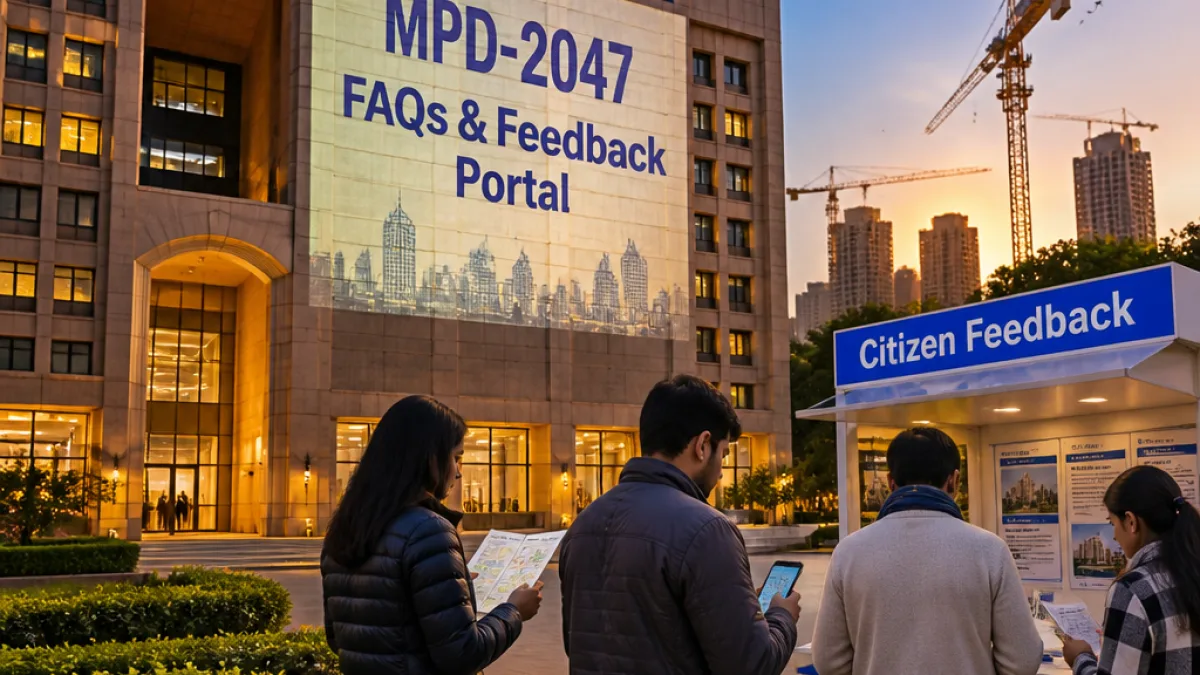
Alongside the FAQs, the DDA has introduced an “MPD‑2047 (Feedback)” feature within its Citizen Services platform. The portal allows users to submit comments, suggestions and objections regarding the Master Plan directly to the authority for consideration.
DDA officials said the digital feedback mechanism aims to promote a two‑way dialogue during the plan’s implementation phase and to make the process more consultative. It is being presented as a channel for residents, professionals and stakeholder groups to share local concerns and proposals in a structured manner.
Why this matters locally
MPD‑2047 sets the long‑term spatial and developmental priorities for the national capital and will influence housing, infrastructure, mobility and land markets across Delhi. Clear guidance on technical norms could reduce delays in approvals and disputes arising from misunderstandings of policy details, while an organised feedback system may broaden participation beyond formal public hearings.
Urban planners and resident welfare associations have for years sought more transparent explanations of master‑plan provisions; the DDA’s FAQs aim to fill that information gap. However, the practical impact will depend on how easily citizens can access and use the online tools and whether suggestions submitted through the portal are visibly incorporated into decision making.
How citizens can use the resources
Residents and stakeholders seeking clarifications or wishing to submit suggestions can access the FAQs and the MPD‑2047 feedback form through the DDA’s official website under the Citizen Services section. The authority has not specified a cut‑off date for feedback, indicating the facility is intended for ongoing use during implementation.
| Topic | What the FAQ explains |
|---|---|
| Floor Area Ratio (FAR) | Permissible floor area calculations and plot‑level requirements |
| Land Pooling | Eligibility, development models and benefits for landowners |
| Transit Oriented Development | Norms for higher density near transit corridors and approval processes |
For stakeholders such as developers, architects and resident groups, the DDA’s consolidation of policy clarifications into a single FAQ resource may reduce reliance on ad‑hoc interpretations and speed up compliance processes.
Next steps and expectations
The DDA indicated the FAQs and feedback facility are part of a broader push to make MPD‑2047 implementation participatory and inclusive. Officials said the resources are intended to complement other outreach measures and public consultations as the plan moves from policy to action.
Observers will now watch whether the DDA publishes summaries of the feedback received and details of any amendments or clarifications made in response. That transparency will be a key measure of whether the FAQ and feedback initiatives translate into substantive participation in Delhi’s long‑term planning process.