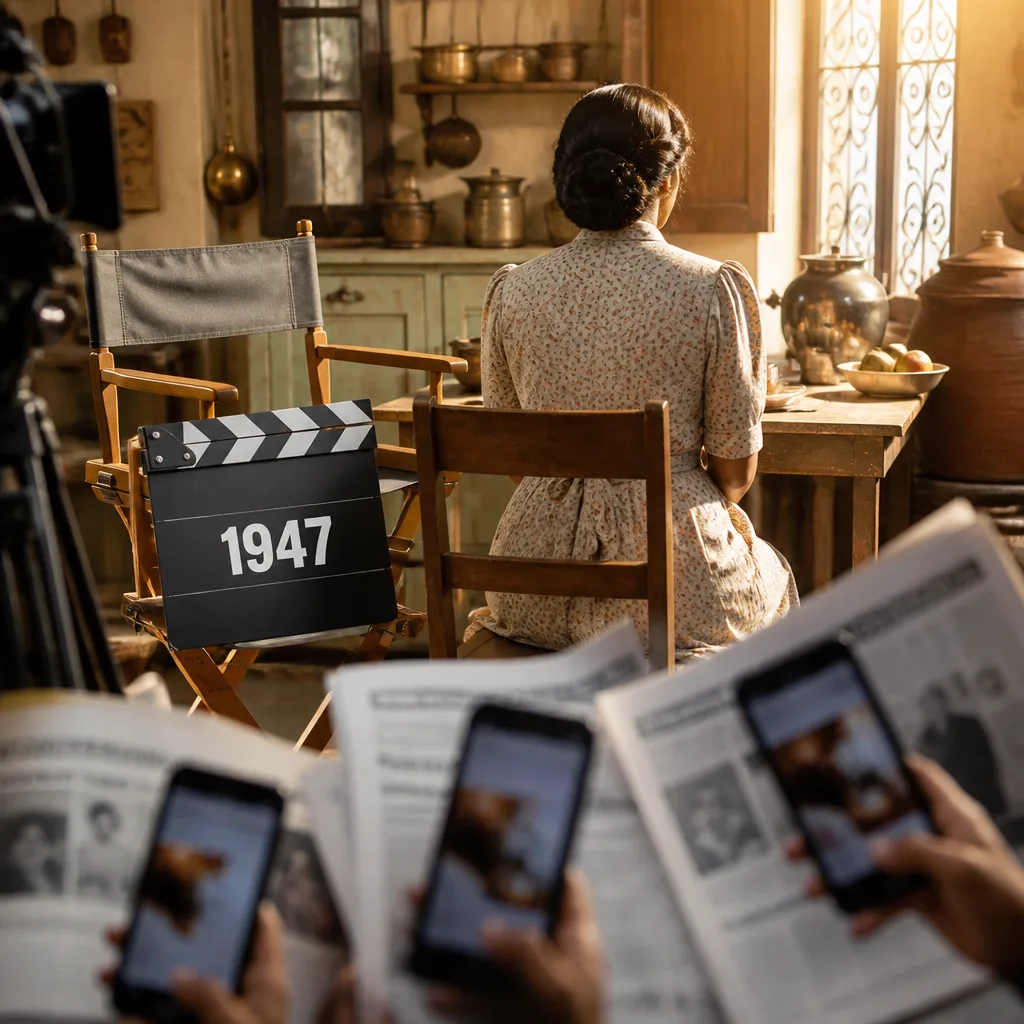
Preity Zinta, who marks her comeback to Hindi cinema after an eight-year gap with the period drama Batwara 1947, has responded sharply to criticism over remarks about her character’s domestic life, saying reactions have been hurried and taken out of context.
Actor asks critics to see the film first
In comments published following an interview she gave to SCREEN, Zinta urged audiences and commentators to view the completed film before passing judgement. She wrote that many responses to her description of the character were premature and did not reflect the full context of the film, which, she stressed, “deals with a particular family”.
“Hi, I have not read your article fully but after reading the text above I feel your take on my experience while filming is totally taken out of context. I’m surprised how everyone is so quick to react to any comment without fully understanding the context. This is a film and it deals with a particular family. There are no broad strokes here. Judging the film or director like this without seeing it, is both unfair and unjust. Journalism should be responsible and fair. Please see the film on 14th Aug and then form an opinion. Thank you. Much love.”
Zinta’s remarks follow a passage from her conversation with SCREEN in which she described some of the on-set directions from director Rajkumar Santoshi. Recounting exchanges about everyday tasks, she said the director would often tell her character to cook, clean or stitch — an illustration, she said, of the period setting’s social realities. In the interview she recalled asking Santoshi, “Raj ji, come on!” to which he replied, “This is 1947. The only career you can have is of a freedom fighter. There’s no other career. Your career is your husband, your children, and your home.”
Context, critics and public debate
The actor’s clarification came after an opinion piece prompted debate on how women from the pre-Independence era are portrayed on screen. The critique argued that women before 1947 were not solely confined to domestic roles of “wives, mothers, or rebels”, and called for nuanced portrayals. Zinta countered that the film examines a specific family’s experience and cautioned against broad-brush judgements prior to the film’s release.
Her response highlights two intersecting issues that are recurring in public discussions about period films: the responsibility of filmmakers to avoid flattening historical realities into stereotypes, and the need for critics and audiences to consider narrative scope and intent before drawing conclusions.
What we know about the film and release
Details disclosed in published interviews indicate that Batwara 1947 is set around the time of Partition and focuses on a family narrative shaped by that era’s social norms. The film is directed by Rajkumar Santoshi and features Zinta in a central role. The actress has asked critics and audiences to watch the film on its scheduled date before forming assessments.
- Release date: 14 August (as mentioned in Zinta’s response)
- Actress’ comeback: Marks return to lead acting after approximately eight years
- Director: Rajkumar Santoshi (quoted contextually in the actor’s interview)
| Item | Detail |
|---|---|
| Film | Batwara 1947 |
| Lead actor | Preity Zinta |
| Release date (as referenced) | 14 August |
| Director | Rajkumar Santoshi |
The exchange has already prompted social-media debate about historical fidelity, creative licence and the depiction of women in period cinema. Zinta’s appeal underscores a common faultline in entertainment coverage: the rapidity with which single lines from interviews can be amplified and treated as definitive statements about an entire film’s outlook.
Analysts of film and gender representation have often argued for careful reading of both fiction and historical context. Observers note that period films can simultaneously depict constrained social roles while also exposing the structures that produced them. Zinta’s insistence that the film is about a particular family suggests the filmmakers intend a focused narrative rather than a sweeping societal statement.
With the film’s release imminent, attention will now shift to how Batwara 1947 balances period detail and character complexity, and whether it answers the questions that have emerged in the debate.