New Delhi, 13 August 2026: A parliamentary committee has flagged significant staff shortages at two central education bodies and warned that public spending on education remains well below the National Education Policy (NEP) 2020 target. The Tenth Report (Eighteenth Lok Sabha) of the Committee on Estimates (2026-27) on "Budget and Policy Aspects for Providing Affordable and Quality Education in the Country including Review of Central Board of Secondary Education" was presented to the Lok Sabha on 12 August, according to the report made public.
Major vacancies at NCERT and CBSE
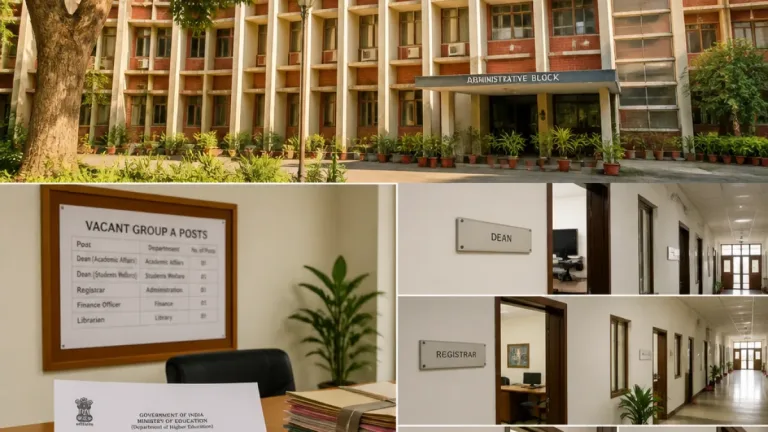
The committee recorded that out of 2,844 sanctioned posts at the National Council of Educational Research and Training (NCERT), 1,596 posts remain unfilled. The Central Board of Secondary Education (CBSE) has 933 vacancies against 2,117 sanctioned positions, the report noted.
| Institution | Sanctioned posts | Vacancies |
|---|---|---|
| NCERT | 2,844 | 1,596 |
| CBSE | 2,117 | 933 |
The panel expressed concern that the CBSE’s significant reliance on temporary and contractual staff could compromise the safety, quality and smooth conduct of national board examinations. It recommended strengthening regular recruitment and reducing dependence on short-term appointments to ensure continuity and accountability in critical exam administration functions.
Enrolment decline and school-level gaps
The committee also highlighted a sharp narrowing in the number of institutions and students as education levels rise. While primary level facilities remain numerous, the report shows a steep drop-off by the higher-secondary stage. Key figures in the report include:
- Primary schools: 911,032
- Higher-secondary schools: 90,866
- Primary enrolment: 61.85 million
- Higher-secondary enrolment: 16.42 million
The panel observed that almost 73% of students leave the system before completing higher-secondary education and called for upgrading more primary and secondary schools to the higher-secondary level to arrest dropouts and improve transition rates.
Infrastructure and state-level gross enrolment
Internet connectivity in government schools remains limited, with the report stating that only 58.6% of government schools have an internet connection. The committee also pointed to low higher-secondary Gross Enrolment Ratios (GER) in several states: Bihar at 38.1%, Madhya Pradesh at 45% and Meghalaya at 39.7%, underscoring regional disparities in access to senior secondary education.
Funding shortfall against NEP 2020 target
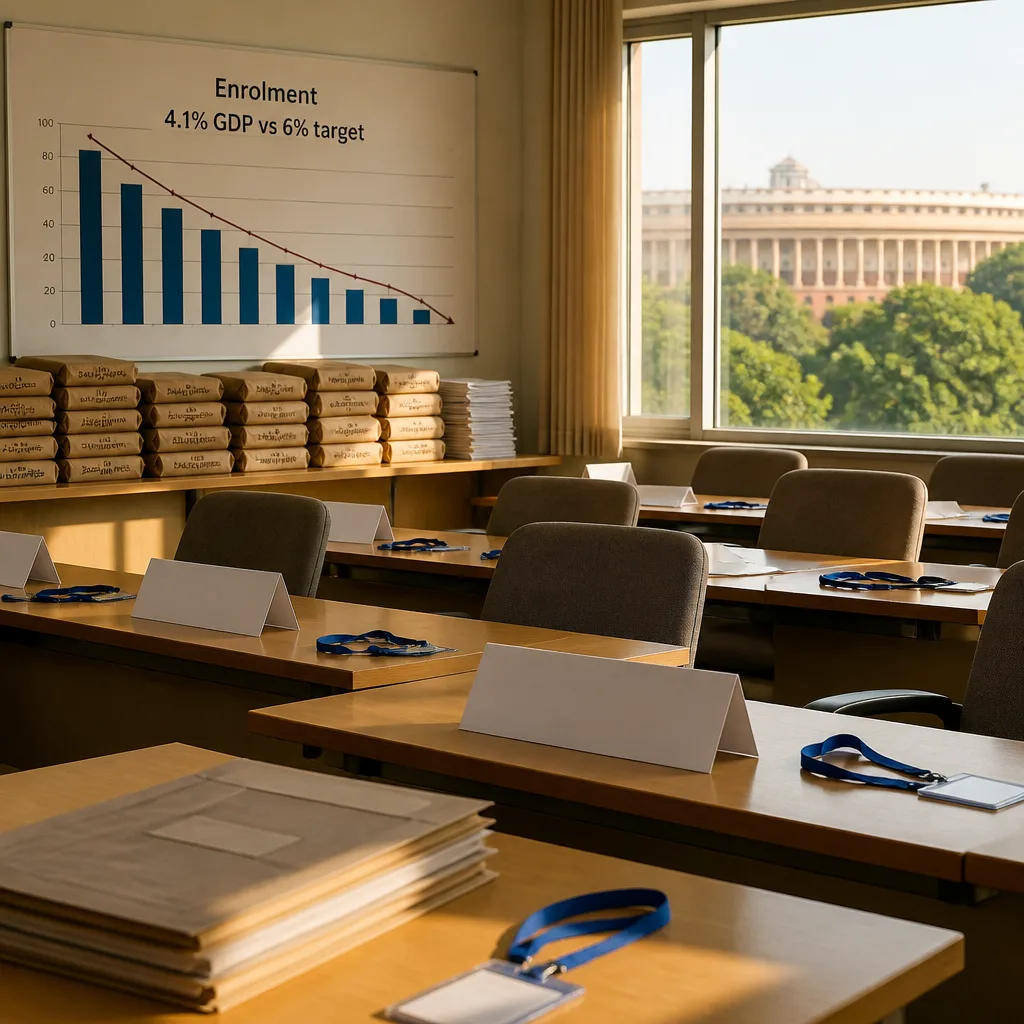
On financing, the panel drew attention to the combined expenditure by the Union and states on education being about 4.1% of GDP, substantially below the NEP 2020 objective of 6% of GDP. The committee suggested that the present resource envelope is inadequate to meet the NEP’s goals on infrastructure, teacher recruitment, digital readiness and universal access to higher-secondary schooling.
The report’s findings have implications for policymakers at both central and state levels. Restoring staff strength in central institutions, accelerating recruitment drives, upgrading schools to higher-secondary level and increasing budgetary allocations were among the measures implied by the committee’s assessment.
"The reliance on temporary and contractual workers could put the safety, quality and smooth conduct of national board examinations at risk," the report said.
Students and parents anxious about examination preparedness and school capacity should watch for official follow-up from the Ministry of Education and the respective institutions. The Committee on Estimates report aims to inform budgetary priorities and administrative reforms ahead of forthcoming academic and fiscal cycles.
For readers seeking the primary document, the report was tabled in the Lok Sabha on 12 August 2026. Official parliamentary records and the Committee on Estimates notification can be consulted for the full text and recommendations.
Note: This article summarises the committee’s findings as presented to the Lok Sabha on 12 August 2026 and is based on the report's published data.