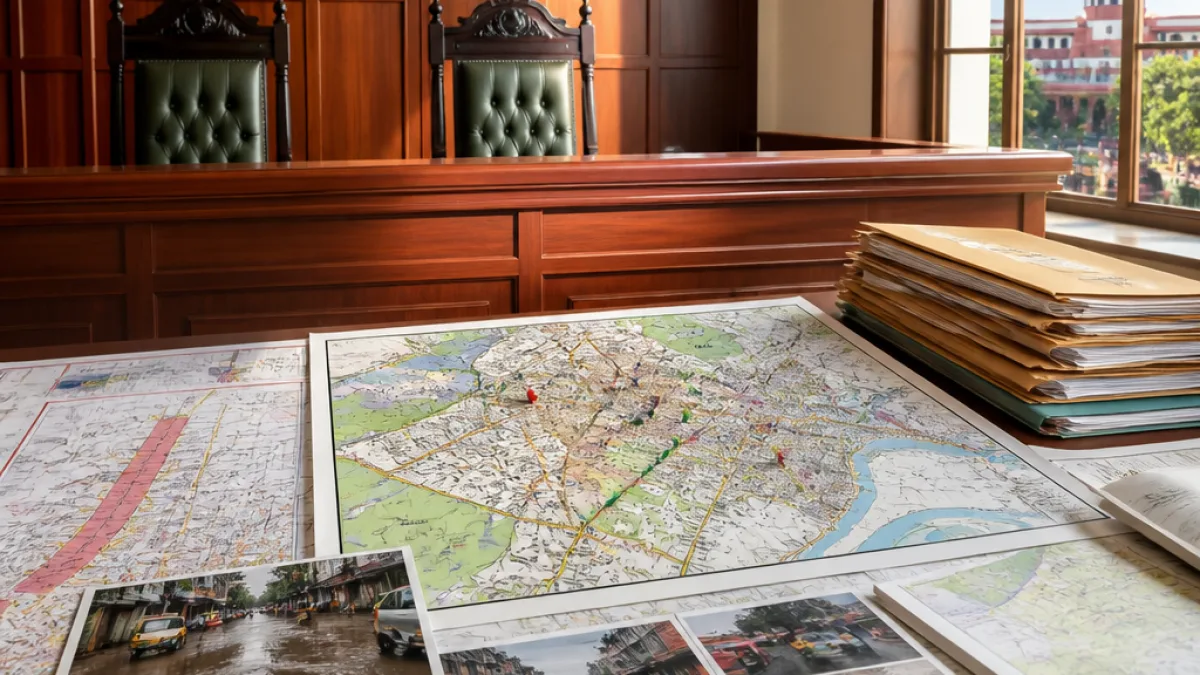
High Court orders fresh, ward-level scrutiny of Cuttack arterial roads
The Orissa High Court has directed ward‑level advocates’ committees to assess arterial roads in Cuttack and submit comprehensive reports before the next hearing on September 10, underscoring persistent failures to convert compliance affidavits into motorable, flood‑resilient streets.
The directions came during a hearing of a suo motu public interest litigation concerning the condition of roads and waterlogging in different parts of the city, a matter the court has been monitoring since 2020, according to a recent report. Justices K R Mohapatra and V Narasingh presided over the proceedings.
"A road is not mere tar and stone. It’s a lifeline under Article 19(1)(d) read with Article 21 of the Constitution," the court observed on August 29, while lamenting the cycle of potholes, repairs and monsoon damage.
The bench invoked stark literary images — referring to Franz Kafka’s line about 'infinite hope' and Shakespeare’s description of 'grief' in King Lear — to convey frustration at repeated directions since 2020 that, the court said, have not translated into lasting road repairs. The court expressed a cautious confidence in recent assurances from senior state officials but pressed for concrete, localised verification.
Officials present; fresh reports ordered
Senior state and municipal officials appeared before the bench. The Additional Chief Secretary, Housing and Urban Development Department, Usha Padhee, and the Cuttack Municipal Corporation Commissioner, Kirandeep Kaur Sahota, participated virtually, while senior Works Department and Roads & Buildings officials attended in person, the report said. The court sought the presence of these senior officers following concerns recorded in an earlier order on August 27.
On that basis the bench ordered the formation or mobilisation of ward‑level advocates’ committees to carry out on‑ground assessments of arterial stretches, compile defect inventories and recommend short‑term and medium‑term remedial measures. The committees were asked to file detailed reports ahead of the next hearing.
- Next hearing scheduled: 10 September
- Bench: Justices K R Mohapatra and V Narasingh
- Officials asked to appear: Additional Chief Secretary (Housing & Urban Development), Cuttack Municipal Commissioner, Works and R&B senior officers
The court observed that the recurring pattern — potholes, repair, onset of monsoon and renewed deterioration — has persisted despite repeated compliance affidavits from civic authorities since 2020. It asked for verifiable, ward‑wise documentation so that the claims of repair and the reality on the ground could be matched before the bench.
| Item | Detail |
|---|---|
| Case | Suo motu PIL on roads and waterlogging |
| Bench | Justices K R Mohapatra & V Narasingh |
| Officials present | Usha Padhee; Kirandeep Kaur Sahota; senior Works & R&B officers |
| Action ordered | Ward‑level arterial road assessments; reports by 10 Sept |
What this means for Cuttack residents
The court’s move to mandate ward‑level inspections shifts the focus from city‑level assurances to micro‑level verification. For residents, this is likely to result in:
- more visible surveys and inventories of damaged road sections in each ward;
- the possibility of short‑term patching and interim mitigation measures before monsoon peaks; and
- greater legal scrutiny of long‑term repairs and drainage upgrades tied to the court’s next hearing.
At the same time, the court’s invocation of fundamental rights signals an expectation that authorities treat road maintenance as essential to citizens’ freedom of movement and right to life, not merely as a technical or budgetary matter.
Residents and resident welfare associations should document severe defects with photographs, location references and any evidence of repeated failures after repairs. Such ward‑level evidence will be useful if committees or civic authorities seek corroboration.
Officials have been asked to ensure that the reports are comprehensive and verifiable. The court’s strict timetable means civic agencies will need to coordinate with advocates’ committees, public representatives and the public to deliver clear, auditable assessments before September 10.
The matter remains under judicial oversight; the next court appearance will test whether the latest assurances from senior officials produce tangible, durable improvements on Cuttack’s roads ahead of the coming monsoon cycle.