Nashik, Maharashtra — Maharashtra Chief Minister Devendra Fadnavis on Tuesday ordered a comprehensive assessment of seismic activity in Nashik and neighbouring Palghar districts and directed intensified public awareness campaigns, officials said. The directive follows a moderate earthquake and aftershocks that rattled parts of Nashik over the weekend and caused minor structural damage in some rural localities.
What the administration has been told to do
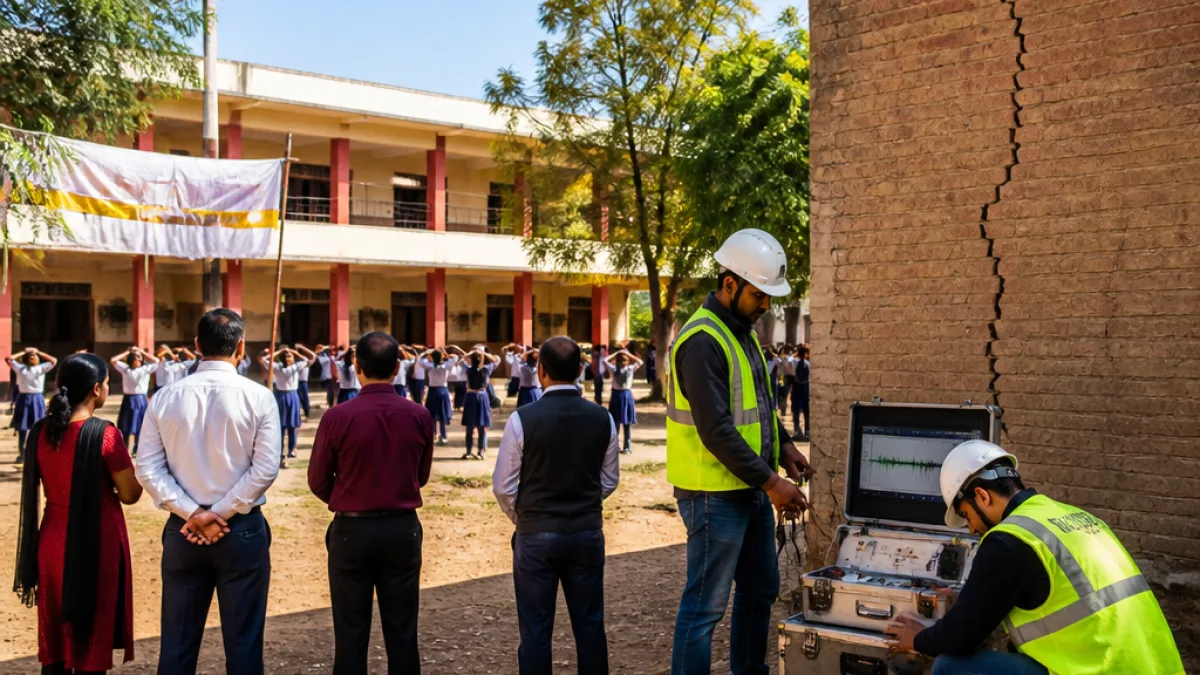
According to officials who spoke to the media, the chief minister noted that a study by the Centre for Seismic Technology was already under way but asked the state administration to bring in additional reputed institutions to widen and deepen the assessment. He also emphasised the need for awareness drives targeted at residents and, in particular, schoolchildren to ensure appropriate responses during seismic events.
- Comprehensive seismic assessment: supplement the ongoing Centre for Seismic Technology study with other institutions.
- Awareness campaigns: intensify public education on earthquake safety; conduct programmes in schools.
- Monitoring and preparedness: local administrations in Nashik and Palghar to step up monitoring and coordinate responses.
Events in Nashik and Palghar
Officials reported that an earthquake measuring 4.3 magnitude was recorded in Nashik on Saturday night, followed by a 3.3 magnitude tremor on Sunday morning. Both events had focal depths reported at about 5 km, with epicentres located in the Bhanwad area close to the Hatgad mountain range near the Maharashtra–Gujarat border.
Tremors were felt in parts of Nashik city and across the district, prompting residents to rush outdoors in panic. Local reports said cracks appeared in house walls at Bhadar in Surgana taluka and Nanashi in Dindori taluka, locations approximately 180 km from Mumbai.
Palghar district also reported multiple low-intensity tremors. On Monday night, four back-to-back tremors were recorded in Jawhar taluka, with magnitudes in the range of about 3.2–3.4. The Palghar episodes caused alarm and led several residents to remain outdoors for hours. No casualties or major damage have been reported in either district so far, officials said.
"A study by the Centre for Seismic Technology was already underway, but authorities were directed to rope in additional reputed institutions to conduct a more comprehensive assessment," officials said.
Local implications and preparedness
For Nashik residents, the chief minister's instructions carry immediate and medium-term consequences. In the short term, district administrations are expected to step up vigilance, inspect vulnerable structures and disseminate information on safe behaviour during tremors. In the medium term, a multi-institutional assessment could identify local fault behaviour, hazard hotspots and priorities for retrofitting or strengthening public infrastructure.
School-focused awareness sessions, as urged by the chief minister, aim to ensure that children know simple, lifesaving actions such as "drop, cover and hold on", evacuation routes and assembly points. Officials said the state cabinet discussed the matter on Tuesday and directed relevant departments to coordinate implementation.
| Event | Magnitude | Depth | Location |
|---|---|---|---|
| Nashik (Saturday) | 4.3 | 5 km | Bhanwad area, near Hatgad range |
| Nashik (Sunday) | 3.3 | 5 km | Bhanwad area |
| Palghar (Monday night) | ~3.2–3.4 | 5 km | Jawhar taluka |
Seismologists generally note that shallow-focus events (depths of a few kilometres) may be felt more strongly at the surface over a localized area, which helps explain why residents in specific talukas experienced pronounced shaking while other districts were largely unaffected.
District authorities in Nashik and Palghar have been asked to coordinate with state disaster management agencies and seismological organisations to finalise the expanded study terms and to roll out awareness activities. Officials said the aim is to both assess ongoing seismic risk and to reduce panic through clear, repeated public messaging in Marathi and other local languages.
With the monsoon under way across the region, local civic bodies will need to factor seismic safety into inspections of older masonry houses and public buildings. The chief minister's order signals heightened official attention to quake risk in an area that has recorded intermittent low-intensity tremors in recent years.