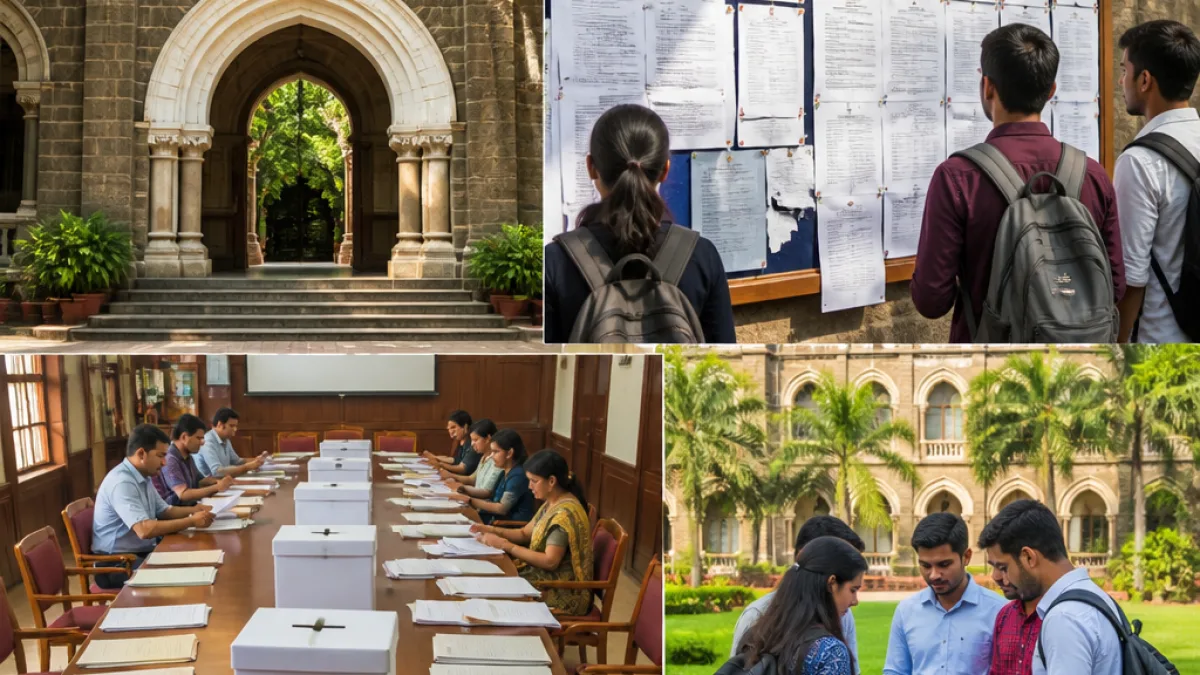
Mumbai, Maharashtra — The Maharashtra government has moved to reintroduce student council elections across state universities and affiliated colleges after a gap of over three decades, announcing a 12‑member committee to examine legal provisions and frame rules for conducting the polls, officials said on Thursday.
Panel to study law and frame guidelines
The panel will scrutinise the relevant sections of the Maharashtra Public Universities Act, 2016 and propose detailed procedures to ensure that elections are carried out in a transparent, peaceful and student‑centric manner, according to a government resolution seen by reporters. The group has been asked to submit its report within one month.
Former University of Mumbai vice‑chancellor Suhas Pednekar has been named chair of the committee. Members include former vice‑chancellors, a pro‑vice‑chancellor and college principals, the resolution said. The panel’s brief covers an election code of conduct, a mechanism to handle grievances and consideration of digital tools for various stages of polling.
Measures against external influence and commercialisation
Media reports cited the committee’s mandate to recommend strict safeguards to keep external political intervention and the commercialisation of student polls at bay. The move comes amid long‑running concerns that party politics and money can distort campus elections, affecting student representation and campus life.
- Committee size: 12 members, chaired by Suhas Pednekar.
- Legal basis: review under the Maharashtra Public Universities Act, 2016.
- Timeline: report to be submitted within one month.
- Focus areas: election code, grievance redressal, digital nomination and voting options, safeguards against outside interference.
The decision revives a policy discussion that saw earlier attempts. Maharashtra had explored restarting campus polls when Vinod Tawde was higher education minister, but that initiative did not progress at the time, according to reports.
Why this matters for campuses
Student council elections, where properly conducted, give campus communities a formal channel for student voice on academic, welfare and extracurricular issues. Their absence for decades has meant alternative, informal mechanisms of representation evolved on many campuses. Officials said the new panel should recommend processes that strengthen student involvement while safeguarding campuses from disruptive politics.
As part of its mandate the committee will also examine the feasibility of introducing digital processes—from online nominations and scrutiny to e‑voting and electronic grievance portals—to streamline elections and reduce room for malpractice. Any such proposals will have to balance accessibility, security and the digital divide facing some student groups.
| Item | Detail |
|---|---|
| Law to be studied | Maharashtra Public Universities Act, 2016 |
| Committee head | Suhas Pednekar (former Mumbai University VC) |
| Members | Former VCs, pro‑VC, principals (total 12) |
| Deadline | One month |
Next steps and likely challenges
The committee’s recommendations will be crucial in defining the practical shape of elections: who is eligible to contest, the structure of student representative bodies, voting modalities and disciplinary processes for violations. Implementing uniform rules across diverse state universities and thousands of affiliated colleges could be administratively complex.
Stakeholders such as student bodies, university administrations and college managements will need to be consulted. The committee’s emphasis on grievance redressal and a code of conduct suggests authorities aim to reduce post‑poll tensions and litigations that have followed campus contests in other states.
Officials did not immediately provide further details on the identities of all committee members or the precise timeline for roll‑out after the report. Press reports that first carried the development cited both PTI and the Times of India for background.
If adopted, the move will mark a significant policy shift in Maharashtra’s higher education landscape, restoring an institutional mechanism for student participation in campus governance after a long hiatus.
Sameer Joshi is the Maharashtra correspondent based in Mumbai.