Nashik: Fresh building surveys and contingency plans after cluster of tremors
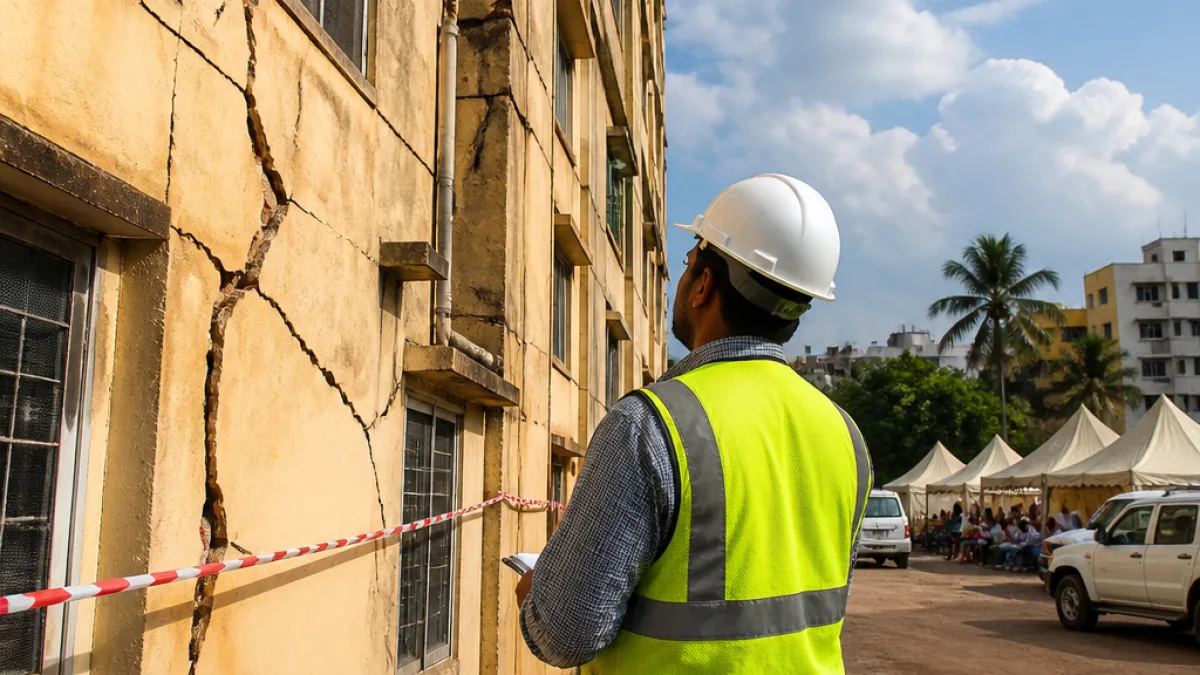
Nashik district authorities have ordered comprehensive inspections of structures marked unsafe and of buildings that have developed cracks after a series of 45 low-intensity tremors rattled parts of the district over the past fortnight, officials said.
The tremors, which ranged between 2.6 and 4.1 on the Richter scale, were recorded at multiple locations. While national agencies including the Geological Survey of India (GSI) and the National Centre for Seismology (NCS) have indicated that major structural damage is unlikely, the district administration decided on precautionary action to ensure public safety.
“These tremors, at the most, lead to cracks in the walls. However, rainwater seepage can make the damage worse, especially in buildings already marked as ‘red’ and unsafe for habitation. We have ordered a fresh inspection of such structures and asked local civic bodies to prepare evacuation plans wherever required,”
— Collector Ayush Prasad, as reported by the administration.
Resident deputy collector Rohit Rajput said that assistance proposals would be prepared once physical assessments and panchanama reports are completed. Any proposals that meet National Disaster Management Authority and State Disaster Management Authority requirements will be forwarded for sanction, the administration added.
- Six specific cases from Surgana, Peth, Dindori and Kalwan talukas have been flagged for immediate follow-up.
- Local civic bodies have been instructed to identify alternative shelters such as community halls, wedding venues and schools to be used if evacuation is required.
- Teams from the district administration will carry out fresh inspections of buildings previously declared ‘red’ and of those showing new cracks.
Officials explained the geological mechanism that can worsen damage in the monsoon. Tremors often affect shallow soil layers sitting above basalt rock; heavy rainfall can change underground water movement, increase soil saturation and raise the risk of landslips or further cracking in weakened masonry, the collector noted.
| Taluka | Action flagged |
|---|---|
| Surgana | Immediate follow-up inspection |
| Peth | Immediate follow-up inspection |
| Dindori | Immediate follow-up inspection |
| Kalwan | Immediate follow-up inspection |
District officials emphasised that, to date, the recorded tremors have mainly caused superficial cracking rather than catastrophic failure. Nonetheless, they cautioned that existing defects — especially in buildings already marked unsafe — can be exacerbated by monsoon ingress and advised residents to avoid occupying severely damaged structures until engineers clear them.
As a precautionary measure, the administration is preparing relocation plans for occupants of affected homes. These include white‑listing likely temporary shelters and mapping transport and logistics for a quick transfer should an evacuation be ordered. The administration said assistance will be processed following formal damage verification and in line with guidelines from state and national disaster authorities.
Local panchayats and municipal bodies have been asked to stay alert, report new incidents of cracking promptly, and co‑operate with inspection teams. The district control room will continue to monitor seismic activity and co‑ordinate relief arrangements if required.
Residents in hilly talukas and fringe rural areas were urged to check for new cracks, avoid standing walls or unsafe parts of buildings during tremors, and follow instructions from local authorities. The administration also reminded people that professional engineers should assess any structure before reoccupation.
Authorities said they will share further details on relief eligibility and the inspection timetable after the current round of surveys is completed.
Reporting from Nashik.