Peripheral layouts left without potable supply as groundwater levels plunge
Thousands of households within a 10-km radius of Mysuru city are confronting what residents describe as the worst water shortage in decades, with borewells running dry and municipal supply from the Cauvery and Kabini rivers disrupted. The shortage has intensified dependence on private water tankers, pushing up household costs and prompting complaints against delayed infrastructure projects and municipal responses.
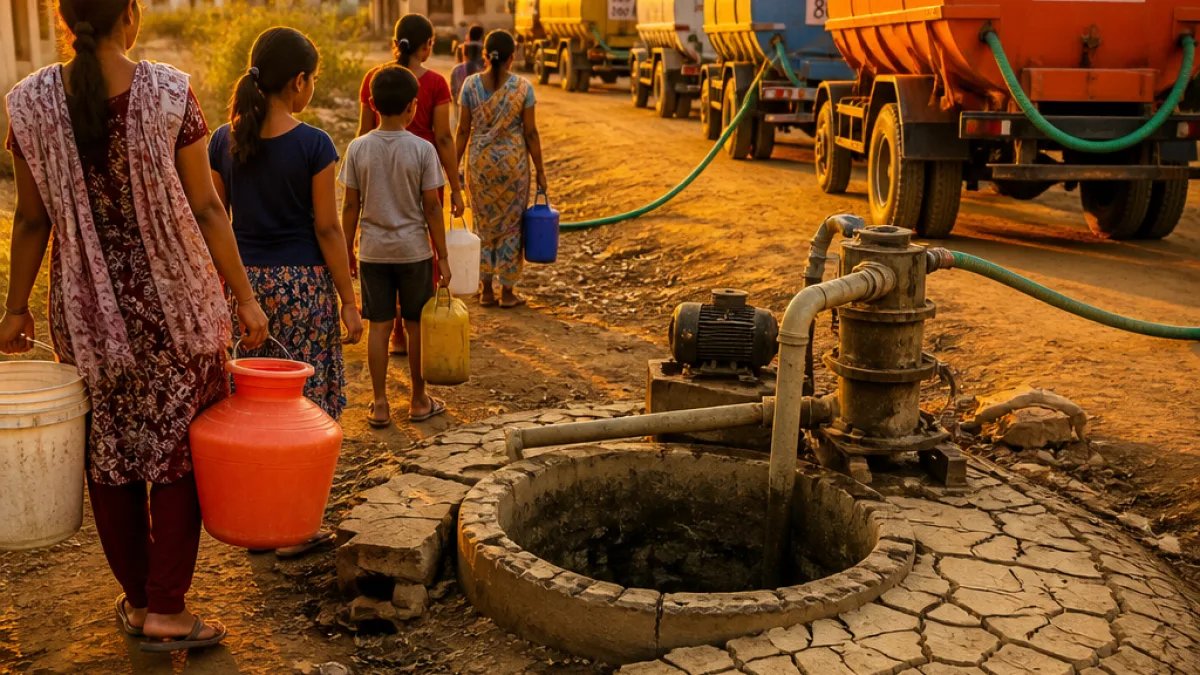
Residents and local leaders reported that Kabini water pumping to around 22 layouts has been suspended for the past two months, forcing people to rely on dwindling groundwater. Where borewells have failed, households are dependent on tanker deliveries charging between ₹600 and ₹800 per load, with some operators reportedly demanding as much as ₹750 a trip in parts of the city outskirts.
“Except for a few layouts, most residents are not receiving potable water. With groundwater levels dropping due to the drought, borewells are drying up…tanker operators are charging exorbitant rates,”
— a homemaker identified as Shyamala from Halli Bogadi said, according to reporting.
Local civic activists attributed part of the distress to prolonged delays in the implementation of the ₹595-crore Hale Unduwadi project, a scheme that residents say could have alleviated the pressure on peripheral water supply had it progressed on schedule. Jayant J, president of Nagarika Hitarakshana Samiti, Srirampura, told reporters that newly constructed overhead tanks in some layouts remain idle even as residents queue for tanker deliveries.
“We have been informed that water pumping has stopped,” Jayant said, adding that dozens of layouts are now dependent on borewell water. AM Babu, president of the Manasi Nagara Residents’ Association and the East Mysuru Layout Residents’ Federation, said the situation had become severe across East Mysuru.
- Supply suspension: Kabini water supply to multiple layouts suspended for around two months, residents said.
- Rising costs: Tanker charges reported between ₹600–₹800 per load; residents in some areas paying ₹750.
- Project delay: Residents and activists blame delays in the ₹595-crore Hale Unduwadi project.
The crisis raises governance and public-health concerns as the city heads into hotter months. Dependence on private tanker operators has prompted allegations of a 'tanker mafia' exploiting shortages by imposing steep rates and dictating supply terms, an accusation voiced by residents who say they receive little clarity from local authorities on restoration timelines.
| Item | Reported details |
|---|---|
| Areas affected | Layouts within 10-km radius of Mysuru; about 22 layouts reported without Kabini supply |
| Tanker cost (reported) | ₹600–₹800 per load; some areas ₹750 |
| Major project cited | Hale Unduwadi project — ₹595 crore; delayed |
Residents said attempts to seek answers from municipal officials have met with limited information. “Officials keep assuring us that water supply will be restored, but we do not know whom to approach for answers,” Shyamala was reported as saying. The absence of clear communication has compounded the frustration of neighbourhood groups trying to coordinate alternative supply arrangements.
Local civic bodies have in the past relied on river-based supply schemes from the Cauvery and Kabini to meet urban and peri-urban demand. Activists say that delayed or interrupted pumping, coupled with falling groundwater tables because of the ongoing dry spell, has created a two-front problem — insufficient surface-water deliveries and weakened groundwater resilience.
Urban planners and water-security analysts have long warned that peripheral growth around Mysuru requires parallel augmentation of water infrastructure, including timely completion of projects, better monitoring of groundwater extraction and transparent management of tanker services to prevent price gouging. While these structural measures are medium to long-term, residents facing immediate shortages are demanding short-term relief measures, such as scheduled municipal tanker runs, regulated pricing and prioritised restoration of suspended pumping.
At present, official responses from the Mysuru Urban Development authority or the city corporation regarding the suspension of Kabini pumping and the status of the Hale Unduwadi project were not included in the reporting. Residents and residents’ associations said they expect clearer timelines and interventions from authorities to prevent further hardship as the city approaches peak demand months.
The unfolding situation underscores the vulnerability of Mysuru’s expanding urban periphery to climate variability and infrastructure delays, making water security a pressing civic challenge for the municipal administration and state agencies responsible for river-based and local groundwater supplies.