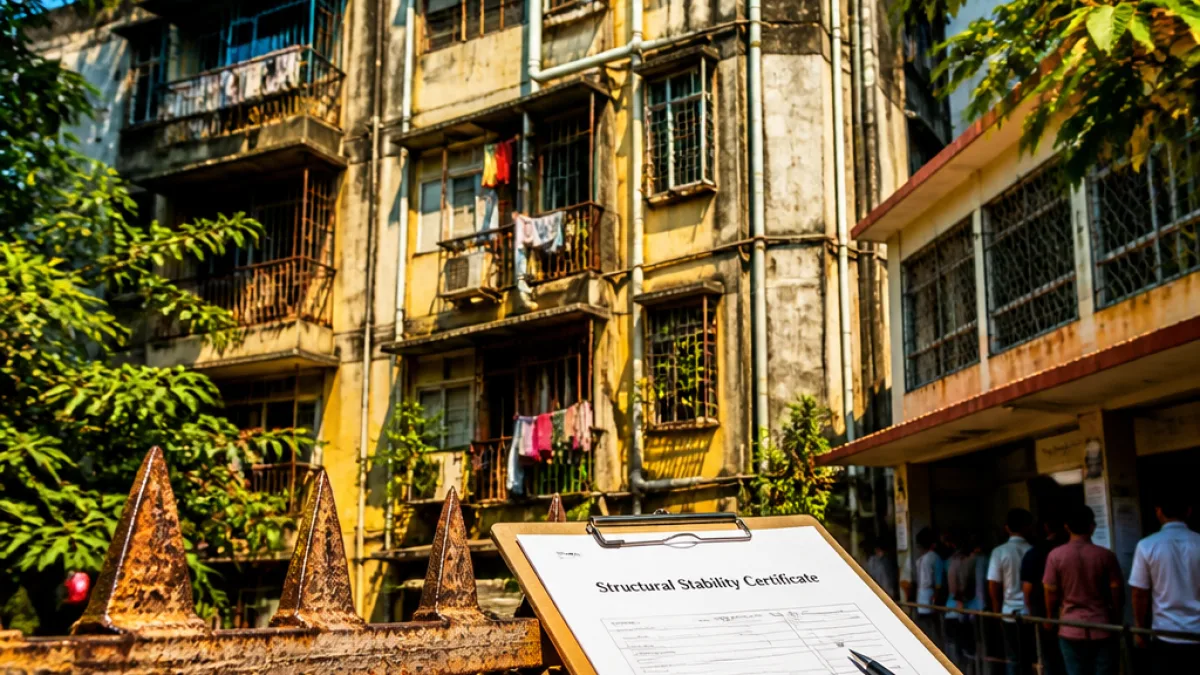
Mumbai — The Maharashtra government on Monday ordered that older buildings seeking fresh water, drainage or other utility connections must produce valid structural stability certificates and construction permits, and demonstrate provision for rainwater harvesting and bio-sludge or solid-waste management facilities, a government resolution issued by the Urban Development Department said.
What the new directive requires
The move, described by the department as part of “ease of doing business and ease of living” reforms, aims to standardise the procedure for granting permissions to existing buildings across municipal corporations, municipalities and nagar panchayats.
Under the resolution, municipalities will be required to grant new water and drainage connections and similar utility services to older structures only if certain conditions are met. Officials said the conditions are intended to ensure the safety of ageing buildings and to promote sustainable water management.
- Applicants must submit the building’s construction permit and a valid structural stability certificate.
- An engineer will examine the structural certificate and prepare a feasibility report.
- The feasibility report must assess availability of space for rainwater harvesting and solid waste/bio‑sludge management systems.
- The report must also evaluate whether installing such systems would pose any danger to the building or neighbouring structures.
How municipal bodies will implement the policy
The resolution applies when municipal bodies process applications for new utility connections to existing buildings, and is subject to compliance with the Unified Development Control and Promotion Regulations (UDCPR) and provisions of the Maharashtra Regional and Town Planning (MRTP) Act, the Urban Development Department said.
Municipal corporations, municipalities and nagar panchayats must allow permissions when the stipulated conditions are fulfilled, the department added. The structural certificate and construction permit will be core documents examined during the approval process.
| Requirement | Purpose |
|---|---|
| Construction permit | Verify legal status and sanctioned plan of the building |
| Structural stability certificate | Confirm safety and load-bearing capacity of the structure |
| Feasibility report | Assess space and safety for rainwater harvesting and bio-sludge systems |
Why the government moved now
Officials framed the directive as part of an effort to balance safety, environmental measures and streamlined services. Rainwater harvesting and bio‑sludge management have been long-promoted by state and local authorities to conserve groundwater and manage sewage-sludge responsibly, particularly in urbanised districts including the Mumbai Metropolitan Region and fast-growing municipal councils across districts such as Pune, Nashik and Nagpur.
Requiring structural fitness certificates before granting new connections targets older buildings that may have been constructed under earlier norms or without adequate documentation. Municipal engineers will be responsible for scrutinising the certificates and feasibility studies before permissions are issued.
Practical implications for residents and builders
Owners of older residential or commercial properties who plan to apply for fresh water, drainage or utility hookups should prepare to obtain a structural stability certificate from a licensed structural engineer and produce the original building permit. Where space is constrained, feasibility reports must detail alternatives or explain why installation may be unsafe.
The resolution does not alter the UDCPR or MRTP Act but mandates that municipal authorities check compliance with those laws when processing connection requests. Local civic engineers and building inspectors will likely see an uptick in verification workloads as approvals require additional technical documentation.
Experts and stakeholder groups will watch how municipalities operationalise the order, including the timeframe for inspections, fees for certification and acceptance of older legacy documents. Failure to meet the conditions may delay granting of new utility services, a practical concern for households and businesses needing connections.
The PTI news agency reported the government resolution; the Urban Development Department issued the official order. The printout of the order lists the conditions and implementation guidance for local bodies, according to the PTI dispatch.
Implementation details such as templates for structural certificates or standard formats for feasibility reports were not included in the PTI summary of the resolution. Municipalities are expected to issue local circulars and checklists to guide applicants in the coming weeks.
Sameer Joshi
Maharashtra correspondent