Scenic setting draws national attention as terminal work moves forward
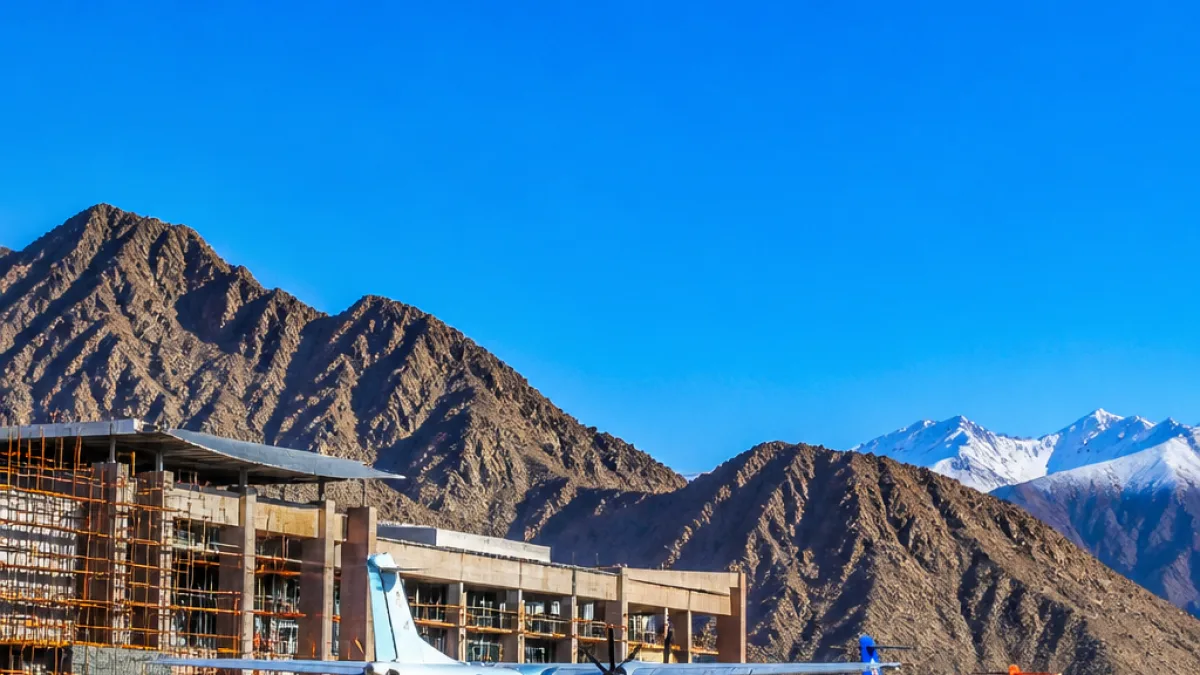
The Kushok Bakula Rimpochee Airport at Leh has been cited among five of India’s most scenic airports, with national coverage noting the airstrip’s placement within Ladakh’s high‑altitude landscape. The airport serves as the principal aerial gateway to the region and, according to the report, is also undergoing infrastructure development — work that the Ladakh administration reviewed in June 2026.
- Location and landscape: The airport lies amid the stark mountains and high‑altitude desert that characterise Ladakh, offering arrivals and departures visually distinct from coastal and tropical airports.
- Development status: The national piece specifically noted a review by the Ladakh administration in June 2026 of the new terminal build at the airport.
- National comparison: The airport was listed alongside other visually notable airports such as Agatti (Lakshadweep) and Pakyong (Sikkim), underscoring differing engineering and approach challenges across India.
The mention of Leh’s airport in a national roundup draws attention both to the region’s unique topography and to potential upgrades that could affect travellers and local services. The report’s brief account emphasises the contrast between Ladakh’s barren, mountainous terrain and the settings of other scenic airports.
Arriving at Kushok Bakula Rimpochee Airport in Leh means entering Ladakh’s high‑altitude landscape.
While the national report did not provide technical details, the reference to a June 2026 administrative review indicates that authorities are engaged in assessing progress on a new terminal project. For Leh residents, changes to the airport’s terminal infrastructure may have multi‑fold consequences, including passenger handling capacity, convenience for inbound tourists, and operational readiness during peak seasons.
Context and local implications
Leh’s status as a high‑altitude destination means the airport is a critical piece of local infrastructure. The facility not only supports civilian travel but also underpins logistics for services that depend on reliable air connectivity. Even limited upgrades to terminal facilities can alter the passenger experience during busy periods and may influence the scheduling and frequency of flights by carriers that operate into Leh.
| Airport | Noted feature in national report |
|---|---|
| Agatti Airport (Lakshadweep) | Runway on a narrow island surrounded by lagoon and sea |
| Pakyong Airport (Sikkim) | Hilltop location; engineering for mountainous terrain |
| Kushok Bakula Rimpochee Airport (Leh) | High‑altitude, stark mountain landscape; terminal development reviewed June 2026 |
The national comparison also underlines varied engineering considerations across these facilities: island runways at Agatti, slope stabilisation and soil reinforcement at Pakyong, and the unique environmental and operational constraints at high altitude that apply to Leh. The report’s inclusion of Leh alongside these locations highlights both the visual distinctiveness and the infrastructure attention the airport is receiving.
Local stakeholders — including passengers, hoteliers, tour operators and logistics providers — are likely to monitor the administration’s reviews and any subsequent official releases for concrete timelines, funding details and operational impacts. At this stage, the public account stops short of providing a schedule for completion or the scope of amenities to be added to the new terminal.
Authorities involved in airport development typically follow phased project cycles that include design clearances, tendering, execution and commissioning. Residents seeking further specifics on how the terminal development will change passenger services at Leh airport should await detailed notices from the Ladakh administration or the Airports Authority of India.
For now, the airport’s inclusion in a national survey of scenic airports serves as a reminder of Leh’s distinctive geography and the continuing attention to its primary air link.