Historic fabric survives amid contemporary restoration
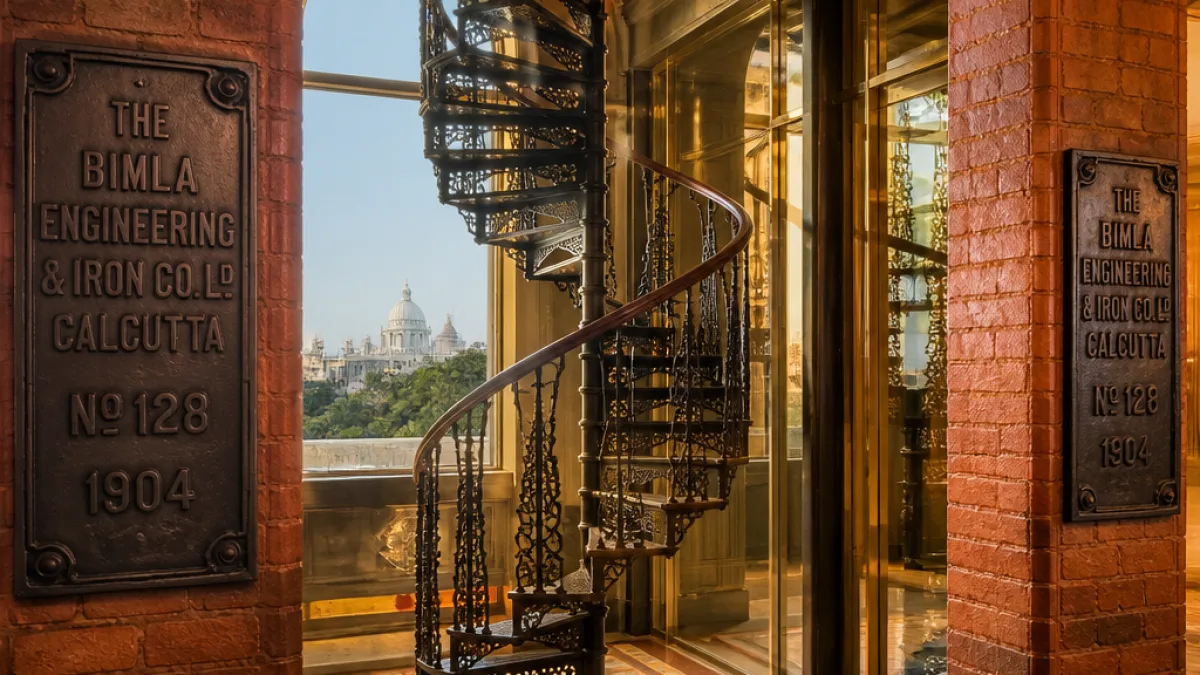
The LaLiT Great Eastern Kolkata, an over 185-year-old hotel in the heart of the city, has retained physical traces of its colonial-era origins even as it has been refurbished to meet modern hospitality standards, t2online reported. Visitors to the heritage wings can still see cast plaques marked ‘Dorman Long & Co., Middlesbrough, England 1830’ on iron pillars and an ornate Edwardian iron framework that frames a spiral staircase.
According to the report, the property traces its roots to a British confectioner’s bakery in the 1830s. That business evolved into the Auckland Hotel, which opened on 19 November 1840, named after the then Governor‑General of India, and later became known locally as Wilson’s Hotel. In the 1860s it was rechristened the Great Eastern Hotel Wine and General Purveying Co., consolidating its reputation as a prominent colonial landmark in Calcutta.
“The renovation has honoured the building’s iconic heritage while connecting Victorian, Edwardian and Contemporary architectural styles,” t2online reported.
The LaLiT Hotels group’s recent conservation work, noted in the feature, is said to have aimed at preserving numerous historical artefacts while integrating contemporary design elements. The Edwardian block’s ironwork — including original cast plates and structural members — is presented as part of the hotel’s narrative, allowing guests to experience layered periods of the city’s built fabric.
- Original features: cast‑iron plaques and Edwardian spiral staircase.
- Origins: British bakery in the 1830s; Auckland Hotel opened 19 Nov 1840.
- Historic associations: reported links to the Quit India Movement and Bengal’s 1940s upheavals.
Links to freedom movement and 1940s history
The hotel’s long history places it in proximity to several pivotal events of the 1940s. The feature recalls that during the period of the Quit India Movement and the Bengal Famine, the hotel functioned as a cosmopolitan meeting place. It is reported that figures from the independence movement, including Mahatma Gandhi, and international revolutionaries such as Ho Chi Minh, used the premises as a discreet venue for discussion and networking away from colonial scrutiny.
Such associations add to the property’s cultural resonance in Kolkata, where civic memory and colonial-era structures remain a visible part of urban life. Heritage buildings across the city often embody contested histories — as sites of architectural value and as witnesses to political and social transformations — and the Great Eastern’s preservation highlights that dual role.
A hybrid of styles and conservation challenges
The article describes the recent renovation as a careful blending of three architectural vocabularies: Victorian, Edwardian and Contemporary. Conservation of cast‑iron fabric, timber elements and internal finishes requires specialist interventions, and the reported restoration at the LaLiT Great Eastern appears to have prioritised visible historical elements alongside modern amenities.
| Year / Period | Event |
|---|---|
| 1830s | Bakery established by British confectioner David Wilson (reported origin) |
| 19 Nov 1840 | Auckland Hotel opened |
| 1860s | Renamed Great Eastern Hotel Wine and General Purveying Co. |
| 1940s | Associated with Quit India Movement and Bengal Famine era activity |
For Kolkata’s residents and visitors, the restored hotel offers more than accommodation: it is presented as a living repository of the city’s layered past. As debates about conservation, adaptive reuse and the future of colonial‑era buildings continue, the LaLiT Great Eastern stands as one example of how heritage structures are being positioned within the city’s contemporary cultural economy.
Local conservationists and urban planners regularly point to the need for sensitive maintenance of such assets so they can continue to inform civic identity while serving present‑day needs. The LaLiT’s combination of preservation and commercial hospitality underscores the practical choices facing custodians of Kolkata’s built heritage.