Inspection focused on compliance with new waste rules and gaps in processing capacity
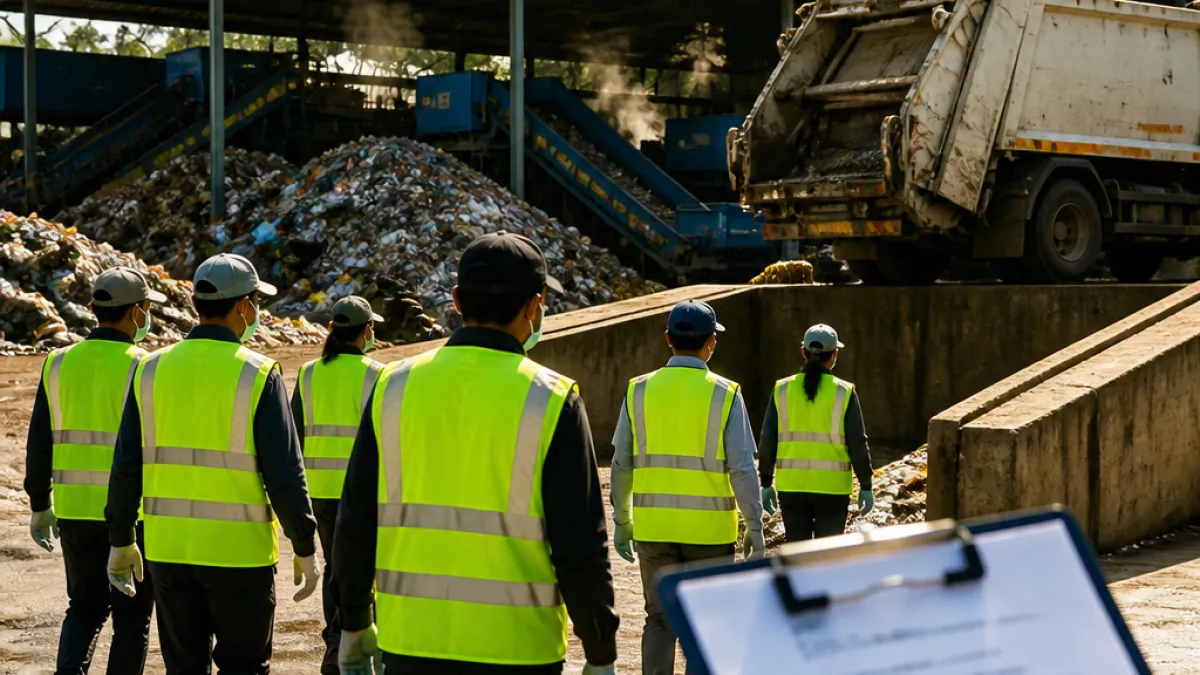
Kohima officials on August 10 carried out a scheduled inspection of the city's waste management installations, visiting the Kohima Waste Management Plant at Lerie and the landfill site at Dzürüzou to review arrangements for collection, processing and disposal.
The visit formed part of the work of the District Level Implementation and Monitoring Committee responsible for overseeing the implementation of the Solid Waste Management Rules, 2026, according to a report released by the Directorate of Information and Public Relations (DIPR).
The inspection team was led by Advisor for School Education Dr Kekhrielhoulie Yhome and included Deputy Commissioner, Kohima, B Henok Buchem, and Chief Executive Officer of Kohima Municipal Council (KMC), Alemyapang Longchar, together with other officials, the DIPR report said.
What officials looked at
- Operational status and capacity of equipment at the Lerie waste management plant;
- Waste disposal practices and site management at the Dzürüzou landfill;
- Challenges and requirements for scaling up scientific processing and segregation to meet new rules.
During the inspection, the team reviewed the existing facilities at Lerie and took stock of on-ground waste management arrangements before proceeding to Dzürüzou landfill to observe disposal operations. The exercise aimed at assessing whether current infrastructure and practices align with the statutory requirements under the 2026 rules, the report added.
"Kohima generates around 80–90 tonnes of municipal waste per day,"
The DIPR report highlighted that official project documents estimate Kohima's daily municipal waste generation at around 80–90 tonnes, underscoring the need for efficient collection, segregation, processing and scientific disposal.
Capacity, gaps and implications for residents
Officials said the inspection offered an opportunity to identify shortfalls in processing capacity and to understand logistical or technical bottlenecks that impede scientific disposal. With the city producing the volume of waste cited in official documents, gaps in segregation at source and limited treatment capacity can increase pressure on landfill sites, shorten their working life and raise public health and environmental risks.
Implementation of the Solid Waste Management Rules, 2026 places statutory duties on municipal bodies to establish systems for source segregation, transportation, treatment and disposal as per prescribed standards. The monitoring committee’s visit signals an institutional intent to ensure Kohima’s compliance with the new regulatory framework.
| Site | Purpose of Visit | Key Focus |
|---|---|---|
| Lerie Waste Management Plant | Inspection of processing facilities | Equipment status, throughput capacity, segregation arrangements |
| Dzürüzou Landfill | Review of disposal arrangements | Site management, scientific closure/operational practices |
The DIPR account did not provide technical measurements or a schedule of corrective actions. However, the inspection is part of a broader monitoring regime; follow-up actions typically include preparing a compliance report, identifying upgrade needs and recommending timelines for remediation or capacity augmentation.
For Kohima’s residents, effective implementation would mean more reliable waste collection, improved hygiene in neighbourhoods, reduced incidence of open dumping and lower risk of contamination of local water courses. Conversely, delayed upgrades or weak enforcement could lead to continued environmental stress and operational strain on existing disposal sites.
The monitoring committee’s review is likely to inform the municipal council’s short- and medium-term planning for waste infrastructure and may influence proposals for additional funding, technical assistance or contract adjustments with service providers. The DIPR report underlines that the inspection assumes significance as Kohima strengthens its municipal solid waste management system.