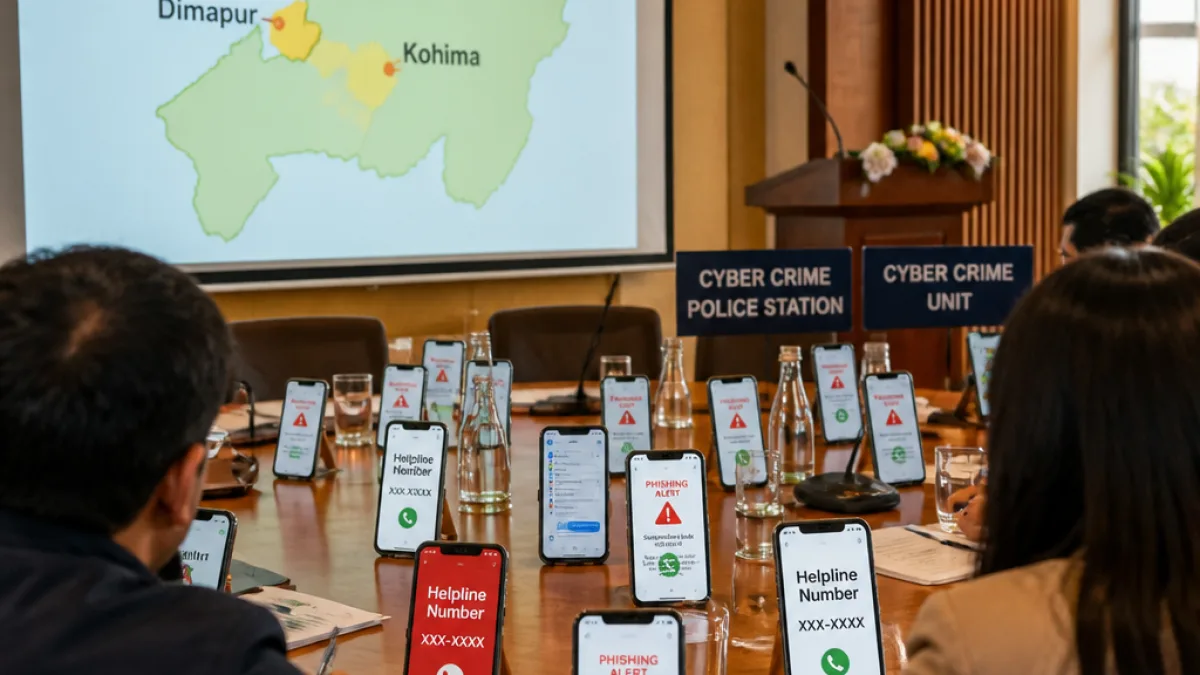
Cybercrime concentration in Dimapur and Kohima alarms state police
DIMAPUR: Dimapur and Kohima together account for an estimated 80–85% of reported cybercrime incidents in Nagaland, the state cybercrime police said on Tuesday, warning that scams are growing more sophisticated and increasingly target individuals through social media, fake helplines and impersonation.
The figures were disclosed by Kihika Chishi, Officer-in-Charge of the Cyber Crime Police Station at the Police Headquarters, during a media workshop titled "Vartalap" organised by the Press Information Bureau, Ministry of Information and Broadcasting, Kohima. The event was held at Hotel Saramati in Dimapur.
Chishi told attendees that the majority of cases logged with the cybercrime unit involve individuals who have been cheated or defrauded online. He flagged several common methods used by perpetrators:
- Smishing — fraudulent SMS messages containing malicious links;
- Phishing — emails or fake websites designed to capture passwords, banking credentials or one-time passwords (OTPs);
- Vishing — voice calls in which callers impersonate bank officials, government employees or other trusted persons to elicit sensitive information.
According to the officer-in-charge, social media platforms are frequently used as the entry point for investment-related frauds. Advertisements promising unusually high returns are used to lure victims into schemes that eventually result in financial loss.
Chishi said an elderly woman who searched online for a bank helpline number ended up contacting a scammer and, after being asked to share an OTP, had her account emptied.
That example was cited by the cybercrime unit as illustrative of the tactics used: victims seeking legitimate assistance online may be redirected to fraudulent numbers or pages that appear authentic. The police advised customers to use the helpline printed on bank cards or contact their bank directly through verified channels.
Police guidance and local implications
State cybercrime officials stressed that interactions between victims and criminals are increasingly shifting to digital platforms, making it essential for the public to remain vigilant. The police reiterated standard precautions such as not sharing OTPs, passwords or banking details with anyone calling or messaging unexpectedly.
For residents of Dimapur — a commercial hub and the most populous city in Nagaland — the concentration of cases carries specific implications. High smartphone penetration and active social media use, combined with a busy service sector, can create conditions where scams spread quickly if awareness is low.
The cybercrime unit's figures, presented at a government-run media workshop in Dimapur, underline the need for coordinated public awareness campaigns and for banks and service providers to ensure easy access to authentic contact information. The police did not provide a detailed numerical breakdown beyond the estimated percentage of statewide cases attributed to Dimapur and Kohima.
| Issue | What to watch for |
|---|---|
| Smishing | Unexpected SMS with links; requests for credentials |
| Phishing | Emails or websites asking for OTPs, passwords, bank details |
| Vishing | Calls from individuals claiming to be bank or government officials |
The police statement at the workshop did not include new operational figures such as the total number of complaints filed or conviction rates. It focused on raising public awareness and describing the methods most commonly used by offenders in the state.
Local law-enforcement officials urged residents to verify helpline numbers directly from bank cards or official websites, and to report suspicious messages and calls to the cybercrime unit so that incidents can be logged and investigated.
As cyber threats evolve, the police said continued public outreach and improved digital hygiene would be essential to reduce victimisation, particularly among vulnerable groups such as the elderly who may search online for assistance and inadvertently connect with fraudsters.