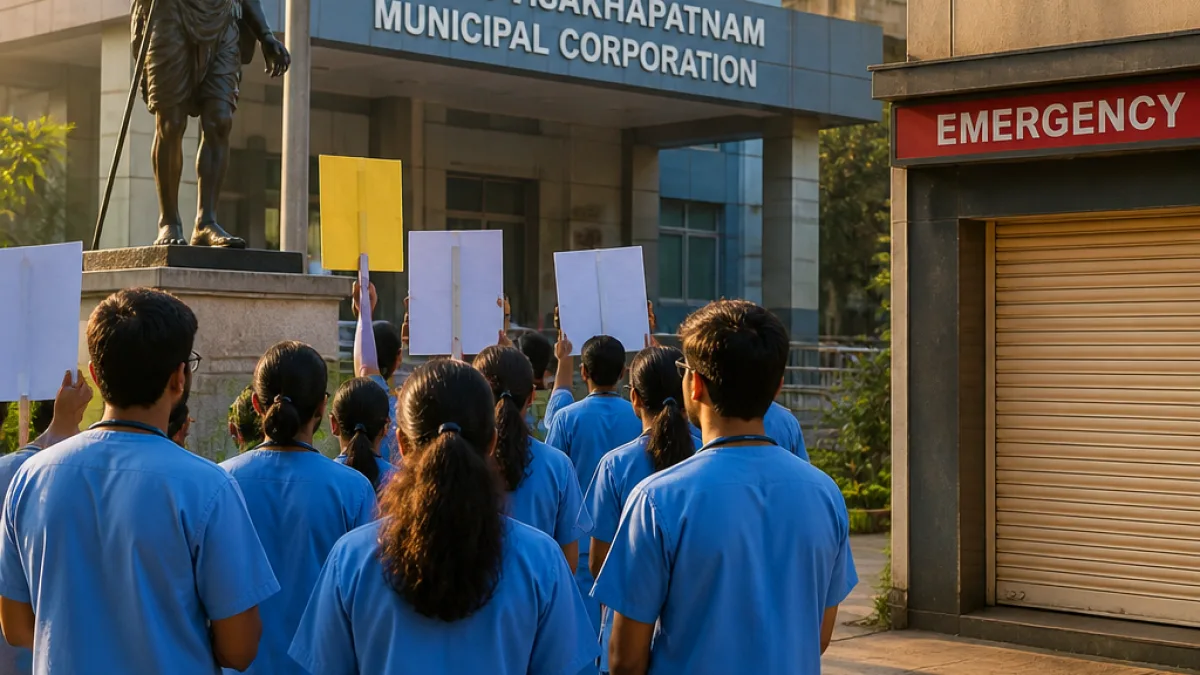
Visakhapatnam: The Andhra Pradesh Junior Doctors' Association (APJUDA) on Sunday announced it would escalate its ongoing agitation over stipend revision and withdraw emergency services across the State from 8 a.m. on August 17, saying the State government had not provided a satisfactory written response by the deadline.
What doctors have said
APJUDA leaders, including General Secretary Dr Balagam Dinakar Sai Srinivas (AMC) and Treasurer Dr Ranjeet Dhabale (AMC), who were among junior doctors protesting for a sixth consecutive day near the Gandhi statue outside the Greater Visakhapatnam Municipal Corporation office, said the deadline for a reply was 5 p.m. on August 16. When that did not produce a satisfactory written commitment on stipend revision, the association moved to the next phase of its strike.
“As of now, August 16 is the deadline. From August 17, we will also halt emergency services,”
They said that in earlier phases of the agitation emergency and Intensive Care Unit (ICU) services had been maintained to safeguard patient care. From Monday, participating junior doctors and other resident doctors across categories will withdraw emergency services, including in the ICU, casualty and labour room, while non-emergency services had already been suspended in earlier phases.
Scale of potential disruption
The association said the State has approximately 9,000 junior doctors, and that services in all 19 government medical colleges across Andhra Pradesh were likely to be affected. The Indian Medical Association, Andhra Pradesh (IMA A.P.) and the IMA Junior Doctors Network, Andhra Pradesh, urged the State government to resolve the issue, the APJUDA leaders said.
| Item | Figure |
|---|---|
| Junior doctors in Andhra Pradesh | ~9,000 |
| Government medical colleges affected | 19 |
| Withdrawal of emergency services begins | 8 a.m., 17 August |
Background and demands
APJUDA’s central demand is a clear, written and time-bound commitment from the State government to implement a stipend revision. The association said it sought implementation in line with discussions and proposals exchanged during negotiations with government representatives. The strike notice was initially issued on August 10 with a deadline of August 15; that deadline was extended while talks continued and subsequently revised to August 16.
Public health implications and precautions
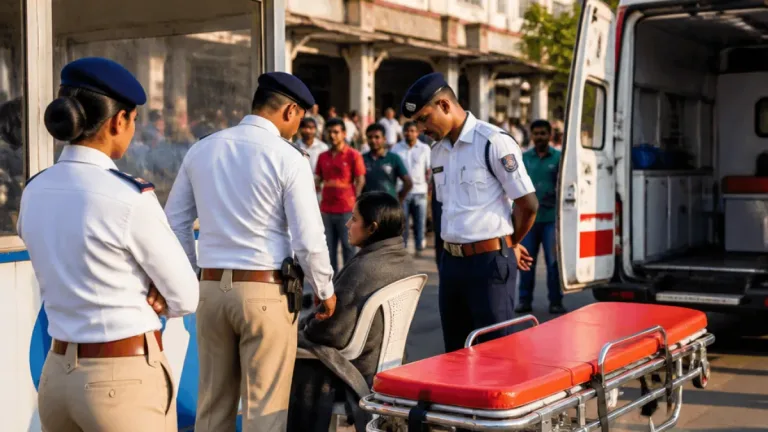
Withdrawal of emergency services — particularly ICU, casualty and labour room care — raises immediate public health concerns, since these units handle life‑threatening and time‑sensitive conditions. Hospitals and district health administrations typically activate contingency plans during such agitations, including reassigning senior doctors, engaging private hospitals, and coordinating ambulance transfers. The APJUDA leaders said emergency services were preserved during earlier phases to minimise harm to patients, but that complete withdrawal would now include those services.
- Patients requiring urgent care may face delays or need diversion to alternate facilities.
- Maternity services could be disrupted if labour room staff participate in the withdrawal.
- Authorities and hospital administrators may issue advisories on where to seek emergency care; the association said it had escalated agitation after failing to obtain a satisfactory written reply.
Appeals and next steps
The IMA A.P. and the IMA Junior Doctors Network urged the State government to resolve the matter, according to the APJUDA leaders. The association has indicated its action is conditional on receipt of the written commitment it seeks; absent that, the escalation to Phase III will go ahead as announced.
It remains unclear from the association’s statement whether there will be phased exemptions for critical cases or any formal communication from the State health department on contingency measures. Hospitals, district collectors and the State health department are the immediate authorities responsible for issuing public advisories and coordinating emergency responses if the withdrawal proceeds as scheduled.
Readers are advised to monitor official channels and hospital notices for updates on service availability and alternate arrangements.