TEHRAN: Iran on Tuesday introduced a higher retail price for motorists who consume more than the monthly petrol quota, state media reported, marking the second such increase since December as the country grapples with war-related economic pressure and soaring inflation.
Details of the new pricing and who it affects
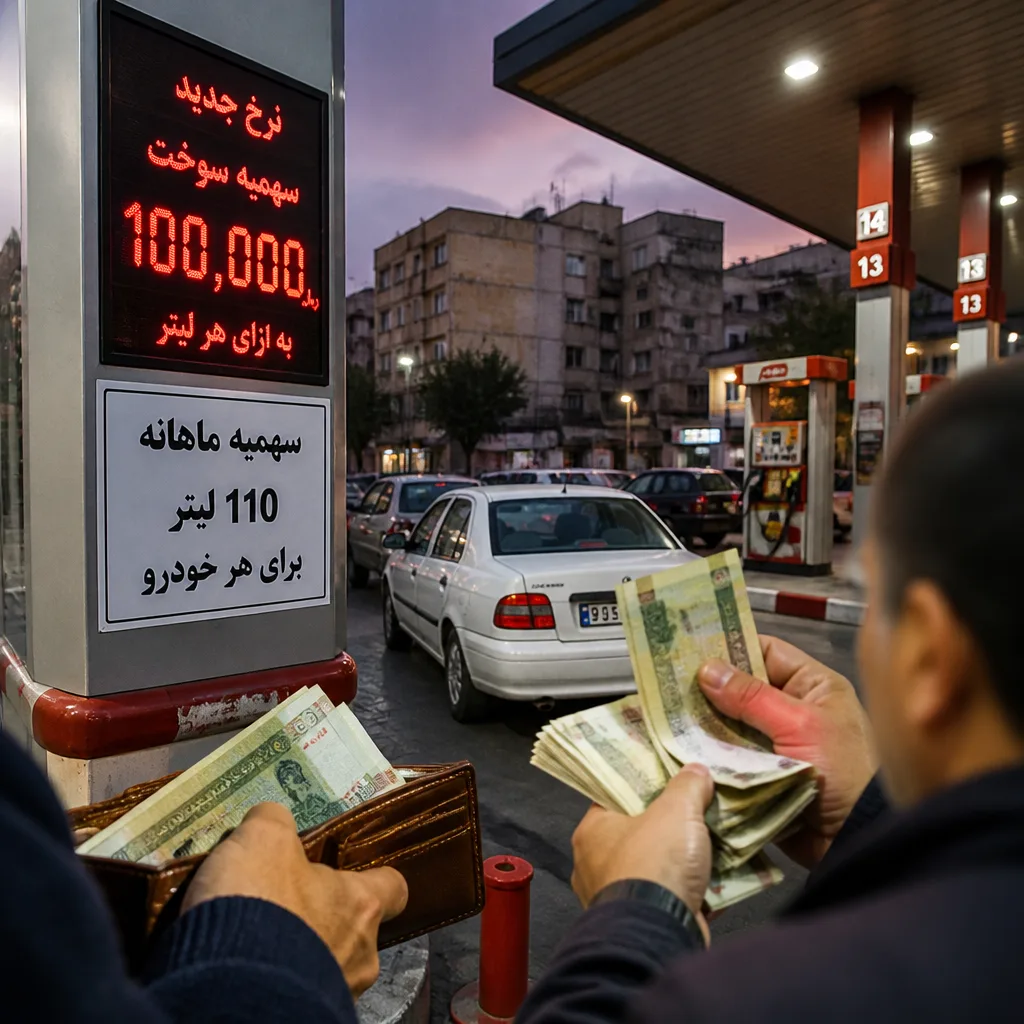
Under the revised system, consumers who buy in excess of the monthly quota of 110 litres (about 29 gallons) will now pay 100,000 rials per litre — roughly double the price applied since December, according to state news agencies. The government said the extra revenue will be redistributed to households.
Keramat Veis Karami, chief executive of Iran's state oil distribution company, was quoted by the official IRNA news agency saying the new rate would affect about 15 per cent of fuel consumers. He added that domestic consumption hit a record in August of 145 million litres per day, while domestic refining capacity stood at 122 million litres per day, leaving the balance to be met through imports.
"The extra money from the price increase will be given to households," the government said, attributing the measure to the "current situation."
Economic context and risks
The increase comes amid a sustained fall in the currency and sharply higher consumer prices. Iran's official statistics body reports an annual inflation rate near 67 per cent, and analysts fear further fuel price rises could deepen inflationary pressures. The rial has weakened markedly, with the US dollar trading at around 2.22 million rials on Monday, state reporting said.
Petrol price adjustments are politically sensitive in Iran. A 2019 price rise prompted nationwide unrest and a heavy security response that reportedly left hundreds dead. Cheap fuel has long been perceived by many Iranians as a social entitlement; successive governments have used subsidies and controlled prices to limit public discontent. Officials have framed this latest hike as necessary to curb excessive consumption — driven in part by an ageing vehicle fleet, limited spare parts and inadequate public transport — and to reduce reliance on imports.
Immediate consequences and policy aims
Officials argue the price-rise will discourage wasteful consumption and ease supply pressures by reducing demand. The state distribution CEO highlighted the gap between consumption and domestic production as a principal motive for the change.
| Metric | Value |
|---|---|
| Monthly quota per person | 110 litres |
| New surcharge for excess use | 100,000 rials per litre |
| Share of consumers affected | 15% |
| Daily consumption (August) | 145 million litres |
| Domestic production capacity | 122 million litres per day |
- The surcharge is the second fuel-price adjustment since December.
- Officials link the measure to the "current situation" without explicitly naming the prolonged war as the cause.
- Analysts caution that higher pump prices are likely to feed into broader inflation.
Regional and India connection
For India, developments in Iran's energy policy are closely watched given long-standing commercial and strategic ties, and because disruptions to Iranian fuel supplies can influence regional markets. India imports crude and refined products from several sources; any sustained increase in Iranian domestic demand for imports or volatility in regional energy flows could have knock-on effects on refinery economics and international crude benchmarks.
Economic hardship at home has repeatedly sparked unrest in Iran. While the government has pledged that additional revenue will be channelled back to households, observers will watch for public reaction and whether measures to contain consumption are effective without stoking discontent. The measure arrives against a backdrop of foreign-exchange weakness and high inflation, factors that complicate Tehran's fiscal management and social compact.
The announcement was carried in state media and attributed to official statements from the oil distribution company and government communications. Independent verification of the exact implementation mechanics across Iran's provinces will emerge as the new pricing comes into force and is enforced at retail outlets.
Reporting based on state media and official agency dispatches.