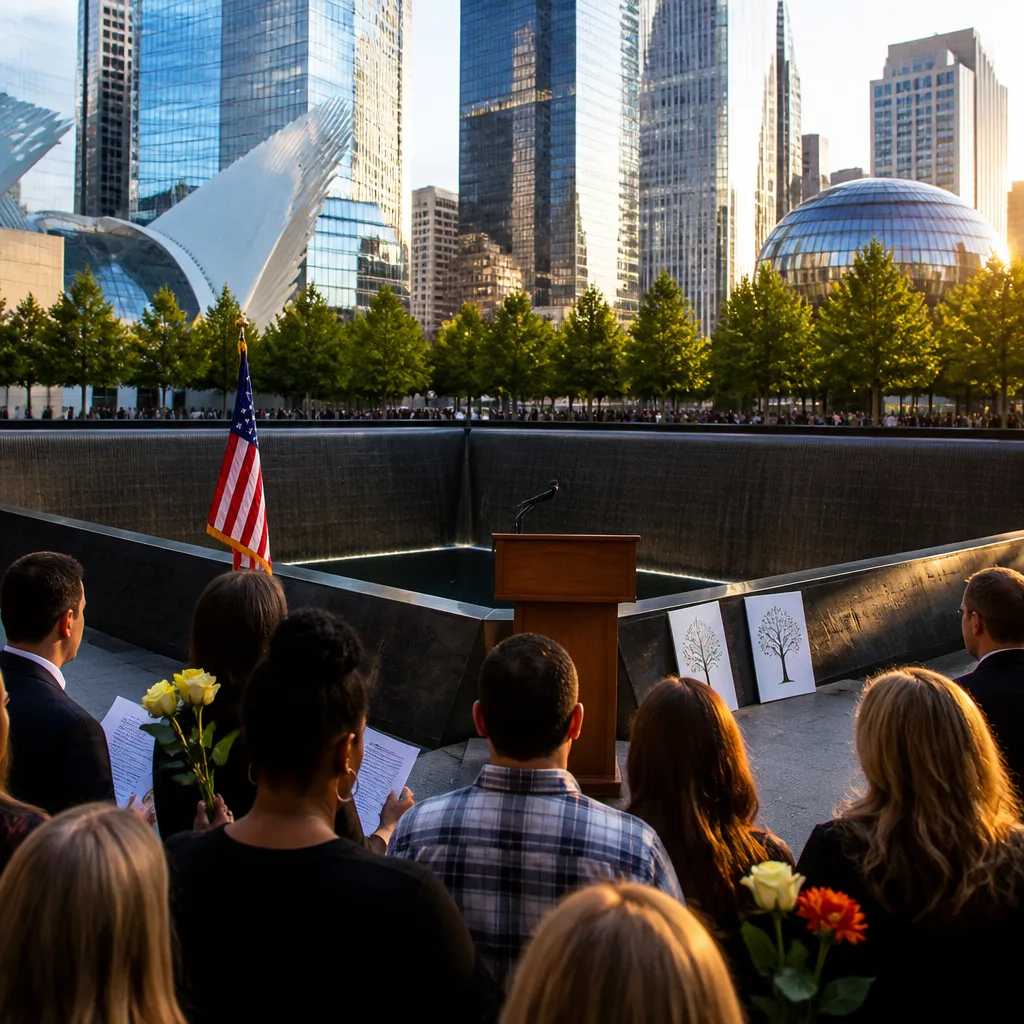
NEW YORK: At the 25th anniversary memorial for the September 11 attacks, Terry Strada, whose husband Tom died in the attacks, publicly criticised Saudi Arabia and successive United States administrations, accusing them of shielding information and prioritising relations over the demands of victims’ families.
Strada denounces alleged protection of Saudi interests
Strada, who chairs 9/11 Families United, addressed the ceremony at the World Trade Center site on Friday, saying that for a quarter-century successive administrations had chosen to protect Saudi interests rather than stand with those bereaved by the attacks. Her comments drew strong applause from those present.
“For 25 years, administration after administration, including leaders in front of us here today, chose to protect the Saudis instead of standing with the 9/11 families,”
She further accused US officials of withholding evidence, citing actions she said had betrayed the families. She named the Justice Against Sponsors of Terrorism Act (JASTA), saying that US officials had "vetoed" it — an accusation framed in her broader plea for transparency and accountability. Strada also appealed directly to then-President Donald Trump, urging him to confront Saudi denials and to back the families’ demands for truth.
Conflicting findings and continuing questions
The question of Saudi involvement in the 2001 attacks has remained contentious. The 2004 report of the National Commission on Terrorist Attacks Upon the United States, commonly known as the 9/11 Commission, concluded it had found no evidence that the Saudi government or senior Saudi officials funded al-Qaeda. The report also documented that the 19 hijackers were financed by al-Qaeda.
Nonetheless, later inquiries and civil litigation have prompted renewed scrutiny of potential links between some Saudi individuals and the perpetrators, leading to a continuing debate over the extent of any assistance provided by private Saudi actors versus official government involvement. Saudi authorities have repeatedly denied any role in the planning or funding of the attacks.
Political and diplomatic implications
Strada’s public rebuke at a high-profile memorial underscores the persistent tensions between victims’ families seeking full disclosure and the geopolitical and diplomatic considerations that have shaped Washington’s dealings with Riyadh. The appeal for greater transparency comes amid an environment where political decisions — including legislation and executive actions — are interpreted by some as influenced by bilateral relationships.
- Key accusation: Families’ chair alleges administrations prioritised Saudi relations over victim support.
- Official record: 9/11 Commission found no evidence implicating the Saudi government or senior officials.
- Ongoing dispute: Later investigations and lawsuits have raised questions about assistance from some Saudi individuals.
The memorial setting — the site where nearly 3,000 people died — heightened the emotional tone of the remarks, as survivors, relatives and public officials gathered to mark the anniversary. Strada thanked Vice-President JD Vance for attending and asked him to convey the families’ message to the President.
| Issue | Recorded finding / claim |
|---|---|
| 9/11 Commission (2004) | No evidence that Saudi government or senior officials funded al-Qaeda |
| Families’ position (Strada) | US administrations protected Saudis; evidence withheld; promises broken |
| Saudi stance | Repeated denials of involvement |
The annual memorials serve both as remembrance and as moments of political reckoning for many families and advocates who continue to press for full disclosure. The interplay between legal avenues pursued by relatives, congressional oversight and executive diplomacy remains a focal point for those seeking answers about the events of 11 September 2001 and the years that followed.
As the debate endures, Strada’s speech at Ground Zero reiterated a central demand from many victims’ relatives: that the United States government should prioritise delivering the fullest possible accounting of the attacks over preserving strategic partnerships.