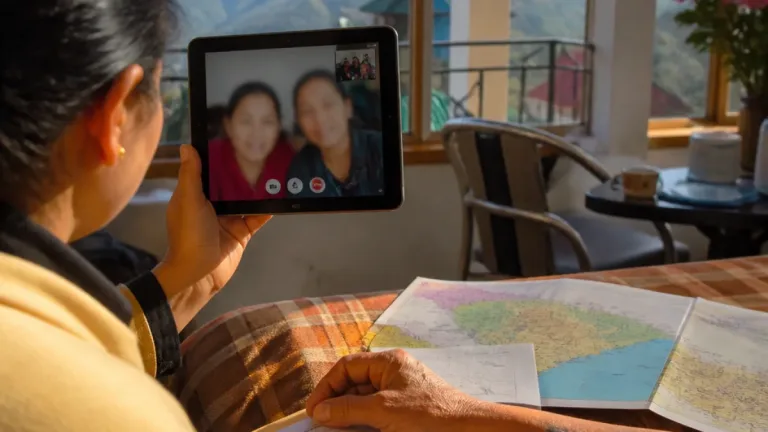

Every pensioner in India must submit an annual life certificate to keep payments flowing. For 2026 the practice has moved decisively online: a Digital Life Certificate (DLC) generated through the Jeevan Pramaan platform using Aadhaar-based authentication is now the dominant route, and in most cases a smartphone and face authentication are sufficient—removing the earlier dependence on fingerprint scanners.
What a life certificate does and who needs to submit it
A pension is payable only while the pensioner is alive. The agency that disburses the pension — usually a bank branch, a treasury, the Central Pension Accounting Office (CPAO), the Employees' Provident Fund Organisation (EPFO) or a defence pension office — must verify life status once a year. That verification is the life certificate or jeevan pramaan patra. Failure to furnish the certificate halts pension credit until the certificate is produced.
The DLC carries a unique Pramaan ID and is stored in a central Life Certificate Repository from which disbursing agencies pull the document electronically. The process eliminates physical paperwork, long queues and misplaced acknowledgement slips.
Seven submission routes and key portals
Pensioners in 2026 can choose several ways to submit their life certificate. The principal digital avenue is the Jeevan Pramaan platform, which supports Aadhaar-based authentication. Other accepted routes depend on the disbursing authority.
- Jeevan Pramaan (DLC) — Aadhaar-based digital certificate stored centrally with a Pramaan ID.
- Bank or Treasury — Disbursing branches continue to accept certificates and pull the DLC from the repository.
- CPAO / EPFO / Defence Pension Offices — These agencies also access the DLC centrally.
- SPARSH / CGDA — Defence pensioners can use the SPARSH portal; SPARSH accepts DLCs.
- State Apps — Some states run proprietary apps or portals (for example, Andhra Pradesh's NIDHI); pensioners should check their state treasury.
- Offline submission — A paper life certificate remains an option for those unable to use digital routes.
- Overseas and NRI pensioners — Specific provisions exist for those abroad; the DLC system is commonly used but the disbursing agency will specify the method.
Practical benefits and common issues
The shift to digital offers clear advantages: no travel to a bank or treasury, no physical queues, and a machine-readable certificate that is retrieved electronically by the payer. For many pensioners the most tangible improvement is that fingerprint scanners are no longer essential — a smartphone with face authentication suffices in most cases.
However, some pensioners still encounter problems with digital submissions. The source lists common reasons for rejection, and pensioners are advised to check acceptance status after uploading a DLC. Disbursing authorities will usually indicate the acceptance or rejection; if rejected, pensioners must rectify the specific cause and resubmit.
| Disbursing authority | Accepts DLC |
|---|---|
| Banks / Treasuries | Yes |
| CPAO / EPFO | Yes |
| Defence (SPARSH / CGDA) | Yes |
Special categories have additional rules. EPS‑95 pensioners face distinct provisions, and family pensioners may need to submit extra declarations. Pensioners who miss the annual deadline will have their pension credit paused until they fulfil the requirement.
The 2026 process emphasises accessibility and administrative efficiency. For most pensioners the change means a shorter, simpler annual task: a brief authentication on a smartphone or authorised device, a generated Pramaan ID and the reassurance that the certificate will be pulled automatically by the paying agency.
Pensioners are advised to check with their bank branch, state treasury or the specific disbursing authority for precise deadlines, any state-level portals such as Andhra Pradesh's NIDHI, and steps to follow if a DLC is rejected.