
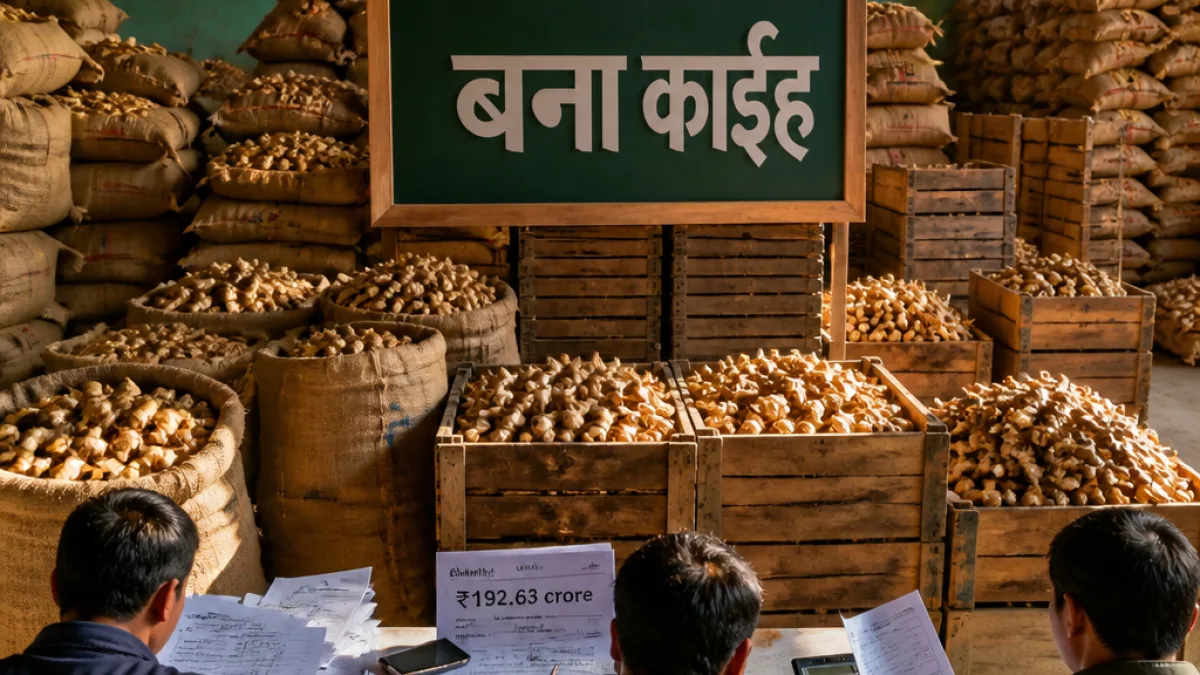
Mizoram has emerged as India’s pre‑eminent ginger producer, formally acknowledged by NITI Aayog in 2025 for its high‑quality crop that is drawing interest from food processors, pharmaceutical buyers and exporters. The subtropical hill zone, its soils and traditional farming together give Mizo ginger a flavour and composition that set it apart in domestic and global markets.
What sets Mizo ginger apart
Agricultural and industry data point to several distinguishing features of ginger grown in the state. Local varieties — including Thingpui, Thinglaidum and Thingaria — are noted for large rhizomes, light‑yellow flesh, a characteristic aroma, mild pungency and relatively low fibre content. These sensory and compositional traits are credited to the region’s agro‑climatic conditions and time‑honoured cultivation practices.
"It is a premium, GI‑tagged ginger from Mizoram, distinguished by its high oleoresin content, strong pungency, low fibre, and suitability for pharmaceutical, food‑processing, and export markets," said Shilpa Agrawal, Vice President and Head of Operations, Ind Food and Beverage Association (IFBA).
The Indian Council of Agricultural Research (ICAR) identifies ginger as a significant cash crop in Mizoram’s subtropical hills, which are characterised by acidic soils and annual rainfall of about 2,000–3,200 mm. These growing conditions, together with local cultivar traits, are reflected in laboratory measures that matter to buyers.
- Low fibre: a crude fibre content reported at around 5.74%, which makes the rhizome easier to process and preferred for many culinary uses.
- Gingerol and oleoresin: gingerol content near 1.25%, and oleoresin reported in May 2026 at 6–8% — higher than the stated global average of about 3%.
- Oil and dry matter: volatile oil near 1.80% and dry matter about 22.47%, adding to aroma and shelf stability.
Composition at a glance
| Measure | Reported value |
|---|---|
| Crude fibre | 5.74% |
| Gingerol | ≈ 1.25% |
| Volatile oil | 1.80% |
| Dry matter | 22.47% |
| Oleoresin (May 2026) | 6–8% (compared with global average ~3%) |
The higher oleoresin — a compound that includes gingerols and other flavour constituents — is a particular selling point. According to industry comment, oleoresin and oil levels are key quality indicators for manufacturers of spice extracts, beverages, nutraceuticals and certain pharmaceuticals.
Market and policy implications
Recognition as a national hub and the conferment of a Geographical Indication (GI) to Mizo ginger have practical consequences. A GI helps protect the identity of agricultural produce and can lift price realisation for growers when linked to traceability, quality standards and marketing support. Producers and processors can leverage composition data — such as the high oleoresin level — when negotiating contracts with domestic processors and overseas buyers.
For consumers and chefs, the state’s ginger promises a pronounced aroma and a clean, mildly pungent taste with less fibrous residue, while for smallholder farmers the crop presents a higher‑value alternative within mixed hill‑crop systems. The interplay of soil, rainfall and cultivar selection, backed by recognition and lab-tested composition, positions Mizoram’s ginger as a strategic crop in India’s spice basket.
As demand for provenance, traceability and distinct flavour profiles grows among both Indian and international buyers, Mizo ginger’s documented qualities may translate into better returns for growers and new opportunities for value‑added industry in the northeast and beyond.