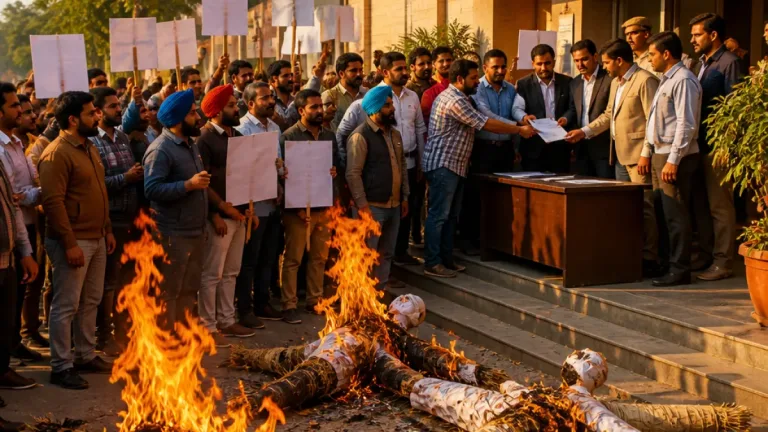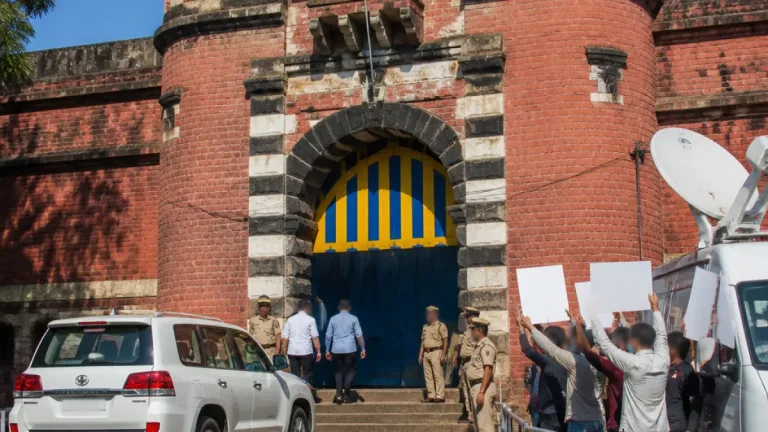
Sanitation workers across Haryana on Friday ended their longest-ever strike after reaching an agreement with the state government, officials and union representatives said. The stoppage, which began on 6 August, left municipal waste collection disrupted in towns and cities for 37 days.
Key terms of the settlement
Representatives of the Nagar Palika Karamchari Sangh met Cabinet Minister Vipul Goel and Cabinet Minister Krishan Kumar Bedi and secured a package of measures and assurances addressing pay, allowances and health benefits for sanitation staff.
- 13,091 contractual sanitation workers on Palika rolls had been on strike; 3,418 regular sanitation workers joined in solidarity, crippling garbage collection.
- Workers will receive a uniform allowance of ₹440 per month instead of a one-time payment.
- A risk allowance of ₹2,000 per month has been ordered for contractual workers, and the government agreed to extend it to regular employees.
- Payment of arrears and measures to equalise pay for equal work have been addressed for eligible employees, with payments already made where applicable.
- Contractual workers will be eligible for leave travel concession (LTC) as per applicable instructions.
- Directions were issued for annual medical check-ups of sanitation workers and sewermen — regular, contractual and HKRNL — to be conducted by the Health Department at the expense of the respective urban local bodies.
- In-principle approval was given to extend the government employees’ cashless medical policy to regular employees of urban local bodies, pensioners and their dependents.
- In-principle approval was also given to raise compensation under the Mukhyamantri Haryana Karamchari Durghatna Bima Yojana from ₹5 lakh to ₹10 lakh in the event of the death of a contractual sanitation worker while on duty.
- An arrangement with the State Bank of India was noted, under which contractual workers who open savings accounts with SBI would be provided ₹50 lakh by the bank in case of accidental death.
Impact on public services and health
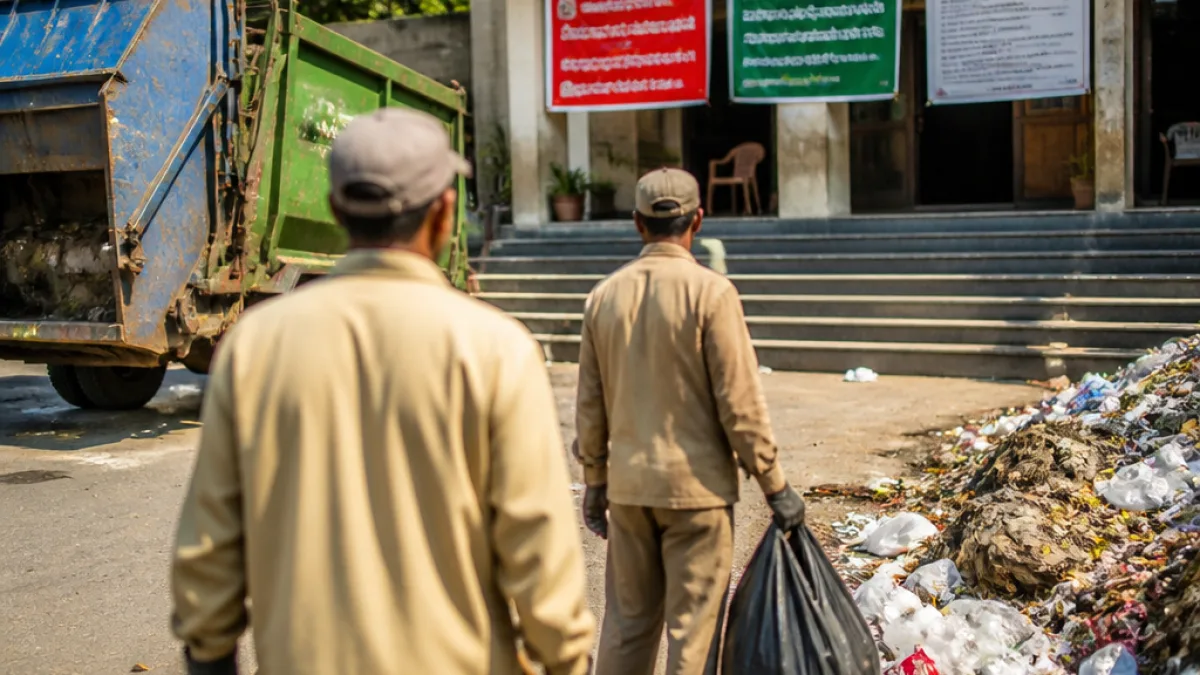
During the strike, many local bodies attempted to manage mounting waste by collecting garbage at night, but heaps of municipal refuse accumulated along roads in several urban areas, increasing public health concerns and complaints from residents. The resumption of work is expected to restore regular collections and ease hygiene risks in towns and cities.
Authorities have instructed municipal administrations to arrange annual medical examinations for sanitation workers and sewermen. The move is aimed at early detection of occupational illnesses and ensuring timely treatment; costs are to be borne by the respective urban local bodies, the agreement says.
What the deal means for workers and municipalities
Union leaders ended the strike after the government agreed to a mix of immediate payments and longer-term benefits. The monthlyisation of the uniform grant provides recurring, predictable support for workers, while the risk allowance acknowledges occupational hazards.
Extending LTC and a cashless medical policy in principle to urban local body staff and pensioners, if implemented, would align some benefits of municipal employees with wider state employee entitlements. Municipal administrations will need to implement the new directives, including funding periodic medical check-ups and updating payrolls to reflect the allowances.
| Issue | Before agreement | After agreement |
|---|---|---|
| Uniform allowance | One‑time payment | ₹440 per month |
| Risk allowance | Not uniformly applied | ₹2,000 per month; extended to regular staff |
| Accidental death cover | ₹5 lakh under state scheme | In‑principle approval to increase to ₹10 lakh |
Officials and next steps
The agreement was reached in talks attended by union representatives and Cabinet Ministers Vipul Goel and Krishan Kumar Bedi. The state Department has already issued instructions for payment of the risk allowance to contractual workers and for annual medical examinations. Further administrative steps will be needed for LTC implementation, extension of cashless medical policy benefits and formal notification of enhanced insurance sums.
With the strike called off, municipal corporations and councils are expected to resume normal waste collection schedules. Urban local bodies will be responsible for executing the new directives and meeting the associated costs.
Both union leaders and government representatives framed the settlement as a negotiated outcome. Details on timelines for implementing each component were not specified in the statement released after the meeting; municipal authorities will be the implementing agencies on the ground.