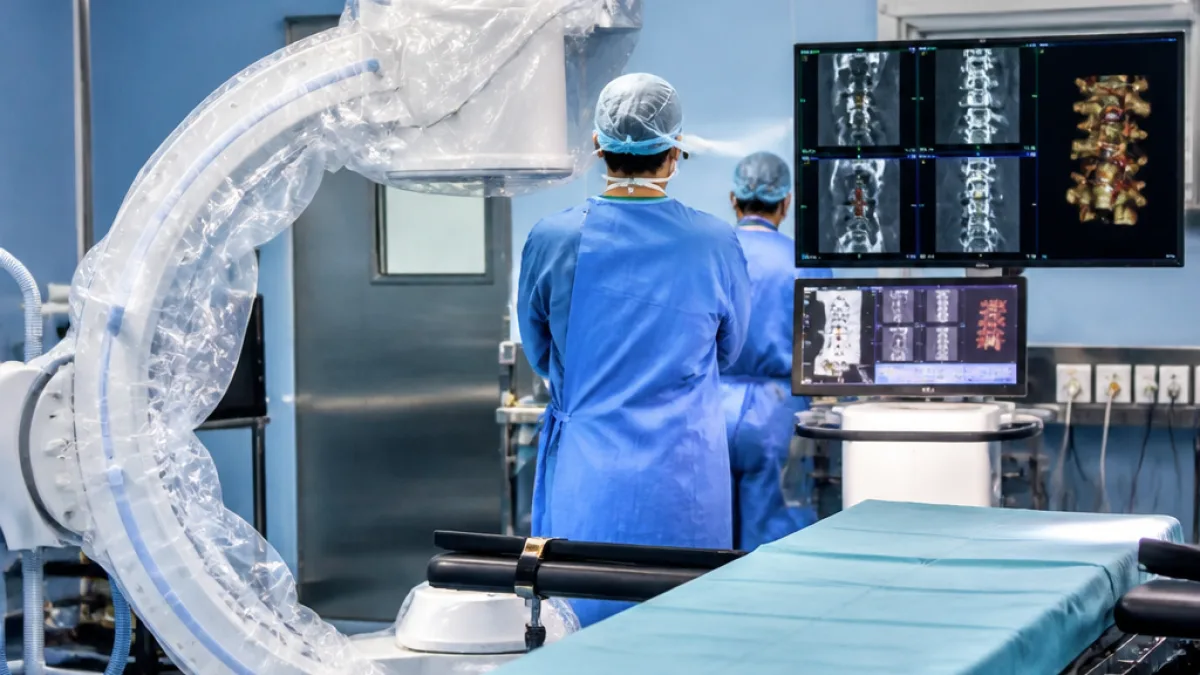
Faridabad, Sep 21: A specialised brain and spine surgery centre being set up in Faridabad will be equipped with Loop-X, a mobile intraoperative imaging system that produces two-dimensional and three-dimensional X-ray-type images during operations, a statement said on Monday.
Facility, partners and claimed regional significance
The centre is being established through a memorandum of understanding between Amrita Hospital, Faridabad, and German medical technology firm Brainlab, the statement added. It said the facility would bring together the hospital's neurology and spine surgery services with Brainlab's imaging and surgical navigation technologies.
According to the statement, the centre will be the first specialised facility of its kind in north India. It will also be used for the training of surgeons and other healthcare professionals, the statement said.
What Loop-X does and potential clinical advantages
The Loop-X system generates cone-beam computed tomography (CBCT) scans during surgery, enabling surgeons to check implant positioning or assess procedural outcomes without transferring the patient for separate imaging, the statement said. It added that the system allows patients to be positioned in different ways during procedures and permits repeat scans without interrupting the operation.
- Intraoperative CBCT: Provides 2D and 3D imaging while the patient remains in the operating theatre.
- Flexible positioning: Permits scans in different patient positions, according to procedural needs.
- Targeted imaging: Imaging can be limited to the area being treated, which the statement said could potentially reduce radiation exposure.
"The Loop-X system can generate cone-beam computed tomography (CBCT) scans during surgery, allowing doctors to check implant positioning or assess the outcome of a procedure without moving the patient for imaging," the statement said.
Training and workflow implications
The statement said the centre would serve a dual role of delivering specialised surgical care and providing a training platform for surgeons and healthcare professionals. By integrating imaging and navigation technologies into operative workflows, the partners intend to reduce the need to shift patients for postoperative imaging and enable intraoperative verification of interventions.
While the statement describes possible advantages such as reduced patient movement and repeat scans without interrupting surgery, it did not provide timelines for completion, patient capacity, or details on cost and referral pathways. Those operational specifics were not disclosed in the released material.
| Feature | Described benefit (per statement) |
|---|---|
| Intraoperative CBCT | Assess implants and outcomes without moving patient |
| Repeat scans | Allowed without interrupting procedure |
| Targeted imaging | Limits radiation to treatment area |
Healthcare observers note that intraoperative imaging systems like Loop-X are intended to improve surgical precision and immediate verification of results; however, the statement did not include clinical data or published studies specific to the planned Faridabad centre's outcomes.
The arrangement between a local tertiary-care hospital and an international technology provider reflects a trend in Indian healthcare toward incorporating advanced imaging and navigation tools into specialised surgical units. Residents and referring clinicians in Faridabad will likely watch for further announcements detailing when the centre will open, the range of services offered, and how patients can access care, none of which were specified in the statement.