
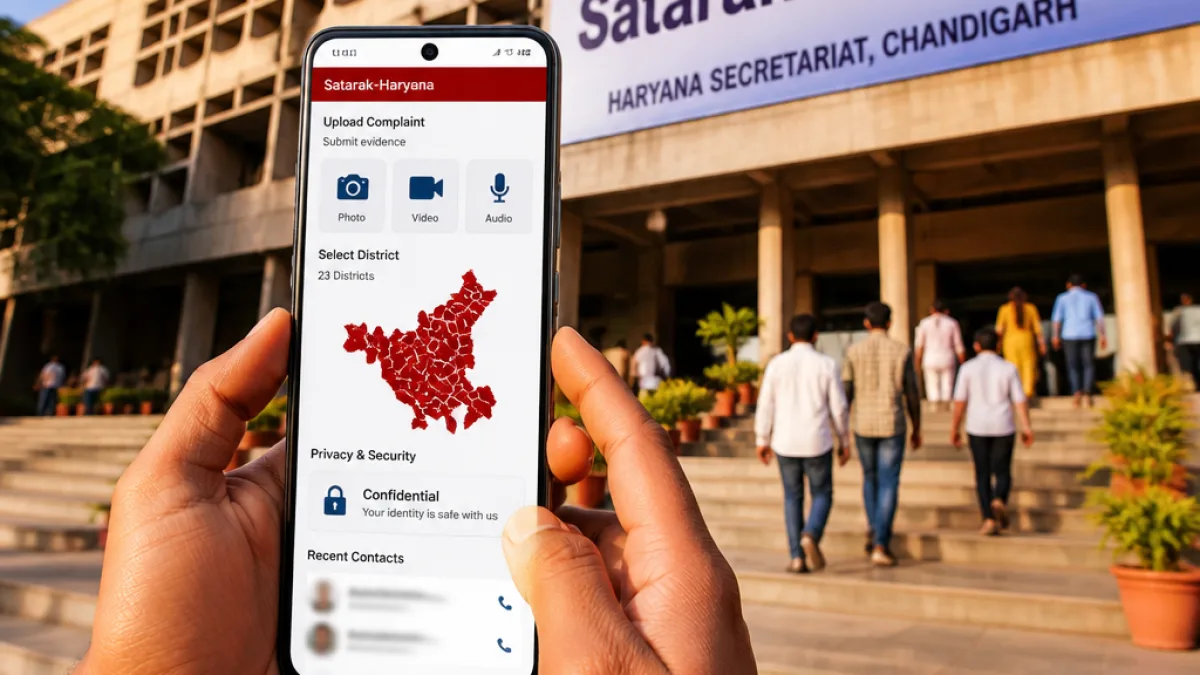
Chandigarh: Haryana Chief Minister Nayab Singh Saini on Thursday launched a mobile application, ‘Satarak‑Haryana’, designed to enable citizens to report corruption-related complaints and submit digital evidence directly to the State Vigilance and Anti-Corruption Bureau (SV&ACB).
What the app offers
Unveiled at the Haryana Secretariat, the application is intended to provide a centralised, digital channel for the public to share information. According to officials, the platform permits users to upload videos, audio files and photographs and to provide details confidentially even if they do not seek immediate action against a named individual.
- Coverage: All 23 districts of Haryana.
- Evidence upload: Video, audio and photographic files.
- Officer contact: Names and mobile numbers of concerned SV&ACB officers, and office locations with Google-based directions.
- Escalation: Facility to contact senior officers including the Superintendent of Police where complaints involve Bureau personnel.
- Record access: Users can download copies of FIRs, subject to applicable rules.
Officials said the app will build a systematic digital database of corruption-related information that can be analysed and used in accordance with rules and procedures.
“Citizens can also download copies of FIRs made available through the app in accordance with applicable rules,” the Chief Minister said at the launch.
Safeguards and cautions against misuse
SV&ACB Chief Arshinder Singh Chawla urged users to submit only genuine, fact-based material. He warned that submitting false, misleading or artificially created content — including material generated by artificial intelligence — could attract action under applicable rules.
“I urge citizens to upload only genuine and fact-based information. Action could be taken under applicable rules against false, misleading or AI-generated material,” Chawla said.
The inclusion of contact details for district officers and a route to senior officials for complaints involving Bureau staff appears aimed at increasing transparency and accountability within the vigilance machinery. Officials said the app also enables confidential tip-offs when the complainant does not want immediate action taken against a person.
How this changes reporting and follow-up
By aggregating evidence and complaints into a digital repository, the SV&ACB expects to create a searchable dataset that can help identify patterns of wrongdoing and prioritise investigations. The state has emphasised that use of the platform will be governed by existing rules on records and FIR disclosure.
For citizens, the application promises faster access to relevant officer contact information and the convenience of uploading multimedia evidence from mobile devices. Officials say the networked approach should also reduce delays in directing complaints to the appropriate district or senior official.
| Feature | Benefit |
|---|---|
| District-wise officer contacts | Direct channel to local SV&ACB personnel |
| Multimedia evidence upload | Supports stronger, verifiable complaints |
| FIR download (where applicable) | Transparency on official action |
Practical notes for users
Officials advising potential users stressed three practical points: ensure uploaded material is authentic and relevant; include sufficient detail to enable follow-up by officers named on the platform; and remember that access to copies of FIRs will be subject to rules governing disclosure. No rollout timeline for platform updates or integration with other state databases was specified at the launch.
The launch situates Haryana among states that are increasingly turning to mobile technology for public grievance redress and internal oversight. How effectively the app is implemented, whether it increases actionable leads for investigators, and whether it withstands misuse will be matters for monitoring by civil society and oversight bodies in the months ahead.
Officials at the Secretariat said further operational details and user guides will be made available on SV&ACB channels.













