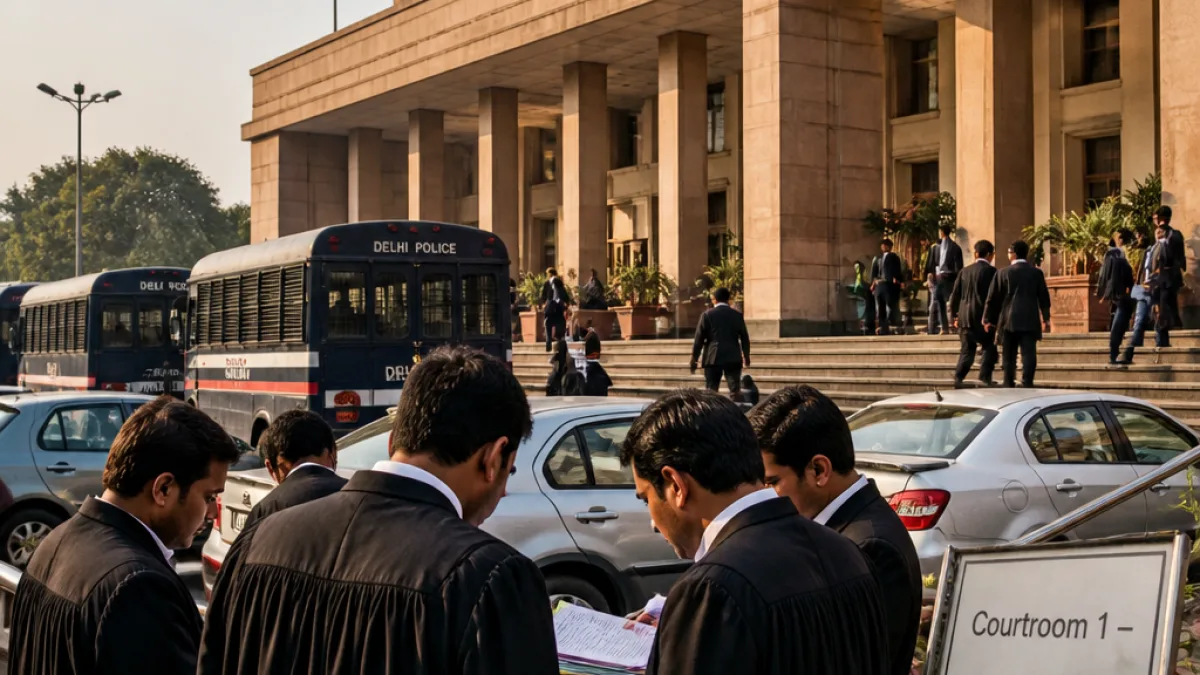
The Delhi High Court will on Monday hear the Central Bureau of Investigation's (CBI) petition challenging a trial court order discharging former Delhi Chief Minister Arvind Kejriwal, his deputy Manish Sisodia and 21 others in the controversial excise policy (liquor policy) case, according to court records.
What is listed before the court
Justice Manoj Jain is expected to take up the CBI's revision petition. The senior judge is also likely to hear applications filed by Kejriwal and Sisodia seeking dismissal of the CBI plea on the ground that it is non‑maintainable, the filings show.
The trial court, presided over by the Special Judge, discharged Kejriwal, Sisodia and the other accused on February 27, concluding that the prosecution case "stood discredited in its entirety" after a detailed hearing. The CBI filed a revision petition challenging that discharge, calling the order "patently illegal, perverse" and alleging errors apparent on the face of the record.
Positions advanced in the filings
Kejriwal and Sisodia have submitted that the CBI's revision petition was filed with "unprecedented haste" — pointing out that it was filed within hours of the discharge order — and that it is a "bare‑shell" and "non‑specific" plea which does not clearly disclose the agency's case against them.
"The CBI has preferred the present revision petition with unprecedented haste and in the most unserious manner... the present revision petition was filed only within four hours of passing of the order of discharge by the Ld. Special Judge," the application states.
The defence applications assert that the trial court reached its discharge conclusion after hearing the matter in detail for more than three months and that the CBI has failed to point out any specific finding that is "perverse" or demonstrates irregularity in the Special Judge's reasoning, which spans more than 500 pages.
CBI's objections
In its revision petition, the CBI has urged the High Court to set aside the discharge order, arguing that the Special Judge committed legal errors and engaged in selective appreciation of evidence, effectively conducting a "mini‑trial" at the stage of framing of charges. The agency says the discharge order cannot stand and requires judicial correction.
- Accused discharged by trial court: Arvind Kejriwal, Manish Sisodia and 21 others.
- Agency challenging the order: Central Bureau of Investigation (CBI).
- High Court judge listed to hear the matter: Justice Manoj Jain.
Background and procedural posture
The trial court discharged the accused after a hearing that extended over months; its order runs into more than 500 pages, according to the judicial record. Kejriwal and Sisodia had earlier boycotted proceedings before another judge, Justice Swarana Kanta Sharma, and subsequently engaged through their legal teams in the discharge proceedings.
The CBI's revision petition contends that the trial court's approach was legally unsound and that a number of its findings are demonstrably perverse. The defence, by contrast, contends the agency has failed to make out any arguable case that would justify upsetting the extensive reasoned order of discharge.
What to expect at the hearing
At the forthcoming listing, the High Court will first consider preliminary maintainability pleas pressed by Kejriwal and Sisodia seeking dismissal of the CBI's revision petition. If those applications are rejected, the court will proceed to hear the merits of the CBI's challenge to the discharge. Court sources say timelines for any further proceedings will depend on the manner in which the bench frames the questions of law and procedure.
| Matter | Status |
|---|---|
| Trial court discharge order | Passed on February 27; discharged 23 accused including Kejriwal and Sisodia |
| CBI revision petition | Filed challenging discharge; alleges errors and selective reading of evidence |
| Next listing | Delhi High Court, Monday before Justice Manoj Jain |
The outcome of the High Court hearing could determine whether the matter proceeds to trial or whether the trial court's discharge order remains intact. Given the high public interest and the involvement of senior political figures, any interim directions or timelines issued by the High Court are likely to shape the immediate procedural trajectory of the case.
Legal observers note that the challenge raises core questions about the scope of judicial review at the revision stage, the distinction between a full trial and the test for framing charges, and the threshold for overturning a detailed discharge order. The High Court's decision on the CBI's maintainability plea and the merits will be closely watched for its implications on prosecutorial strategy and trial court practice in complex criminal matters.