
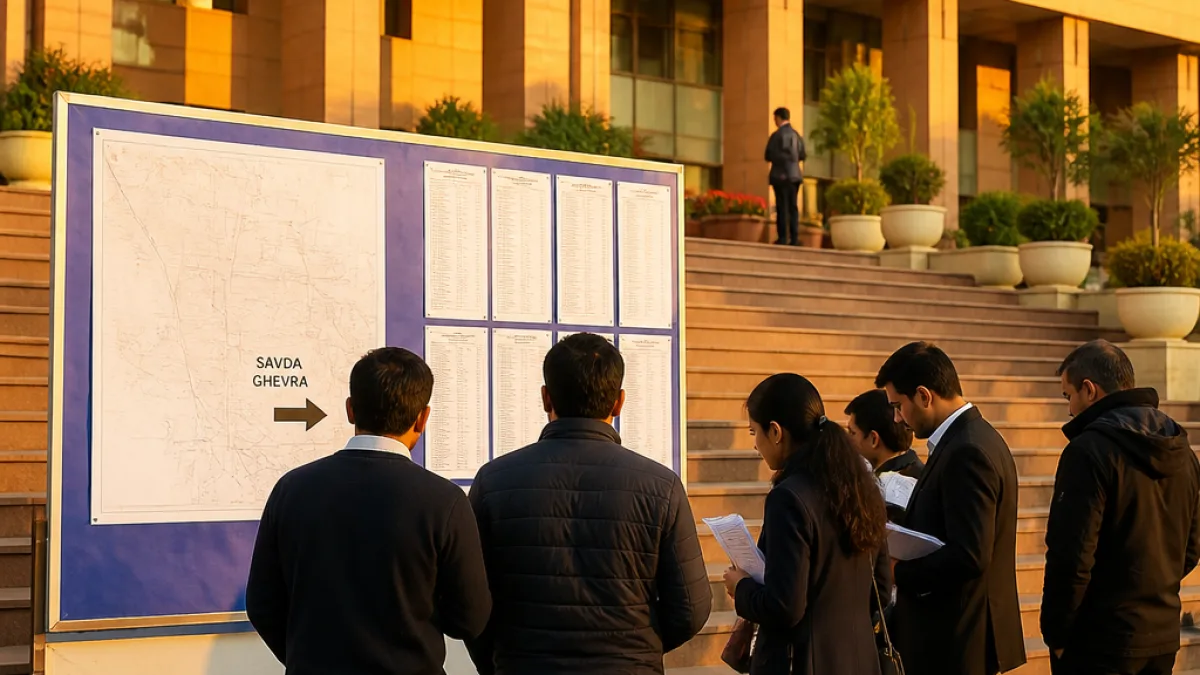
The Delhi High Court on Thursday constituted a Monitoring Committee to supervise the rehabilitation and relocation of dwellers from three Jhuggi Jhopri bastis — B.R. Camp, Masjid Camp and DID Colony — who are to be shifted to the Delhi Urban Shelter Improvement Board (DUSIB) Colony at Savda Ghevra. The order came from a Division Bench as it heard intra‑court appeals filed by residents contesting eviction and relocation directions issued earlier by a Single Judge.
Bench stresses rehabilitation must be meaningful
A Bench of Chief Justice Devendra Kumar Upadhyaya and Justice Tejas Karia observed that the process of rehabilitation must enable dwellers to "lead a meaningful life" after relocation and therefore requires consistent monitoring and supervision. The court emphasised that relocation must accord with the Delhi Slum & JJ Rehabilitation and Relocation Policy, 2015 and the related protocol notified by DUSIB.
According to the court record, the appeals concern approximately 717 dwelling units identified as Jhuggi Jhopri bastis under the Delhi Urban Shelter Improvement Board Act, 2010. The Single Judge had earlier dismissed writ petitions filed by the dwellers but issued directions regarding amenities, education, travel, water, sanitation and other related facilities. The Division Bench took up the intra‑court appeals challenging that order.
- Number of dwelling units sought to be relocated: 717
- Proposed destination for relocation: DUSIB Colony, Savda Ghevra
- Statutory framework cited: Delhi Slum & JJ Rehabilitation and Relocation Policy, 2015
Senior Advocate N. Hariharan represented the appellant groups. For the respondents, Additional Solicitor General Chetan Sharma, Central Government Standing Counsel Archana Gaur, Standing Counsel Anand Prakash and Advocate Anuj Chaturvedi appeared, according to the court record.
“The process of rehabilitation, to ensure that dwellers of Jhuggi Jhopri bastis are able to lead a meaningful life after their relocation, needs to be consistently monitored and supervised.”
Appeals hinged on policy compliance and relocation distance
The appellants argued before the Division Bench that eviction and relocation violated provisions of the Rehabilitation Policy, 2015 and the Draft Protocol notified by DUSIB, including the requirement that rehabilitation be within five kilometres where feasible. The respondents countered that the land in question was urgently required, that the scheme had been approved by the High‑Powered Committee and DUSIB, and that the proposed relocation arrangements were part of an approved rehabilitation plan.
| Item | Details |
|---|---|
| Bastis affected | B.R. Camp, Masjid Camp, DID Colony |
| Units to be relocated | Approx. 717 dwelling units |
| Relocation site | DUSIB Colony, Savda Ghevra |
| Legal framework | Delhi Slum & JJ Rehabilitation and Relocation Policy, 2015; DUSIB protocol |
The court directed the constitution of the Monitoring Committee to ensure the relocation process is implemented in a manner consistent with statutory safeguards and the need to preserve the dignity and livelihoods of the dwellers. The order requires that amenities — including water, sanitation and access to education and travel — be assured as part of the rehabilitation. The exact constitution and terms of reference for the committee were not set out in the summary of proceedings reported to the court.
The case highlights persistent tensions in Delhi between urgent land requirements for public or development projects and statutory protections for informal settlement residents. The High Court’s insistence on a supervised rehabilitation process seeks to bridge those tensions by requiring administrative compliance with the 2015 policy as relocations proceed.
Further hearings are expected to address specific modalities of relocation, timelines for handover of the land and the monitoring mechanisms that will be applied to ensure that the dwellers’ living conditions and access to essential services are maintained post‑relocation.