Municipal plan aims to free carriageways by moving vehicles off roads
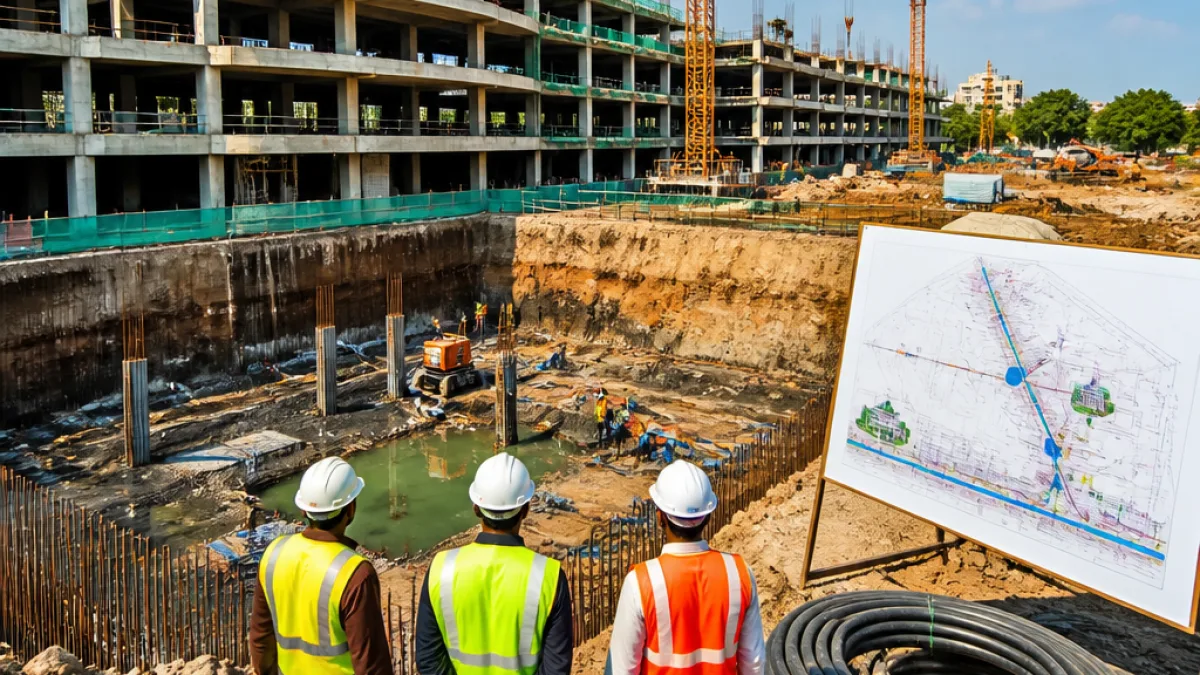
CUTTACK: The Cuttack Municipal Corporation (CMC) has moved to tackle the city’s chronic parking shortage by initiating inspections to identify sites for four multi-level parking facilities, Mayor Subhas Singh said on Thursday. The move is aimed at providing organised parking spaces, reducing roadside vehicle parking and easing pressure on the city’s road network.
Mayor Singh said the locations for the proposed facilities have not yet been finalised. An inspection team will survey potential sites, taking into account land availability and parking needs in different parts of the city. The findings of the inspection will be submitted to the Housing and Urban Development Department (H&UDD) for consideration, he added.
"An inspection will be conducted to identify suitable sites, taking into account the availability of land and the parking requirements of different parts of the city," Mayor Subhas Singh said.
The proposal comes as the number of two-wheelers and four-wheelers in Cuttack continues to grow, intensifying competition for scarce roadside space. In busy commercial corridors, marketplaces and along major roads, vehicles parked on the carriageway frequently narrow traffic lanes and cause delays, particularly during peak hours. Municipal authorities said multi-level parking could make better use of limited land by expanding capacity vertically.
Expected outcomes and local concerns
Officials expect the multi-level facilities to:
- Provide organised parking spaces to reduce roadside parking.
- Improve traffic movement on major thoroughfares.
- Help manage growing vehicle numbers without excessive land take.
However, municipal officials also cautioned that the scheme’s success will depend on accessible site selection, careful planning and ongoing maintenance. The condition and utilisation of existing parking infrastructure — notably the facility at Link Road–Madhupatna — have been raised as concerns, with reports pointing to poor upkeep and underuse. The CMC will need to factor maintenance plans and user access into the proposal before forwarding recommendations to the H&UDD.
| Item | Current status |
|---|---|
| Number of proposed multi-level facilities | 4 (locations to be inspected) |
| Agency to receive inspection report | Housing and Urban Development Department (H&UDD) |
| Existing facility cited | Link Road–Madhupatna (concerns over upkeep) |
Commuters and shopkeepers in congested localities have long complained about vehicles left along roadsides, which not only reduce carriageway width but also create bottlenecks that slow public transport and emergency services. Municipal planners say multi-level parking can be part of a broader traffic-management strategy, but it is not a standalone solution. Integrated measures such as enforced no-parking zones, one-way systems, improved public transport and last-mile connectivity are typically required to achieve sustained traffic relief.
Next steps and what residents should expect
The CMC will carry out the inspection and compile site assessments to forward to the H&UDD. Until locations are finalised and detailed project proposals are approved, residents should expect the routine traffic and parking patterns to remain unchanged. The corporation has not announced timelines, financing sources or capacity estimates for the proposed structures.
Residents and motorists are advised to follow official CMC notices on traffic changes and parking schemes. Any future construction of multi-level parking will likely require temporary traffic diversions and coordination with local businesses and residents. Authorities will need to ensure clear signage, safe pedestrian access to parking structures and regular upkeep to avoid the fate of existing underused facilities.
For Cuttack, where narrow streets and dense commercial activity coexist, multi-level parking offers a way to reclaim carriageway space for smoother traffic movement — provided the sites chosen are accessible, the facilities are maintained, and parking policy is integrated with broader urban transport planning.