Authorities move after long-standing safety concerns on NH stretch near Badekolamath
BELAGAVI: The National Highways Authority of India (NHAI) has initiated steps to repair a dangerous section of the National Highway near Badekolamath after local police compiled data showing repeated accidents and fatalities over the last decade.
The Belagavi City Police Commissioner, Bhushan Borase, collected information on the number of accidents and deaths over the past 10 years and sent a formal letter to NHAI in July 2025 requesting corrective measures, according to official accounts. The stretch has been the scene of multiple collisions during the monsoon season, often involving lorries, buses and heavy goods vehicles.
- Police records point to hundreds of accidents and dozens of deaths on the stretch in the last 10 years.
- More than 20 accidents have been reported on the same section in just one year, officials said.
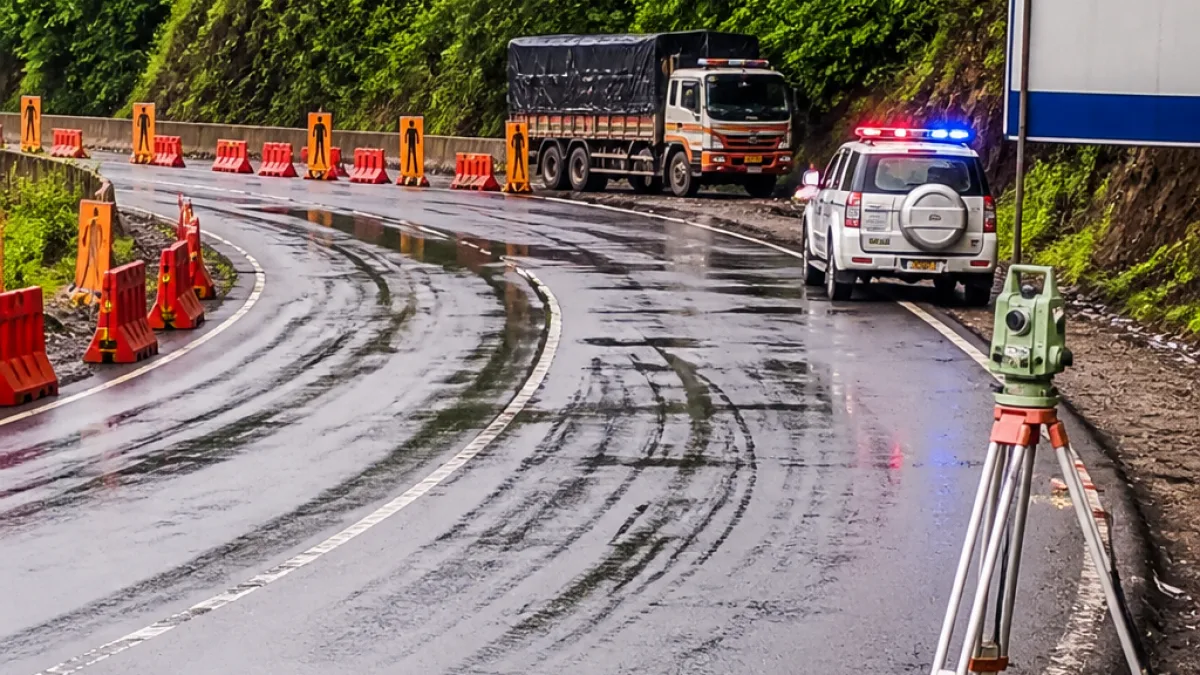
- NHAI has floated a tender for road repairs and implemented temporary safety measures including barricades and human-shaped warning boards.
"Accidents occur due to the slope along with a dangerous curve on that section of the highway," vehicle users reported to the police, prompting the intervention.
Road users and local motorists had long blamed the combination of a steep slope and a tight curve for the successive mishaps. The problem becomes acute during monsoon months when reduced tyre grip and poor visibility increase the risk of vehicles skidding or overturning, especially heavy commercial vehicles negotiating the bend.
As an immediate response, the NHAI has reportedly floated a tender for the repair work. Meanwhile, precautionary measures have been put in place on the curve: barricades constructed with drums and human-shaped warning boards have been installed to alert drivers approaching the critical section. These temporary safeguards are intended to reduce speed and provide visual cues until structural corrections are carried out.
Officials have not released a detailed timeline for the repair work or an estimate of the cost. The police submission in July 2025, however, appears to have been a pivotal step in escalating the matter from local enforcement to the highway authority, according to available reports.
| Timeframe | Reported incidents (as per police compilation) |
|---|---|
| Last 10 years | Hundreds of accidents; dozens of deaths |
| Last 1 year | More than 20 accidents |
Local transport operators and commuters welcomed the decision to seek engineering corrections but urged swift action. Motorists noted that temporary measures, though useful, are no substitute for a permanent fix such as realigning the curve, easing the gradient or providing additional lane-width and banking to help heavy vehicles negotiate the bend safely.
Traffic engineering experts typically recommend a combination of design changes — reduction of gradient, curve reprofiling, improved camber and enhanced signage — for such sections. While the specific scope of works that NHAI will execute has not been detailed publicly, the floating of a tender signals that a feasibility and execution plan is being finalised.
The move to repair the Badekolamath stretch follows similar patterns in other parts of Karnataka, where repeated accident clusters have forced authorities to reassess road geometry and drainage, particularly on routes with significant heavy vehicle movement. Residents in the Belagavi region said clearer timelines and regular updates from NHAI would help build public confidence that the dangerous stretch will be made safer.
In the interim, local police continue to monitor the curve and have intensified patrolling during peak hours and monsoon periods to manage traffic flow and respond to incidents promptly. The combination of enforcement, temporary physical cues and a forthcoming engineering intervention aims to reduce accidents on this long-troubled highway segment.