Comprehensive plan sought for yak conservation and herder livelihoods
Itanagar/Tawang: Arunachal Pradesh Chief Minister Pema Khandu on Saturday called for a comprehensive roadmap to strengthen yak conservation, improve the livelihoods of herders and unlock the economic value of yak-based products, an official statement said.
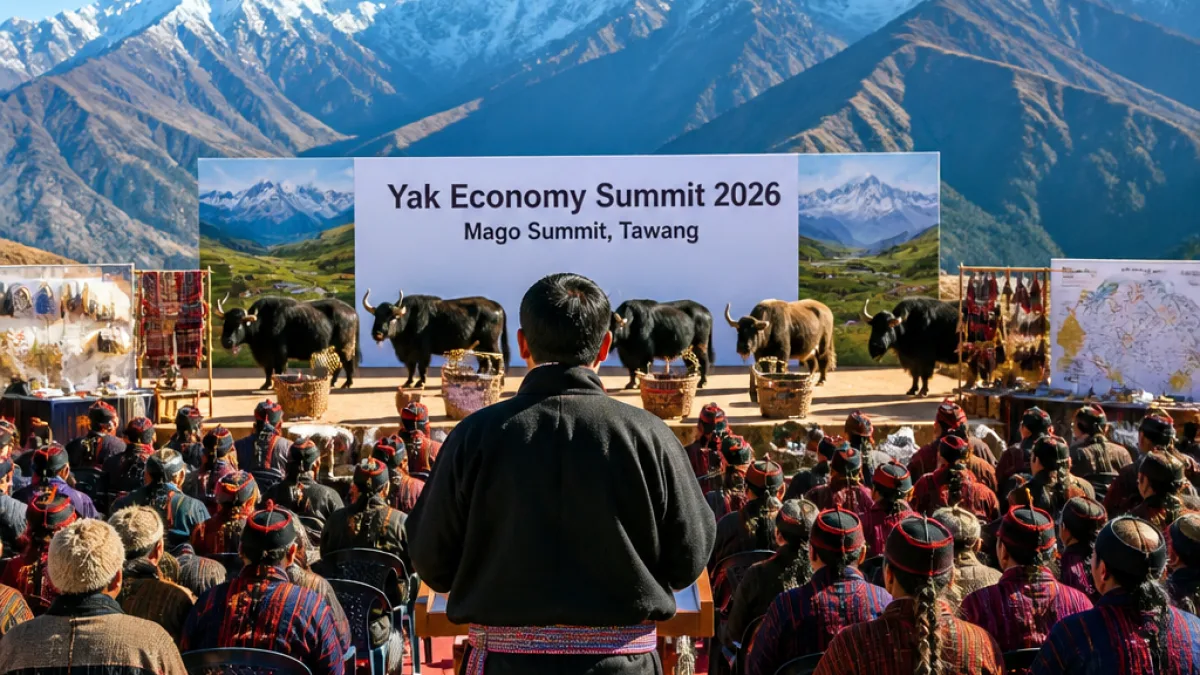
Delivering the keynote address at the Yak Economy Summit 2026 and Yak Mela held at Mago in Tawang district, Khandu said yak rearing is not only a source of income but also an intrinsic part of the social, cultural and strategic tapestry of high-altitude Himalayan communities.
“From the perspective of national security, it is our duty to support our Brokpa communities and yak herders through appropriate policy interventions,” the chief minister said.
In his remarks, Khandu emphasised that targeted policy support is required from both the state and the Centre to sustain traditional yak-rearing communities living in remote, strategically sensitive regions. He said any long-term plan must be based on detailed evidence and local organisation.
Key elements Khandu outlined for the proposed roadmap include:
- Comprehensive mapping of yak populations, herders and their seasonal movements to inform planning.
- Identification of summer and winter grazing camps to develop appropriate infrastructure and ensure sustainable management.
- Organisation of herders into cooperative structures to enhance bargaining power, pooling of resources and market access.
He announced that yak associations already exist in Arunachal Pradesh, Sikkim, Ladakh and Himachal Pradesh and that these regional bodies have been brought together under the Yak Federation of India. Khandu said a meeting of the federation would be convened in February to review progress and frame a forward roadmap.
As part of institutional measures, the chief minister proposed the establishment of the Arunachal Pradesh Yak Herders and Products Development Cooperative Society. He said a cooperative framework would help herders pool resources, access markets and develop viable businesses around products such as meat, milk, wool and other value-added items.
Role of agencies and planning priorities
While the statement listed high-level priorities, Khandu also flagged inter-agency collaboration as essential. He indicated that stakeholders such as the Army and agricultural research bodies would be involved in taking the initiative forward, and stressed that mapping and data collection should precede infrastructure planning.
| Priority | Purpose | Mentioned agency/actor |
|---|---|---|
| Population and movement mapping | Inform grazing management and infrastructure | State government, Yak Federation |
| Cooperative formation | Market access, resource pooling | Arunachal Pradesh Yak Herders and Products Development Cooperative Society (proposed) |
| Strategic support | Support pastoral communities in sensitive border areas | Army, state and central agencies |
The statement did not provide a timeline or budgetary figures for the proposed measures, nor did it elaborate on the specific role or commitments expected from the Centre. It noted that a federated meeting in February would review progress and identify policy interventions required from both levels of government.
Local stakeholders in Tawang and other high-altitude districts have long argued that yak rearing is central to livelihoods and local culture, but face challenges including remoteness, limited market linkages, cold-chain constraints, and grazing pressure. The CM’s call for mapping and cooperative structures aims to address some of those systemic gaps by creating a more organised framework for production and marketing.
Experts and local leaders have previously urged better veterinary support, breed improvement programmes and investment in value-addition to improve incomes; the summit platform sought to consolidate such demands into a policy agenda. The announcement of a federation-level review meeting and the proposal for a state cooperative signals an attempt to institutionalise those claims.
Practical next steps indicated by the statement are:
- Detailed population and camp mapping of yaks and herders across seasons.
- Constitution of the proposed state cooperative to link producers with markets.
- A federation meeting in February to evaluate progress and recommend policy interventions.
The chief minister’s remarks place yak economy issues within a wider set of concerns that combine livelihood support with strategic considerations for communities living along sensitive border tracts. How the roadmap translates into funding, institutional arrangements and on-the-ground delivery will be watched closely by herders, local administrations and central agencies ahead of the federation meeting.