Demolition carried out after High Court directions; lawyers demand rehabilitation
The Lucknow Municipal Corporation (LMC) on Sunday razed roughly 100 lawyers' chambers in and around the Qaiserbagh court area, officials said, after a demarcation exercise identified 211 such structures on government land, drains and footpaths. Nearly as many chambers remain on the civic body's list for future action as advocates protested the move and sought alternative accommodation.
The operation began at about 10 am on Rani Laxmibai Marg near the Residency crossing, with a heavy police presence and personnel from the Lucknow Development Authority (LDA) and the Public Works Department (PWD) joining LMC teams, according to official statements. Tensions rose when officials moved towards the Balrampur Hospital stretch and advocates physically blocked machinery.
- Number of chambers identified by LMC: 211
- Chambers demolished on Sunday: around 100
- Chambers remaining on the list: nearly 100
- Chambers spared after objections: 9
LMC Zone 1 zonal officer Om Prakash said about 100 chambers had been removed, while additional municipal commissioner Pankaj Srivastava said land records had been collected for around seven bighas near Gate 4 of the Qaiserbagh court where encroachments were alleged. Further action, officials said, will follow the High Court's directions and the records being collated.
"Diwali is such a major festival, yet we are being left in darkness. How can this government function like this?"
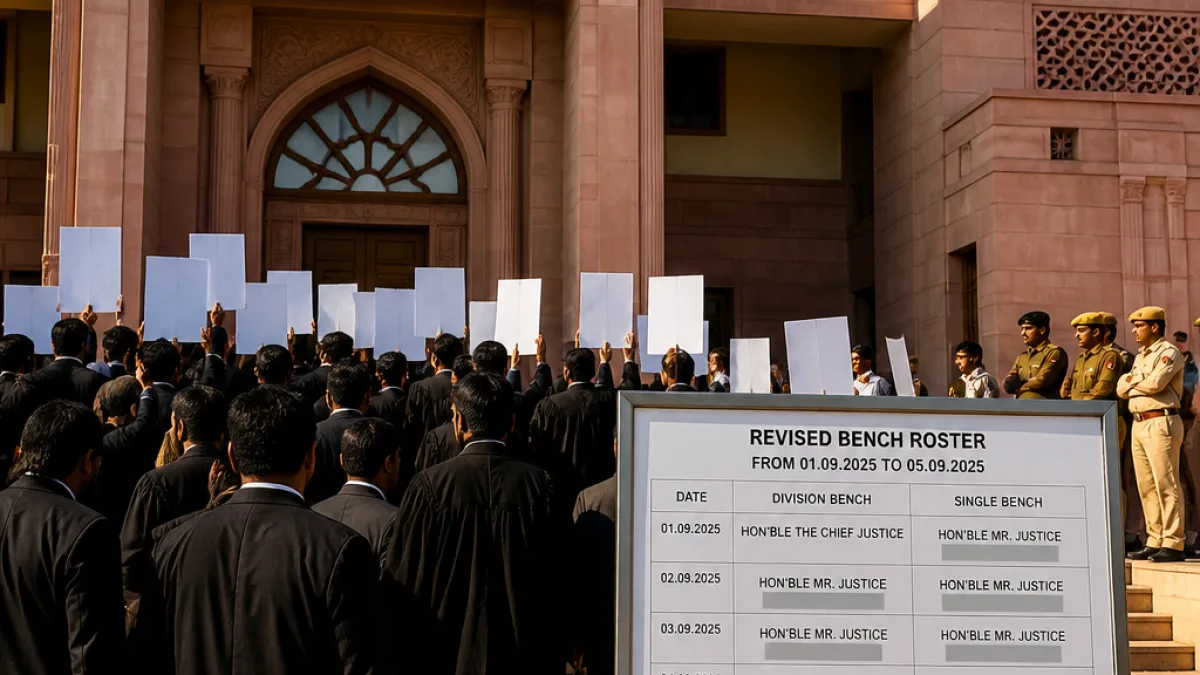
The demolition triggered protests from advocates who said the structures had been used for decades and that no rehabilitation arrangements had been provided. One protesting lawyer accused authorities of prioritising demolition over making alternative arrangements and warned that lawyers would continue to resist the move.
Protesters resorted to direct action: several advocates climbed onto bulldozers and lay down in front of machinery to halt the demolition. Officials reported objections regarding nine chambers, which were spared pending verification.
Context and prior operations
Officials said the drive was part of compliance with a High Court order and followed two earlier operations in the area. The civic body demolished 72 structures on May 17 and 71 on August 30, bringing the total removed in those earlier drives to 143. The recent action increased the number of demolished structures in phases but left the larger question of rehabilitation unresolved for many advocates.
| Item | Count |
|---|---|
| Identified during demarcation | 211 |
| Demolished on Sunday | ~100 |
| Removed in May and August | 143 |
| Chambers spared after objections | 9 |
Advocates argued that the timing of the exercise added to their distress, with some saying the action, close to the Diwali festival, jeopardised their livelihoods and professional continuity. One lawyer said that if chambers were demolished without alternatives, lawyers might be compelled to practise on the roads, describing the situation as a forced public protest.
Authorities maintained that the drive targeted structures illegally occupying public land, drains and footpaths, and was being carried out in compliance with judicial directions. The LMC said records were being collated and that decisions on the remaining structures would be taken in accordance with the court's orders.
The dispute highlights competing concerns: municipal enforcement of public land use and drainage protection on the one hand, and the loss of long-used workplaces and absence of formal rehabilitation plans for a significant professional community on the other. How the LMC, the courts and advocates resolve those issues will shape access to legal services in the Qaiserbagh court precinct and broader relations between the legal fraternity and civic authorities in Lucknow.
Further action by the civic body will depend on the High Court's directions and the verification of land records collected by officials, LMC sources said.