High Court finds discrepancies in arrest record; directs Registrar General to probe
The Allahabad High Court has ordered an inquiry into alleged perjury and fabrication of an arrest memo placed before it by police, and directed the release of an Aligarh resident whose recorded grounds of arrest the Bench found deficient. The direction came while allowing a habeas corpus petition filed in connection with a forgery case registered in Aligarh.
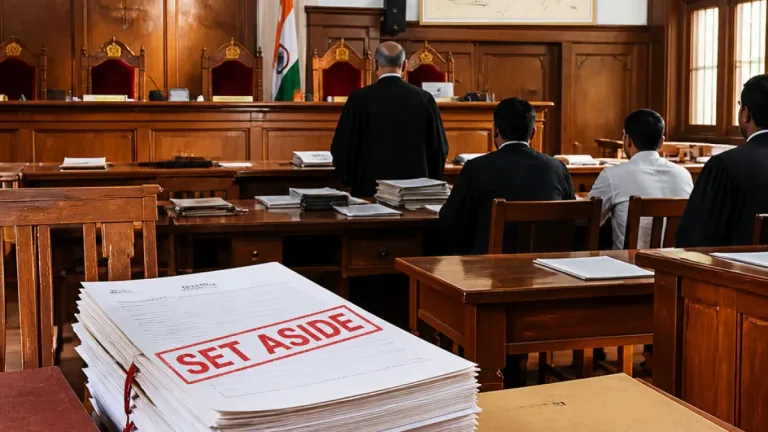
A Division Bench of Justice Atul Sreedharan and Justice Achal Sachdev issued the order on October 14, 2026, in the matter captioned Junaid and Another v. State of U.P. and 4 Others. The Court found two different versions of the arrest memo on record and concluded that portions of one memo appear to have been completed after the petitioner was arrested and after the habeas petition had been filed.
Facts of arrest and the court's finding
The petitioner was arrested in FIR Crime No. 650 of 2026 at Police Station Quarsi, Aligarh, under provisions of the Bharatiya Nyaya Sanhita: Sections 336(3), 338 and 340(2)—which correspond to Sections 467, 468 and 471 of the Indian Penal Code, the Bench noted. These allegations are those made in the FIR and remain untested.
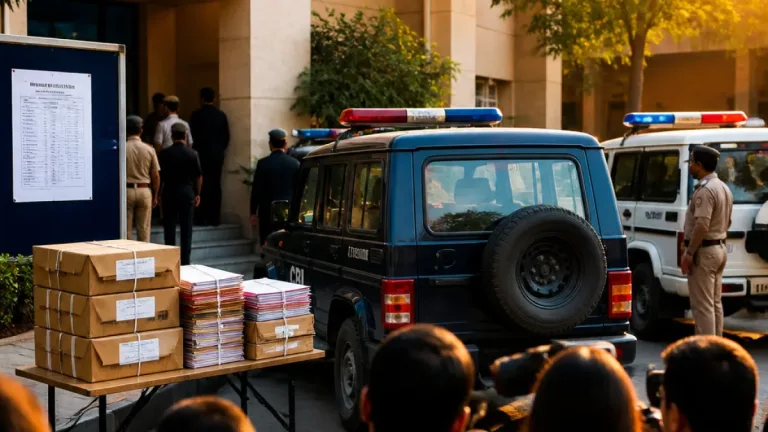
According to the habeas corpus petition, the petitioner was taken into custody at about 3:00 a.m. on August 6, 2026 and detained at Police Chowki Jamalpur. The arrest memo handed to him recorded the ground of arrest only as “in the above case”, the petitioner told the court, and a certified copy of that memo matched the copy produced before the remand magistrate.
- The State, however, annexed a different arrest memo to its counter-affidavit.
- The Court observed that Items 12 and 13 in that version had been filled in after the arrest and apparently after the habeas petition was filed.
- The counter-affidavit also denied the presence of CCTV cameras at the chowki, while photographs attached to the rejoinder showed cameras at its entrance.
“The record discloses conflicting versions of the arrest memo placed before the Court and materials suggesting that entries were made after the petitioner’s arrest,” the Bench observed in its order.
Release order and legal consequences
The Bench allowed the habeas corpus petition and ordered the release of the petitioner, but made the release without prejudice to re-arrest. The court emphasised that it was not pronouncing on the merits of the underlying forgery case and said it was not required to, and did not, express any view on those charges.
Separately, the High Court directed its Registrar General to institute an inquiry into the alleged fabrication of the arrest memo and the possibility of perjury before the Court by police officers who placed the documents on record. The order did not specify a timeframe for the inquiry in the published record.
Local procedure and transparency concerns
The Bench’s findings focus on procedural deficiencies: inadequate recording of grounds of arrest and the production of inconsistent documents in judicial proceedings. The differing memos and the dispute over CCTV presence at Police Chowki Jamalpur raise questions about contemporaneous record-keeping and evidence preservation in the Aligarh policing unit concerned.
| Detail | Record |
|---|---|
| FIR | Crime No. 650 of 2026, PS Quarsi, Aligarh |
| Arrest time | Approximately 3:00 a.m., 6 August 2026 |
| Detention location | Police Chowki Jamalpur |
| Alleged offences | BNS 336(3), 338, 340(2) (corresponding to IPC 467, 468, 471) |
The court’s action—both ordering release and directing an inquiry—underscores the judiciary’s insistence on proper documentation where personal liberty is at stake. For residents of Aligarh and those interacting with the local criminal justice system, the order signals judicial scrutiny of police records and reinforces procedural safeguards around arrest and custody.
The release does not preclude further investigation or prosecution; the State retains the statutory power to re-arrest on proper grounds. The Registrar General’s inquiry may lead to departmental or legal consequences depending on its findings and any subsequent proceedings initiated by the court or the State.