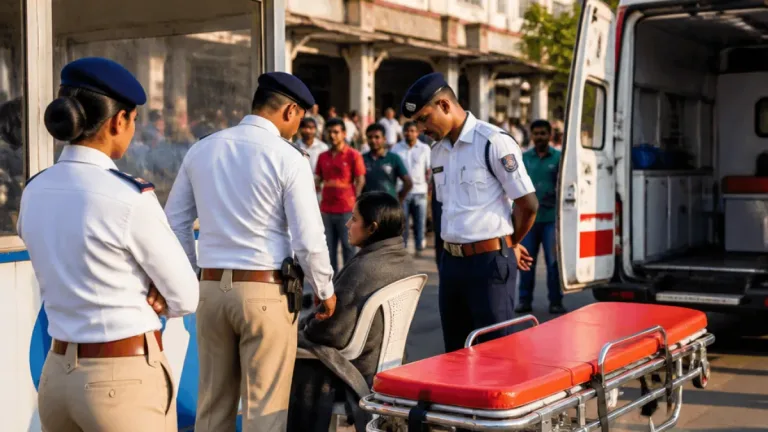
VIJAYAWADA: Andhra Pradesh's Health and Family Welfare Department will conduct a series of simulation exercises across selected districts to assess the state's preparedness for infectious-disease outbreaks, officials said. The phased drills, beginning on 18 August, will test end-to-end response systems – from early detection to containment and public communication.
Scope and objectives of the drills
Commissioner of Health and Family Welfare KVN Chakradhar Babu said the exercises are intended to evaluate how well the health network and allied government agencies handle a public-health emergency. Unlike routine mock drills that concentrate on frontline staff actions, these simulations will examine the entire public-health machinery, identifying gaps in surveillance, logistics and coordination before a real crisis occurs.
"The exercises aim to evaluate how effectively the health network and allied government bodies react from the initial detection of a disease down to its complete containment," the commissioner said.
The state has planned a phased schedule covering five infections across different ecological and operational contexts: vector-borne, zoonotic and waterborne diseases. The chosen locations and scenarios are meant to stress-test specific components of the response chain.
Planned schedule and focus areas
| Dates | District / Town | Disease scenario | Primary focus |
|---|---|---|---|
| 18–19 August | Machilipatnam (Krishna) | Leptospirosis | Environmental surveillance, data reporting, medical supply lines |
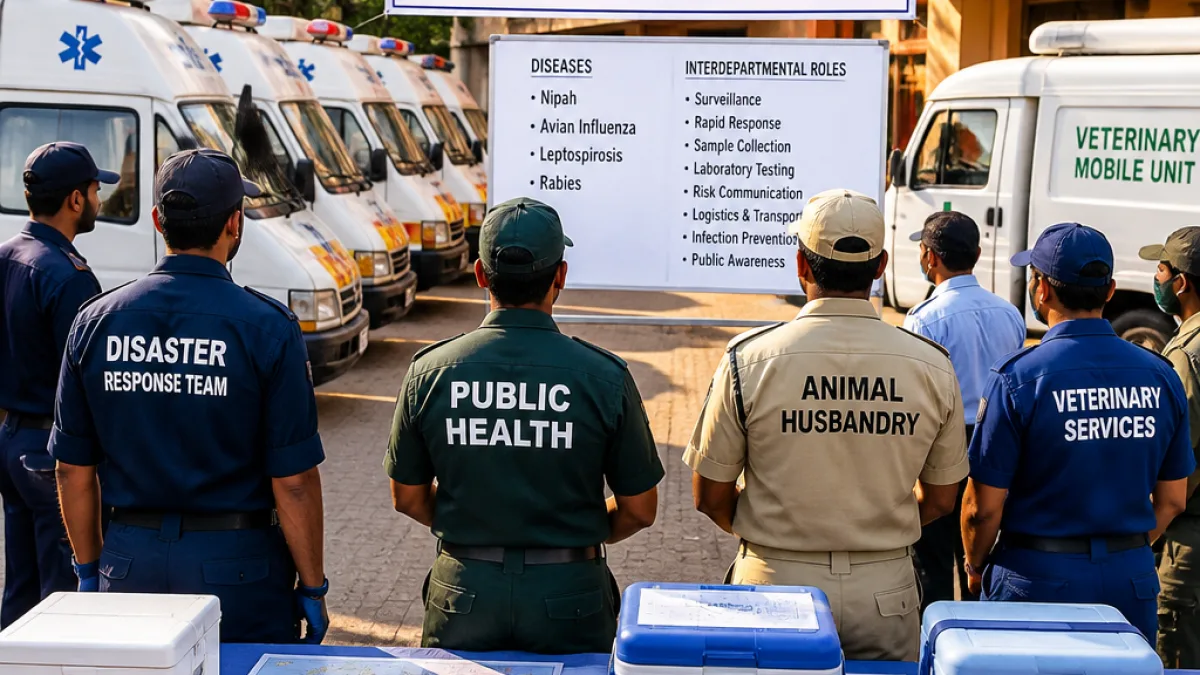
| 20–21 August | Bhimavaram (West Godavari) | Highly Pathogenic Avian Influenza (HPAI) | Inter-departmental coordination, emergency protocols, sample packaging & transport |
| To follow | Visakhapatnam | Dengue | Private-sector integration, vector surveillance |
| To follow | Vizianagaram | Scrub Typhus | Emergency Operations Centre (EOC) functioning |
| To follow | Guntur | Cholera / severe diarrhoeal disease | Water safety and sanitation interventions |
Officials said the drills will be organised under a One Health framework, bringing together human health, animal health and environmental stakeholders to simulate real-world, cross-sectoral responses.
Departments and functions involved
The exercises will include teams from the State Integrated Disease Surveillance Programme (IDSP), District Medical and Health Officers (DMHOs) and representatives from animal husbandry, food safety, agriculture, forest, municipal and panchayat raj departments. Laboratory logistics, sample transport, supply-chain management and public risk communication will all be tested.
- Surveillance: Environmental and syndromic surveillance and completeness/timeliness of data reporting.
- Inter-agency coordination: Protocols for cross-department actions and EOC activation.
- Logistics: Laboratory sample handling, cold-chain and medical supply distribution.
- Community engagement: Public communication strategies and private sector linkages.
Why the exercises matter
Public-health experts and administrators have for years recommended moving beyond isolated drills focused solely on frontline clinical tasks. Integrated simulations can reveal policy bottlenecks, resource shortfalls and operational delays that are difficult to detect in routine preparedness checks. By running planned scenarios across diverse districts and disease types, Andhra Pradesh aims to identify weaknesses in both urban and rural settings and across different administrative tiers.
Officials said findings from the exercises will be used to refine standard operating procedures, strengthen the supply chain and improve lab-network readiness. The state hopes the process will reduce response times and enhance coordination during actual outbreaks.
What residents should know
Authorities have not indicated any public disruption from the simulations; drills are expected to be conducted primarily within government systems. Residents in the selected towns may see increased activity by health teams and information campaigns. The department urged people to follow routine prevention measures—use of clean water, vector control, safe food practices and seeking timely medical care for fever and gastrointestinal symptoms.
Results of the exercises, and any follow-up policy or logistical changes, will be made available by the Health and Family Welfare Department after the drills are completed and evaluations compiled, officials said.