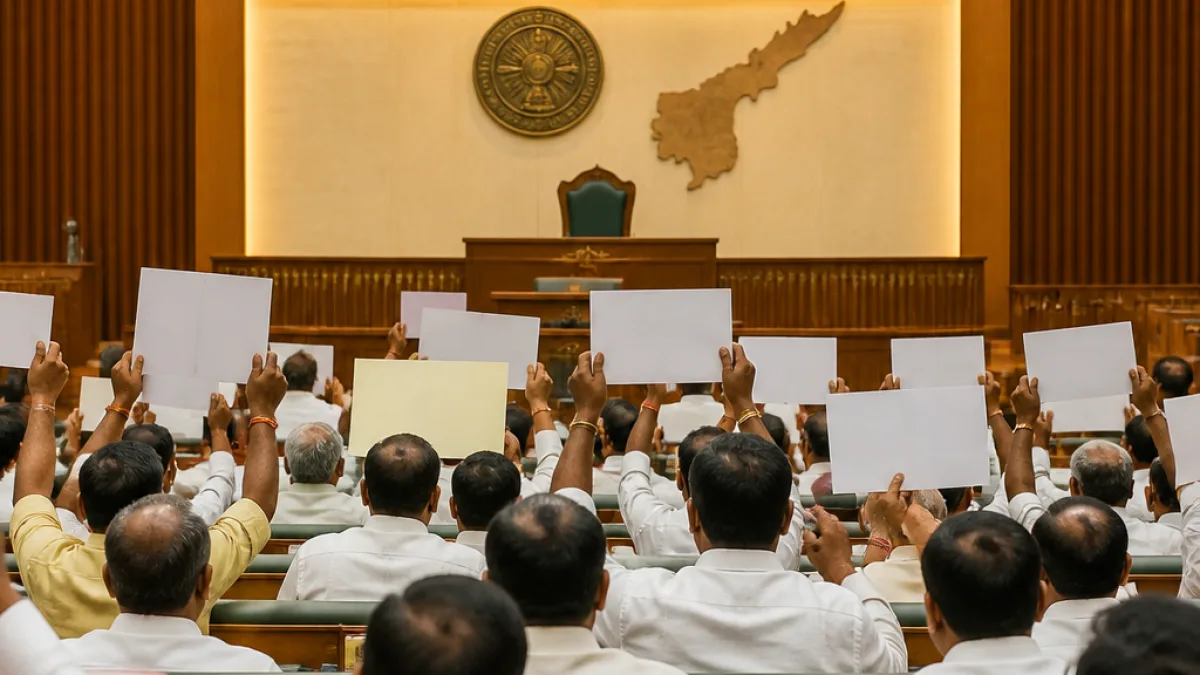
The Andhra Pradesh Cabinet on Tuesday approved enhanced reservations for Backward Classes (BCs) in local bodies, setting aside 34 per cent for BCs in rural local bodies and 33.33 per cent in urban local bodies, Chief Minister N. Chandrababu Naidu announced in the State Legislative Assembly.
Claim of restoring earlier policy and legal compliance
Speaking in the Assembly amid chants of "Jaiho BC", the Chief Minister said the decision fulfils an electoral promise and is consistent with constitutional and legal limits. He said the move is aimed at strengthening social justice and political empowerment of BC communities from the panchayat level to Parliament.
Naidu recalled that reservation for BCs in local bodies was originally introduced during the tenure of former Chief Minister N. T. Rama Rao, and that during his earlier tenure BC reservations had been raised to 34 per cent under Panchayat Raj legislation. He said local body elections were held with 34 per cent BC reservation in 1995, 2001, 2006 and 2013, and that the present Cabinet decision was intended to re-establish that share for upcoming polls.
Administrative changes and direct elections for urban heads
The Chief Minister said the government will move to directly elect mayors and municipal chairpersons in future to ensure stability in urban governance and reduce frequent leadership changes in municipalities. He also announced an expansion in district-level institutions, saying the state would create 28 Zilla Praja Parishads, up from the current 13, to strengthen administration following the recent district reorganisation.
Naidu said holding local body elections was necessary to unlock funds earmarked for rural development, and informed the Assembly that the state needed to conduct these polls in order to access ₹2,300 crore in rural ...
Political context and reactions
The announcement comes against the backdrop of coalition politics in the state, with the ruling National Democratic Alliance (NDA) government saying the step demonstrates commitment to BC empowerment. In his speech, the Chief Minister listed several prominent BC leaders whose rise, he argued, reflected greater political access for the community.
Opposition parties have in the past raised questions on reservation formulas and the legal process for changes; however, the Cabinet statement asserted that the decision adheres to constitutional and statutory constraints. The Assembly record shows the announcement was made as a Cabinet-approved measure.
"The Cabinet’s decision complies with constitutional and legal provisions and remains within all applicable limits," the Chief Minister said in the House.
What the change means on the ground
- Rural representation: BCs will have 34 per cent of seats reserved in panchayats and other rural local bodies, restoring a previously practised share.
- Urban representation: Urban local bodies will have a 33.33 per cent reservation for BCs.
- Institutional adjustments: Creation of more Zilla Praja Parishads is intended to match administrative structures to the reorganised districts.
The restoration of quotas is likely to shape candidate selection, party strategies and electoral alliances ahead of local body polls. Direct elections for mayors and municipal chairpersons, if implemented, could change the balance of power between party leaderships and local political networks.
Data summary
| Level | BC Reservation |
|---|---|
| Rural local bodies | 34% |
| Urban local bodies | 33.33% |
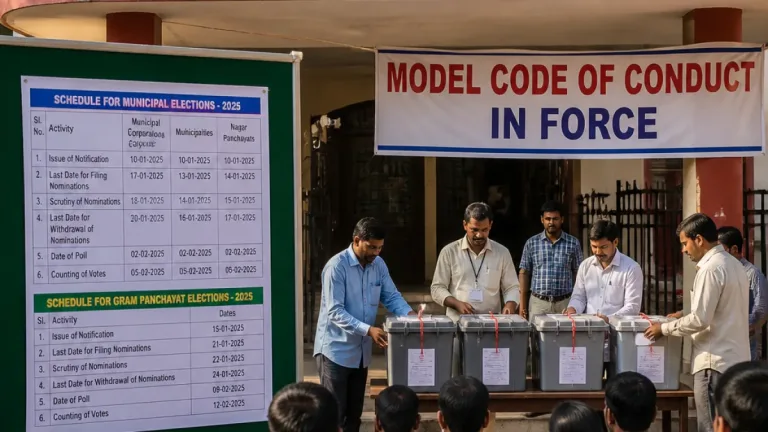
Officials said the measure would be implemented ahead of the next cycle of local body elections. The government framed the move as restoring a policy that had precedence in earlier years rather than introducing a novel quota.
Next steps and legal framework
The Assembly announcement did not include detailed statutory notifications or the precise mechanisms for seat distribution, rotation, sub-quotas within BC categories, or timelines for the new election schedule. Legal experts and political parties will watch for the formal Gazette notification and any subsequent rules that determine how reservations are applied at ward, division and seat levels.
Given past litigations and the sensitivity of reservation policy, any change to quota percentages or their implementation mechanics may invite legal scrutiny. The government has maintained that the Cabinet decision stays within constitutional boundaries.
As the state prepares for local body polls, parties, community organisations and prospective candidates will assess the implications of the announced reservation levels for candidacy, representation and local governance.