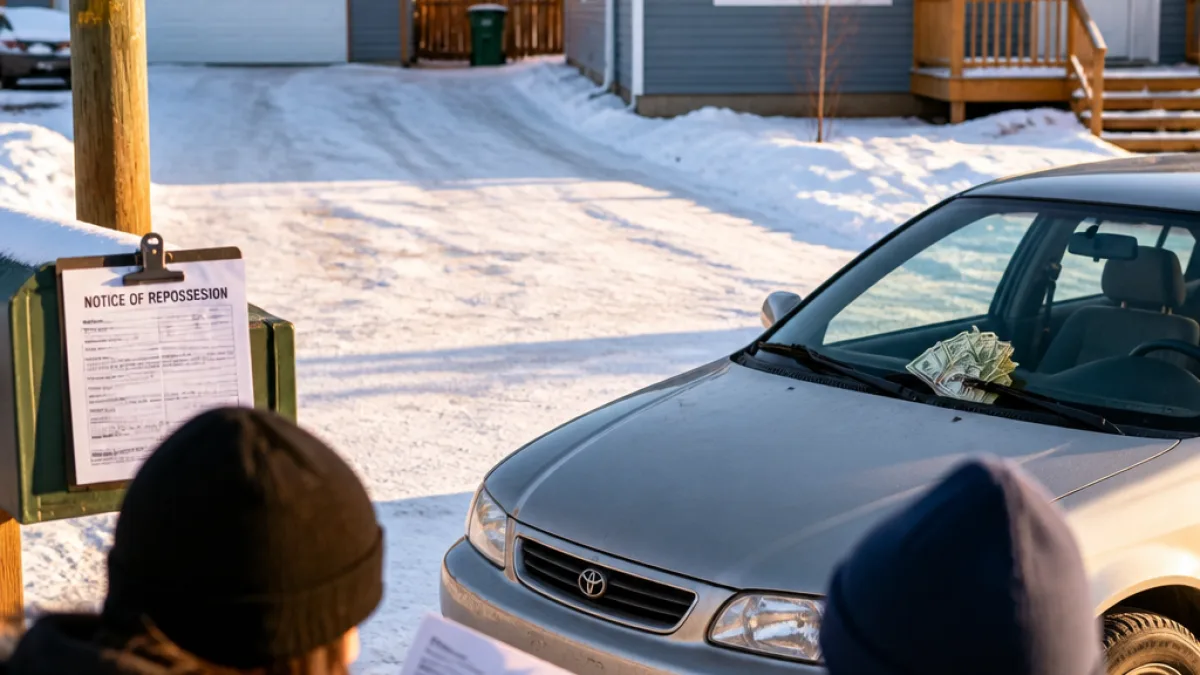
Facing what she called an unsustainable monthly bill for insurance and financing, content creator Lilli Hitt Bryant let a GMC Yukon be repossessed and replaced it with a paid-off 2008 Toyota Corolla she bought for US$2,000. Her story, shared on TikTok, has been viewed tens of thousands of times and underscores how high vehicle payments are forcing consumers to rethink transportation choices.
Why she walked away
In her video, Bryant says she and her husband were each paying roughly US$1,000 a month — about US$2,000 combined — on two new General Motors vehicles, including the Yukon. She told viewers she stopped wanting to keep paying what she calculated as US$24,000 a year for the pair.
"I wish I would have done a voluntary repossession, but I'm just, I'm not paying $12,000 anymore to ride around," she said, describing the cost burden for a single vehicle.
She said her husband’s truck had already been surrendered and that the couple used US$2,000 earned from a post-construction cleaning job to buy the Corolla outright. "I think she's cute. $2,000 is paid for. It looks ridiculous, but I don't care," she said in the video.
What this means for consumers
The viral account touches on several practical and financial realities that matter to Yukon households as well as readers across Canada:
- Monthly payments are only part of the picture. Insurance, maintenance and interest can push the true cost of owning a newer, financed vehicle far higher than sticker price suggests.
- Appearance and status decisions have real trade-offs. Bryant framed her choice as wanting to "be rich" rather than "look rich," prioritizing savings over visible wealth signalling.
- There are alternatives to unaffordable payments. Selling, refinancing, downsizing to a paid-for older vehicle, or seeking credit counselling are all options people consider when vehicle costs escalate.
Repossession versus voluntary surrender
In the TikTok, Bryant said she regretted not arranging a voluntary repossession. The difference matters: a voluntary surrender typically means you return the car to the lender yourself and may reduce some repossession-related costs, but it does not erase the outstanding loan balance or the impact on credit. An involuntary repossession, where the lender seizes the vehicle, can carry added fees and similarly affect a borrower’s credit report.
| Item | Example from the post |
|---|---|
| Monthly cost per vehicle | ~US$1,000 (payment + insurance) |
| Combined annual cost (two vehicles) | ~US$24,000 (as cited by creator) |
| Replacement vehicle | 2008 Toyota Corolla — purchased for US$2,000, paid in full |
What Yukon drivers should consider
While Bryant’s experience took place in the United States, the core issues are familiar in Yukon and other parts of Canada, where remote geography, weather and limited public transit can make car ownership essential. For Yukoners weighing similar decisions, the following steps can help manage risk:
- Review the full cost of ownership: factor insurance, fuel, winter tires, maintenance and interest into monthly affordability calculations.
- Contact your lender early if payments become unaffordable — options may include refinancing, payment deferral or a negotiated sale.
- Explore voluntary surrender or sale before repossession occurs to potentially lower fees and control timing.
- Consider trusted local mechanics for inspections when buying an older, paid-for vehicle to avoid unexpected repair costs in winter conditions.
- Seek credit counselling if multiple debts are becoming unmanageable.
Many buyers are attracted to newer, larger vehicles for comfort and status, especially in northern climates where a sturdy SUV seems sensible. But Bryant’s choice highlights that smaller, simpler cars — when mechanically sound and suited to a buyer’s needs — can be an economically practical alternative.
Her story is not a one-size-fits-all blueprint. Surrendering a financed vehicle can bring serious long-term consequences for credit and future borrowing. The TikTok clip nonetheless opens a wider conversation: when monthly payments rise into the four-figure range, households must weigh immediate convenience against savings, debt, and future financial flexibility.
As costs of new and used vehicles evolve, Yukon readers would do well to shop carefully, ask hard questions about total ownership costs, and seek local advice before committing to long-term auto financing.
Kaylee Johns
Yukon correspondent, WE NEWS