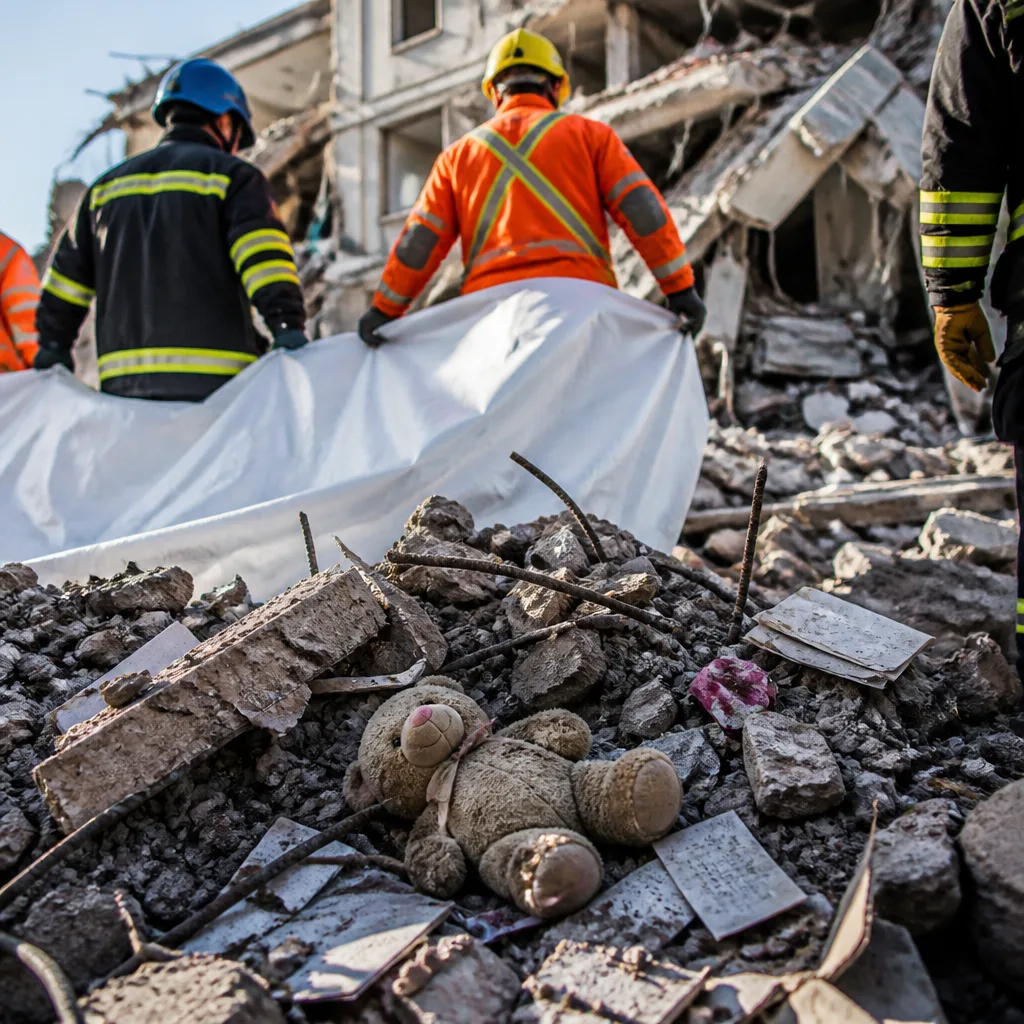
The United Nations human rights chief has said the recovery of hundreds of bodies from rubble in Gaza has renewed worries about possible war crimes, after remains — including what appeared to be whole families — were found in sites hit during the conflict that began nearly three years ago.
Latest recoveries prompt international scrutiny
Volker Türk, the UN high commissioner for human rights, said the discoveries showed many victims were women and children and that families missing for years were having their worst suspicions confirmed. The findings echo concerns set out in a 2024 UN report that examined strikes on residential buildings and other civilian locations early in the war.
“It is heartbreaking that the loved ones of those missing for so long are only now having their worst fears confirmed,”
The bodies have been recovered from sites destroyed by Israeli strikes during hostilities that began in October 2023, following a deadly raid by Hamas militants. The strikes produced massive destruction across Gaza and left large volumes of rubble that United Nations agencies say could take years to clear.
Numbers and scale
United Nations and Palestinian civil defence figures cited in the UN rights chief’s statement outline the magnitude of the devastation and ongoing humanitarian challenges:
- More than 630 bodies and human remains recovered from beneath destroyed buildings since November 2025, according to Gaza’s Civil Defence.
- Palestinian authorities estimate that over 8,000 people remain trapped beneath wreckage.
- UN assessments put the total debris generated by the assault on Gaza at roughly 61 million tonnes, with clean‑up potentially taking up to seven years.
| Metric | Figure |
|---|---|
| Bodies recovered (since Nov. 2025) | 630+ |
| Estimated still buried | 8,000+ |
| Estimated rubble | 61 million tonnes |
Allegations and responses
The discoveries have renewed the questions raised in the 2024 UN inquiry, which concluded that strikes on civilian residential buildings and similar sites in Gaza’s early weeks may have violated international humanitarian law. The UN rights office has said the new recoveries are consistent with those earlier concerns.
Israeli authorities have repeatedly rejected charges that they deliberately target civilians and maintain their operations were conducted in accordance with international law while seeking to neutralize Hamas militants. At the time of the UN statement, Israel’s Prime Minister’s Office and the Foreign Ministry had not immediately replied to requests for comment on the recent recoveries.
The conflict’s scale and ongoing hostilities have complicated investigations and accountability efforts. While a United States-brokered ceasefire in October 2025 ended full-scale ground operations, both sides continue to accuse one another of violating the terms and of conducting strikes since the truce.
Human toll and legal implications
Türk warned that the pattern of recovered remains — including accounts suggesting whole families were killed in single incidents — raises acute legal and moral questions. International humanitarian law prohibits direct attacks on civilians and requires parties to take all feasible precautions to avoid or minimise civilian harm. A finding that strikes were disproportionate or deliberately targeted non-combatants would carry serious implications under that legal framework.
The new recoveries also amplify the humanitarian crisis in Gaza, where clearance of destroyed areas, identification of remains and proper burial pose enormous logistical, technical and emotional challenges for families and authorities. The UN has said the scale of debris presents a long-term obstacle to reconstruction and to determining the full scope of civilian casualties.
As investigations by UN bodies and others proceed, the discoveries reported by Gaza’s civil defence will likely shape international debate about accountability, the conduct of hostilities in urban environments and the protections owed to civilians during armed conflict.
For now, the search for the missing continues amid mounting pressure for transparent, independent inquiries into the strikes that levelled neighbourhoods and left thousands unaccounted for.